On this page
WARDOGS hands every new player a $10,000 balance, and that number only exists once per account — not once per match and not once per life. Updated 13 September 2026 with the Season 1 price list and 4 October 2026 with the hotfix that pulled IR Rangefinders from the vendor. This guide covers what to buy first with that one-time $10,000 and how the Season 1 list splits per-life vendor prices from one-time unlock prices.
TL;DR
- You get $10,000 once, ever — it is not refilled per match or per life
- Every life you buy a fresh loadout: weapons, gear, utility, vehicles
- Spend it all on a single expensive kit and you are stuck playing cheap until the balance rebuilds
- Since the 2 October hotfix the vendor no longer sells IR Rangefinders; they return in Season 02 and will need batteries
- Cash comes back from team actions in the Control Zone — revives, transport, objective control — not only kills
- This is a different system from MW4’s Inflation mode, which refills $10,000 on every respawn
Cash Farming
Cash farmed by hand to the amount you pick, 100,000 to 1,000,000
What Is the WARDOGS Starting Wallet?
The starting wallet is the $10,000 balance every account receives the first time it enters WARDOGS. Every player starts their journey with $10,000, and each life they purchase a custom loadout from a wide selection of weapons, gear, utility, and vehicles to help their team win the match, with every teamplay action rewarding cash. That single sentence structure matters: the $10,000 is the seed, the loadout purchase happens every life, and the reward comes from teamplay, not from the wallet refilling itself.
Beyond the starting cash, WARDOGS also has a secondary currency. Gold Bars are the endgame currency in WARDOGS, obtained by exchanging cash you have earned, and spent in the Gold Market on cosmetic unlocks — they cannot be bought with real money. The Gold Bars season-end guide covers what happens to that currency when a season closes, which matters more once you have actual cash to convert.
| Currency | What it's for | Refills how |
|---|---|---|
| Starting cash | Buys every loadout, life after life | Seeded once at $10,000, then earned back through play |
| Gold Bars | Cosmetic unlocks in the Gold Market | Exchanged from earned cash, never bought with real money |
Anyone who would rather not spend the evenings on it can hand WARDOGS boosting to our crew instead — same account, same progress, played by hand.
One-Time $10,000, Not a Per-Life Allowance
Nowhere does the official description say the balance resets: cash persists from match to match, so a bad first purchase is paid off over several matches, not by the next spawn. How that running balance is earned and spent over time is covered in the WARDOGS money guide.
Warning
WARDOGS is not MW4. In MW4’s Inflation mode, $10,000 is handed out fresh on every respawn. In WARDOGS, the $10,000 is a one-time seed for your entire account, and the balance you spend down each life is whatever is actually left. Buy a vehicle, lose it in the first minute, and that money does not come back until you earn it through play.
What to Spend Your First Cash On
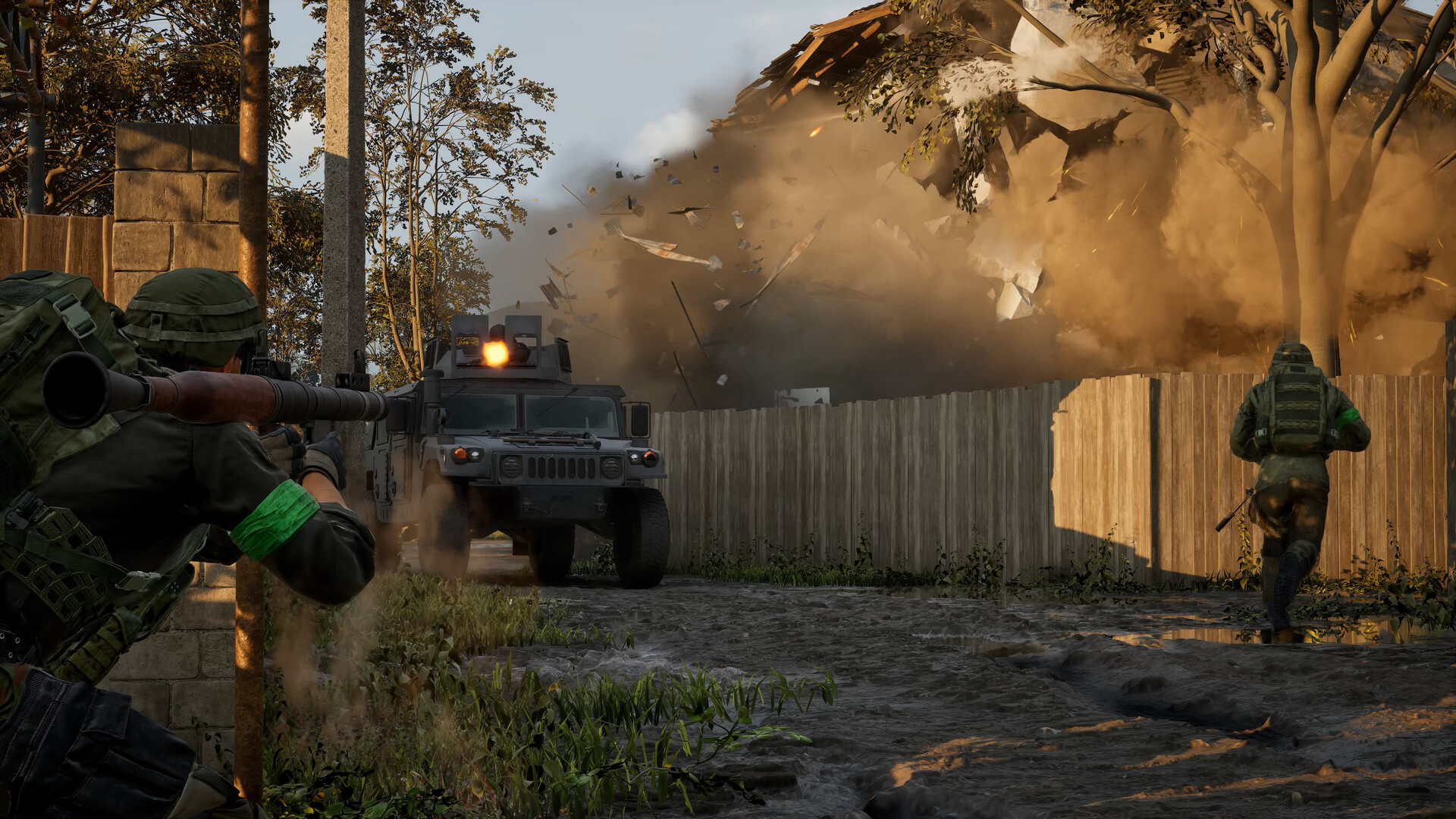
Official material groups loadout purchases into a handful of categories, and the split matters because not all of them are decisions you make alone. Players start with $10,000 and earn more through combat, objectives, revives, transport, and other team actions, with cash buying weapons, equipment, utility, and vehicles. Weapons and gear are personal — you buy them for your own life and lose only your own money if you die badly. Vehicles are a different animal entirely, since a tank, helicopter, or armored transport is expensive enough that losing it hits harder, and it typically only pays off when a squad is actually using it together rather than one player joyriding into the Control Zone alone.
Since 9 September 2026 BULKHEAD has published prices for fourteen items in the Season 1 changelog — they are in the next section. Anything not on that list still comes only from the in-game vendor. The planned meta-layer around that spend — Black Market, Vault — is covered in the metagame and Black Market overview; note that it describes announced systems, not ones you can use today.
The honest cost of getting this wrong is straightforward: blow most of the $10,000 on one expensive kit or a vehicle in your very first life, lose it fast, and you are then playing several matches on a thin balance with no per-life top-up to bail you out. Since there is no confirmed refund or partial recovery on death, a bad first purchase is a debt you pay off match by match, not something that resets by the next spawn.
Tip
Because vehicles are confirmed to matter most as a team asset rather than a personal flex, coordinating a vehicle buy with squadmates matters more than memorising any single price — and the Season 1 list below shows which vehicles got cheaper to crew.
| Spend category | What it gives you | When it's justified |
|---|---|---|
| Weapons | Your primary means of dealing damage and holding the zone | Almost every life — this is the baseline purchase |
| Gear / armor | Survivability in direct fights inside the Control Zone | When you expect to be in close contact rather than support work |
| Utility | Revive tools, transport support, objective-play items | When your balance is thin and you want cash-earning actions over kills |
| Vehicles | Mobility, firepower, or a fortified forward position | Team decision, not solo — the payoff depends on a squad actually crewing it |
Season 1 Prices: What Changed for the Buy Order
Updated 13 September 2026. The Pre-Load Live & Season 1 Changelog is the first official price list, and it changes the buy order in two places: cheap utility is no longer cheap, and the transport that a fresh squad actually needs got cheaper.
| Item | Price type (Vendor = per life; track = one-time unlock) | Beta price | Season 1 price | Direction |
|---|---|---|---|---|
| Forward Operating Base | Vendor | $2,500 | $7,500 | Up ×3 |
| Large Hammer | Vendor | $1,600 | $2,400 | Up |
| Artillery Tank | Career | $400,000 | $500,000 | Up (also moved to Career 90) |
| 6-10x MRAD scope | Recon | $25,000 | $40,000 | Up |
| 6-10x MOA scope | Recon | $30,000 | $45,000 | Up |
| Medium Hammer | Support | $10,000 | $25,000 | Up |
| Large Hammer | Support | $25,000 | $75,000 | Up ×3 |
| Small armoured supply crate | Pilot | $5,000 | $10,000 | Up |
| Little Bird with miniguns | Pilot | $25,000 | $50,000 | Up |
| Z20 Lakota | Pilot | $50,000 | $35,000 | Down |
| URAL | Driver | $50,000 | $35,000 | Down |
| Dune Buggy | Driver | $35,000 | $25,000 | Down |
| Kodiak Flatbed | Driver | $15,000 | $35,000 | Up (also moved from Driver 2 to Driver 10) |
| Music Tape H | Driver | $5,000 | $2,500 | Down (moved from Pilot 28 to Driver 23) |
For a first-life buy order the practical reading is: the Forward Operating Base at $7,500 is a per-life vendor price and three quarters of the starting wallet, so it is a squad decision, not a solo one. The Hammer numbers are a different kind of price — one-time track costs to open the item after its level (Medium $25,000, Large $75,000 at Support 8) — while the Large Hammer’s per-life vendor price is $2,400, so a Hammer is expensive to open and cheap to field. The URAL ($35,000, Driver 3) and Dune Buggy ($25,000, Driver 8) figures are also one-time track prices, now lower than in the beta; what a vehicle costs per life is on the vendor screen, not in the changelog. The supply-crate purchase curve was “rescaled from 25 to 250 down to 1 to 200,” and crate items sold under $75 now pay 1 XP instead of 25, so flipping crates is no longer a shortcut to either cash or levels. Level requirements moved too — the vehicles guide has the Driver track, and the XP curve breakdown has the new level costs.
2 October Hotfix: IR Rangefinders Pulled From the Vendor
BULKHEAD’s balance hotfix of 2 October 2026 makes two changes that touch a buy order:
- IR Rangefinders are disabled in the vendor until Season 02, and when they come back they will require batteries to use. The studio says it agrees with players that they were too overpowered. The post’s title calls them IR Goggles; the text says IR Rangefinders. The change rolled out as servers restarted over the following 12 hours, with no client download.
- The CIWS now destroys the Havoc in about 6 seconds instead of 12 — BULKHEAD says the previous patch overcorrected it.
For a buy order the first point is the one that matters: a loadout planned around an IR Rangefinder cannot be bought until Season 02, which BULKHEAD has dated to 15 October 2026. The post does not say what a Season 02 battery costs or how many uses it gives.
Account Level Boost
Your overall WARDOG (Career) level raised from where it is to the number you pick — the Season…
Earning Back What You Spend
Cash comes back from team actions in the Control Zone — reviving squadmates, transporting friendlies, holding the objective — not only kills, and the moving Hot Zone pays double. A cheap loadout played toward the zone is likely to earn back its cost faster than an expensive kit played cautiously from the edges; every earning route is covered in the WARDOGS money guide.
Common Misconceptions About WARDOGS Starting Cash
“You get $10,000 every time you spawn”
This is the single most repeated wrong read on the system, and it comes from confusing WARDOGS with other games that do refill cash on respawn. The detail almost everyone gets wrong is that money does not refill when you die — you start your account with $10,000 once, and Team17’s own page is explicit that cash persists from match-to-match, meaning you are spending from a running balance, not a per-life allowance.
“The most expensive loadout is always the correct buy”
Expensive gear is not inherently the smart play in a system where losing it costs you a real chunk of a balance that does not regenerate. A loadout that gets you actively contributing to zone control — even a cheaper one — earns cash back faster than a costly kit that dies once and sits you out of good purchases for several matches.
“Kills are the main way to earn money back”
Kills contribute, but the developer’s own framing puts revives, transport, and objective control in the same sentence as combat. WARDOGS revolves around large objective zones, combined-arms warfare, and rewarding players for helping their team, whether that means capturing territory, reviving allies, transporting troops, building a forward base, or buying an artillery tank. Playing purely for kills while ignoring the zone is likely to earn back cash slower than playing for the objective.
Our Take: Is Spending Big Early Worth It?
Our Take
Play cheap and stay near the zone before you gamble the whole $10,000 on one loadout.
The math of a one-time, persistent balance with no per-life refill favors patience over a flashy first buy. WARDOGS has been in Early Access since 10 September 2026; the Season 1 changelog gives two per-life prices (FOB $7,500, Large Hammer $2,400) and a dozen one-time track prices, the 2 October hotfix took IR Rangefinders off the vendor until Season 02, and every other per-life price is on the vendor screen — so an exact “best starting loadout” is something you price in your own client, not something a guide can hand you. What’s confirmed is the shape of the incentive: cash rewards team actions and zone presence, so a modest kit played toward the objective is the safer way to build a balance before committing to anything expensive, vehicles especially.
Sources and Confidence
WARDOGS is in early access, so this article leans on what Team17 has published rather than on numbers pulled from a build that is still changing.
| Claim | Where it comes from | Status |
|---|---|---|
| Every player starts their journey with $10,000; cash persists from match to match; each life you buy a loadout | WARDOGS on Steam (store description) | Official listing |
| Loadouts are bought each life from weapons, equipment and vehicles | Team17 official game page | Official listing |
| Early access scope, editions and platforms | WARDOGS on Steam | Official listing |
| Further weapon categories and vehicle types are planned after early access | Team17 official game page | Official listing |
| IR Rangefinders disabled in the vendor until Season 02, then requiring batteries; CIWS destroys the Havoc in about 6 s instead of 12 | BULKHEAD, IR Goggles & CIWS Balance Hotfix, Steam, 2 Oct 2026 | Official |
| Season 1 price changes (FOB, Hammers, scopes, vehicles) | BULKHEAD, Pre-Load Live & Season 1 Changelog, Steam | Official |
| Exact per-weapon prices at any given patch | Changes between builds; read in game | In-game data |
Was this guide useful?
WARDOGS services
Cash Farming
Cash Farming
Cash farmed by hand to the amount you pick, 100,000 to 1,000,000 · Everything else earned in those matches (XP…
Wardog Level
Account Level Boost
Your overall WARDOG (Career) level raised from where it is to the number you pick — the Season 1 table publishes levels…