On this page
WARDOGS is Bulkhead and Team17’s 100-player shooter, in Steam Early Access since 10 September 2026, built around a single idea: there are three teams fighting for one zone, not two, and you buy your role from scratch before every life instead of picking a class. That one change breaks most of the instincts you bring from other shooters, and this guide covers exactly how the Control Zone, the loadout economy and the sandbox systems fit together as of Patch 0.11 (14 September 2026).
TL;DR
- 100 players split into three teams fight over one randomized 2x2km Control Zone inside a much larger map
- There are no classes: the gear you buy each life determines whether you’re a medic, pilot or builder
- Every fight between two of the three teams is a free window for the third, so two-sided shooter habits get you killed
- You start with $10,000 once; cash persists between matches. Inside the Control Zone a smaller Hot Zone pays double cash (Steam page), and players in it count double toward team presence (BULKHEAD social posts) — not double score or XP
- WARDOGS has been in Steam Early Access since September 10, 2026; BULKHEAD says each season brings its own XP curve and item order, so numbers here are Season 1 values
Account Level Boost
Your overall WARDOG (Career) level raised from where it is to the number you pick — the Season…
What Is WARDOGS? Three Teams, No Classes, One Zone
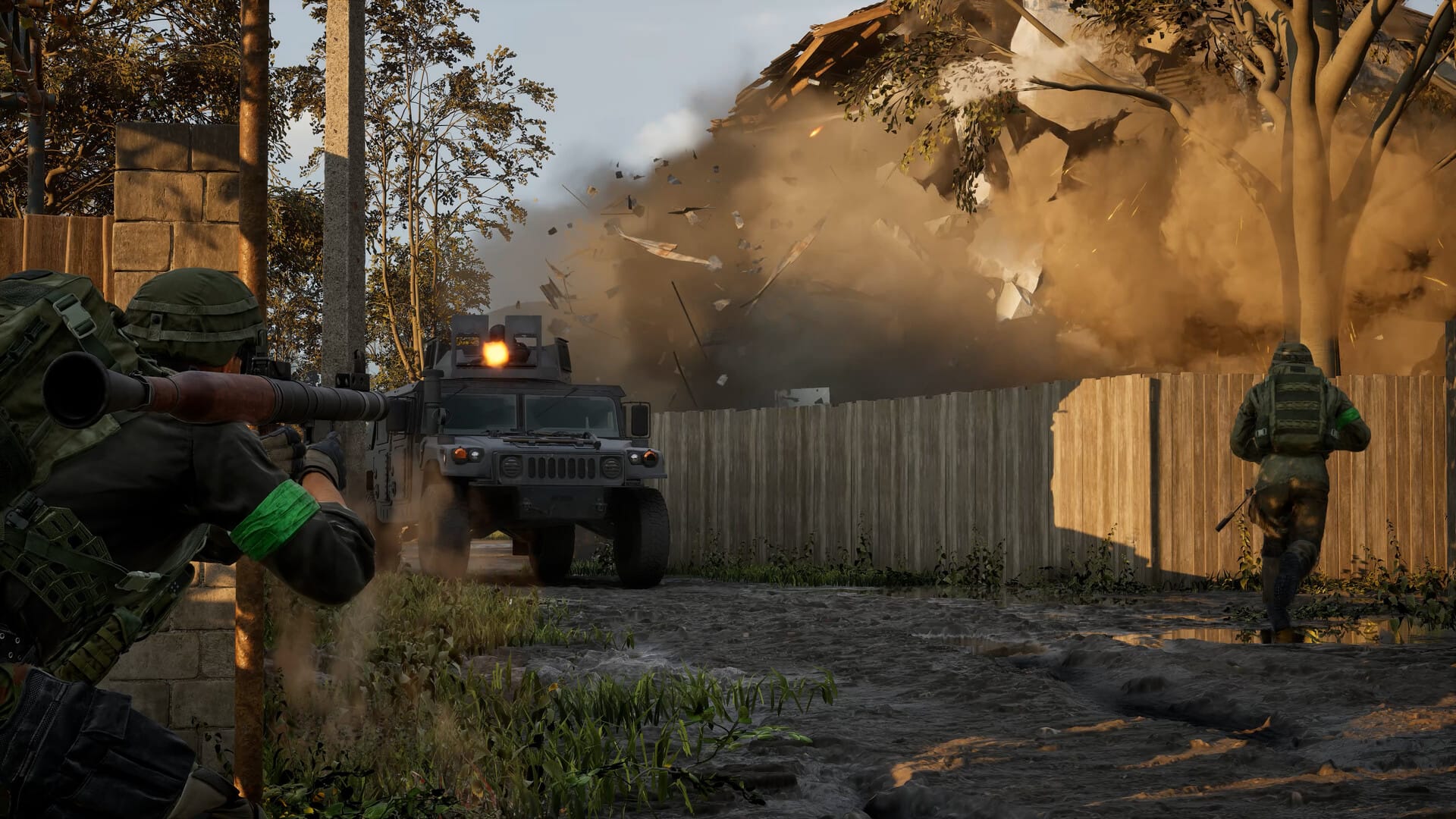
WARDOGS is a large-scale tactical shooter where one hundred players split across three teams fight over the control zone, set in the derelict industrial mountains of Eastern Europe on a destructible battlefield where teamwork pays and cash is king. There’s no faction you pick and stick with for a class kit, and no permanent two-sided rivalry — at the core of WARDOGS is a persistent cash system, and each life you purchase a custom loadout from a wide selection of weapons, gear, utility items, and vehicles to help your team win the match. The three-team structure is the part that actually changes how you should play: any fight you start against one enemy team is visible and vulnerable to the third, so isolated 1v1 thinking from traditional shooters works against you here.
Bulkhead has directly confirmed the three sides as LONESTAR, a Western paramilitary faction, VALKYRA, aiming to restore a Soviet-style republic, and MANTICORE, described as a Persian shadow army — these names now appear on the official Steam page and Bulkhead’s own channels.
If the grind is the only part worth skipping, WARDOGS boosting runs the same route on your own account.
How the Control Zone and Scoring System Actually Works
The game mode, inspired by King of the Hill, has three teams fight for control of a randomized 2x2km Control Zone within a much larger map, and the team with the most players inside it earns points, with the first team to reach 100 points winning the match. The full map runs 256 square kilometres, of which the Control Zone is only about 4 square kilometres — the zone is where the match gets decided, and the rest is the approach. Inside that zone sits a smaller, moving Hot Zone: it pays double cash (the Steam page’s own words), and players standing in it count double toward team presence per BULKHEAD’s social posts — two separate effects, neither of which is a score or XP multiplier. It is exactly the kind of high-value, high-risk pocket a third team can punish you for overcommitting to.
| System | How it's structured | What it changes in player behavior |
|---|---|---|
| Three-team Control Zone | 100 players, three sides, one randomized 2x2km zone per match, first to 100 points wins | You can't treat any fight as isolated — engaging one enemy team exposes you to the third |
| Hot Zone | A smaller zone inside the Control Zone: double cash, and players count double toward team presence | Encourages overextension into a spot where two other teams also want to be |
| Randomized zone location | The Control Zone's position on the 256km² map resets every match | Kills map memorization; positioning has to be read fresh, not learned once |
| Cash-funded loadouts | Every life starts from your account balance, not a fixed kit | A death is a financial decision, not just a respawn timer |
Buying Your Loadout: Why Your Role Is a Receipt, Not a Menu Choice
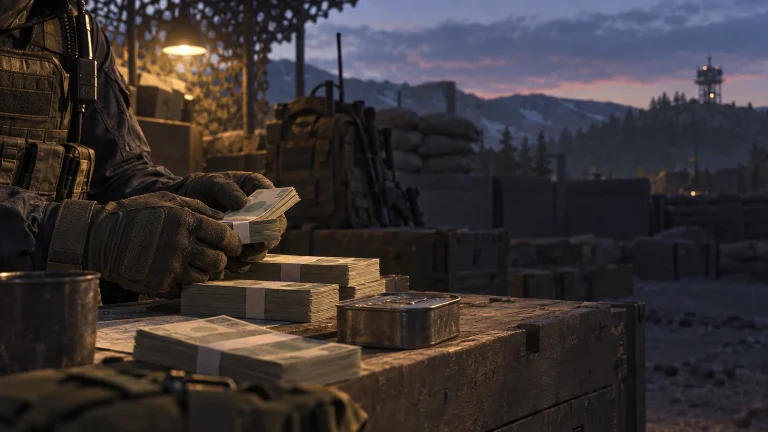
Every player starts their journey with $10,000, and that balance carries between lives, growing or shrinking based on what you spend and how much cash your teamplay pulls in. WARDOGS doesn’t use a traditional class system; instead, a player’s battlefield role emerges from the equipment they choose to buy. That has a direct consequence worth planning around: your team’s composition is never chosen, it’s assembled by accident from a hundred separate purchase decisions, so it’s worth actually checking who’s carrying what before you drop your own cash on a role nobody else is covering.
You Can Combine Roles in One Life
Nothing locks you to a single purchase category for the whole match. If you want to play medic and builder in the same life, buying enough carry capacity lets you do both at once, which is closer to how a real squad splits work than a fixed class slot.
Team Play Pays for Itself
Every teamplay action in the Control Zone rewards cash, from reviving squadmates, transporting friendlies to the zone, or controlling the objective. That’s the loop that funds your next purchase, so playing selfishly tends to leave you with less to spend on your next life, not more.
Progression Sits On Top of the Purchase System
Progression runs alongside the cash economy: an account-wide Career level and role tracks whose XP comes from what you buy and do. BULKHEAD’s February 2026 Q&A put the count at six tracks, and the Season 1 changelog names five of them — Medic, Support, Driver, Pilot and Recon — with unlock levels per item; the sixth is called Assault in community data. The role tracks guide has the detail.
Tip
Before you spend your balance each life, glance at what your teammates near you are already carrying. Team composition in WARDOGS forms itself from a hundred individual purchases, so the fastest way to fill a gap is to notice it before you buy, not after you spawn into a fight nobody’s healing.
| You buy... | You effectively become | What you're contributing |
|---|---|---|
| Medical gear and a bigger carry loadout | Medic | Reviving squadmates, which is one of the actions that pays cash back into your balance |
| A helicopter or transport vehicle | Pilot | Moving your team across the 256km² approach into the Control Zone fast |
| Construction kit and fortification gear | Builder | Forward bases and defensive structures your team can retreat to |
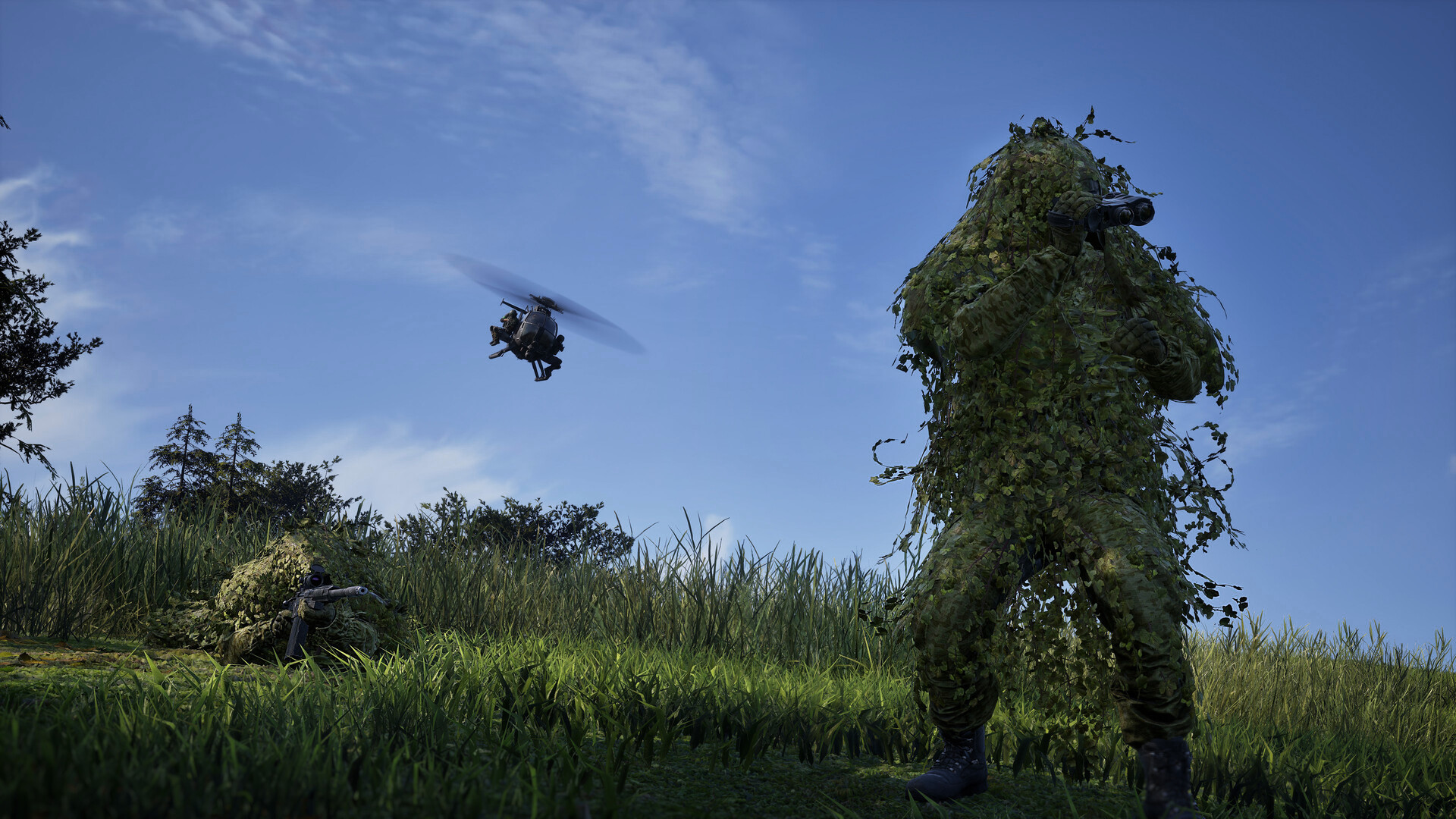
| Recon tools like binoculars or thermal optics | Scout | Spotting, since the game has no automatic enemy markers on the HUD |
The WARDOGS Sandbox: Destruction, Forward Bases and Bought Vehicles
The battlefield itself is meant to be reshaped during a match, not just fought over. Structures are destructible and players can build their own fortifications, which combined with a zone that moves every match means terrain advantage is something you make rather than something you memorize. Vehicles work the same way as everything else in WARDOGS: helicopters, tanks and artillery are confirmed, bought with the same cash as a rifle, so a vehicle is not a pickup you find on the map but a decision to spend a life’s entire budget on one thing. That single choice can carry an entire squad forward or leave you with nothing if the vehicle gets destroyed before it pays for itself.
| Vehicle or system | Status | What it's for |
|---|---|---|
| Helicopters | Confirmed for launch | Fast transport across the map's approach into the Control Zone |
| Tanks and artillery | Confirmed for launch | Direct fire support and structure destruction |
| Forward operating bases | Confirmed for launch | Player-built fortified positions away from spawn |
| Fighter jets | Planned as a post-launch addition | Not in the game at early access launch |
Step-by-Step: How a Single WARDOGS Life Plays Out
Follow this sequence to get it done fast.
-
1
Check your account balance
your cash carries over from teamplay actions in previous lives, so you're never starting completely fresh after the opening spawn.
-
2
Scan your team's current composition
look at what roles nearby teammates already bought so your purchase fills a real gap instead of duplicating one.
-
3
Buy your loadout
weapons, gear, utility items or a vehicle, all pulled from the same cash pool, which is why a helicopter purchase means skipping most other gear that life.
-
4
Move through the approach
the Control Zone sits inside a much larger map, so getting there on foot, by vehicle, or via a squad transport is its own tactical decision.
-
5
Contest the zone, and the Hot Zone if you can hold it
presence inside the Control Zone scores points toward the 100 needed to win; the Hot Zone pays double cash and counts your presence double — it does not double the score.
-
6
Earn cash through teamplay before you die
reviving, transporting friendlies or holding the objective feeds the balance you'll spend on your next life.
Cash Farming
Cash farmed by hand to the amount you pick, 100,000 to 1,000,000
Early Access Reality Check: What Shipped on September 10 and What Is Still Announced
WARDOGS entered Early Access on September 10, 2026 at $39.99, which developer Bulkhead has said is not the final price, with increases planned in stages as the game develops; the studio expects 12 to 24 months in Early Access, so every system described above is the launch-state version. What shipped on day one: the three-team Control Zone mode, the vendor and persistent cash, gold bars, the Season 1 role-track progression (see the XP curve breakdown) and community servers. What is still announced only: the metagame layer — Skill Points, Black Market, Vault, side businesses — covered in the metagame overview. The August closed beta and the pricing plan are archived in the closed beta guide and the price and roadmap guide.
Warning
Nothing here is final. Bulkhead has explicitly framed the early access period as a year or two of iteration, so weapon prices, vehicle costs, map count and even the Hot Zone’s exact size and timing can change between now and whatever the game looks like a year after launch.
Myth: Three Teams Just Means Smaller Two-Sided Fights
It doesn’t. A three-team format means every engagement you start is visible to a side that didn’t spend any resources on it, which rewards patience and positioning over the aggressive peek-and-trade habits that work in two-sided shooters.
Myth: You Pick a Class Like Medic or Pilot at Spawn
WARDOGS doesn’t use a traditional class system — a player’s battlefield role emerges from the equipment they choose to buy, so there’s no menu screen locking you into a kit; the role is just a description of what you spent your cash on that life.
Myth: Cosmetics or Progress Can Be Bought With Real Money
Bulkhead has used community Q&A sessions to state the game won’t include a battlepass or pay-to-win purchases, with cosmetics earned purely through play rather than sold directly — a claim to watch as the monetization roadmap firms up post-launch rather than treat as locked in stone this early.
Our Take: Does the Three-Team Format Actually Change the Math?
Our Take
The three-team structure is the actual innovation here, not the buy-your-loadout economy on its own.
Cash-funded loadouts have shown up in other tactical shooters before. What’s genuinely different is that every fight you pick is a gift to whichever team didn’t spend resources on it, which forces a slower, more positional style than most large-scale shooters reward. Early impressions from outlets that got hands-on time have been notably positive about the fundamentals, and the game is described as entering a confident two-year early access period. Whether the loadout economy stays balanced once thousands of players start optimizing it is the real open question, and that’s not answerable until the servers are actually live.
Was this guide useful?
WARDOGS services
Cash Farming
Cash Farming
Cash farmed by hand to the amount you pick, 100,000 to 1,000,000 · Everything else earned in those matches (XP…
Wardog Level
Account Level Boost
Your overall WARDOG (Career) level raised from where it is to the number you pick — the Season 1 table publishes levels…