On this page
Divine Orbs are the top-end trade currency in Path of Exile 2 and the yardstick players use to price everything else, but you cannot farm them directly. Divine Orbs do not drop reliably from a single source and there is no vendor recipe for them in Path of Exile 2 — the fastest way to “farm” Divine Orbs is to farm value and convert it. Mechanically, Divine Orbs are the backbone of the Path of Exile 2 economy, and they reroll the numerical values on item modifiers, serving as the standard unit of value players use to measure how good a farming strategy actually is. That makes “how do I get Divines” the wrong question. The real question is which endgame loop generates the most sellable loot per hour, then how you convert that loot into Divines on the Currency Exchange.
TL;DR
- Divine Orbs aren’t farmed directly — you farm value (rares, uniques, bulk currency) and convert it through the Currency Exchange
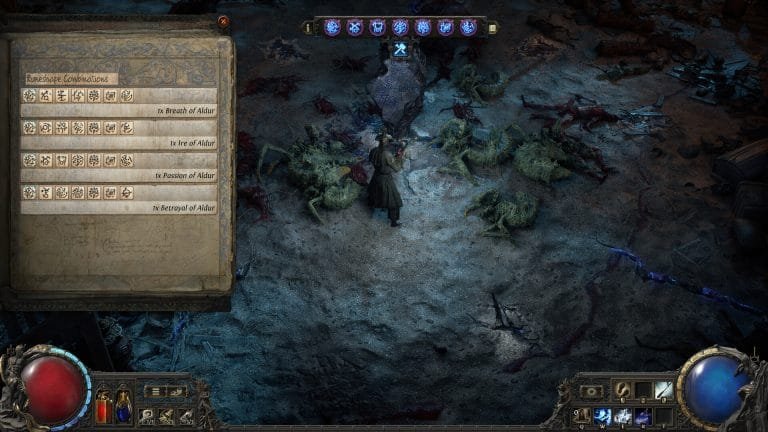
- Expedition (fused with the Runes of Aldur mechanic) and Abyss are the two standout currency engines reported in the 0.5 Return of the Ancients league
- Unlock enough of the Atlas passive tree and reach red-tier waystones before you chase a serious currency strategy
- Exchange rates swing hard through a league cycle — check current prices before committing hours to any one method
- Path of Exile 2 is still in Early Access; 1.0 has not shipped, and any 0.5.5 event details below are expected, not locked in
Updated 4 September 2026 — there is a new league and a new economy
Patch 0.5.5 launched Forbidden Rites on 4 September with a fresh economy. Runes of Aldur has not been shut down — it runs until the 1.0 full release on 11 December — so every loop below still works there and in Standard.
What you should not carry over is prices. A new league resets the market to zero, and any Divine Orb exchange rate quoted this week is a snapshot of an economy that is hours old. The mechanics on this page are stable; the numbers around them are not. New-league specifics are in our Forbidden Rites breakdown.
Where to Get Divine Orbs and Currency in Return of the Ancients
In the current 0.5 patch, the practical path is running high-tier juiced maps, stacking currency-dense mechanics like Expedition, Ritual, Breach and Delirium, selling your valuable rare and unique drops, and converting bulk lower currency into Divines on the Currency Exchange. None of that works without first clearing the campaign and opening the Atlas, which is why players still asking whether they can shortcut the leveling phase should check a campaign skip guide for context on how GGG treats that request across the series — short answer, there is still no skip, and PoE 2’s own ten-plus-hour campaign is part of the loop. Once you’re mapping, value comes from three buckets: currency-dense league mechanics run on juiced waystones, high-value uniques and rares sold on the trade site, and passive Atlas bonuses that make every subsequent map pay out more. As of mid-2026, players who jumped in early were reporting 100+ divines pulled from focused strategies, and the currency meta is still actively being figured out — treat any single number you read, including the ones below, as a snapshot rather than a permanent rate.
Warning
Exchange rates for Path of Exile 2 currency swing hard within a single league. One dated check pegged one Divine Orb at roughly 100–130 Exalted Orbs in hotfix 0.5.2 (June 12, 2026), while a separate report a few weeks later described severe inflation, with players needing nearly 700 Exalted Orbs to redeem one Divine Orb. Whichever farming method you pick, check the live Currency Exchange rate before assuming an older guide’s numbers still hold.
PoE 2 Atlas Progression: What to Unlock Before You Farm Seriously
The Atlas is Path of Exile 2’s infinite endgame map system, and in 0.5 it was rebuilt from the ground up. You no longer run fixed levels — you run Waystones that open randomized zones, and the Atlas passive tree is a separate tree that buffs those zones with more loot, more monsters, and more of the specific mechanics you want to farm. Structurally, Waystones can carry up to six modifiers while Precursor Tablets carry up to four, and stacking both is how you juice a map before running a currency mechanic inside it. Precursor Towers sit on the edges and corners of the Precursor Fortress and hand out +4 Atlas points each as mini-boss maps, which makes them worth prioritizing early even if you’re not chasing the pinnacle yet.
Sources differ slightly on the exact total — somewhere north of 300 Atlas passive points depending on how you count them — but the practical point is that 0.5 lets you fully unlock every Atlas point over time, and you cannot respec the tree afterward beyond the big notables, so pathing matters far less than it used to since you eventually own the whole board. The pinnacle sequence runs through the Precursor Fortress: the Arbiter of Ash is now just the gateway, and clearing him opens the Origin Tower and the real pinnacle, the Arbiter of Divinity. Each Divinity kill raises five stone pillars, and clicking one zaps an entire Atlas region and banks every point in it at once, so five kills bank the full tree, and a pinnacle auto-complete clears a region’s maps except its Precursor Towers, which you still need to run by hand for the last points. For the deeper mechanics of Runes of Aldur and the full Atlas rework, our Return of the Ancients endgame guide covers the runeforging side of this system in more depth. Realistically, budget for it: revealing every node and completing a first T16 Waystone typically takes 8 – 15 hours for an experienced player with a functional build, while reaching and farming the Arbiter of Divinity consistently runs 20 – 40+ hours depending on build and currency invested. The more useful early milestone is reaching T15 Waystone self-sustain, roughly 2 – 3 hours of efficient mapping once you’re in red maps, at which point your farm compounds and each map funds the next one plus gear upgrades.
Where the grind outlasts the interest, Path of Exile 2 boosting picks it up from wherever the account already stands.
Step-by-Step: Building a Repeatable Currency Farming Loop
Follow this sequence to get it done fast.
-
1
Clear the campaign and open the Atlas
there's no way around this in Early Access, so treat it as the entry fee before any farming plan matters.
-
2
Path toward Precursor Towers first
they reveal Atlas regions and hand out flat points, giving you the fastest early return before you specialize.
-
3
Pick one currency-dense mechanic to specialize around
Expedition, Abyss, or Ritual, rather than splitting Atlas points across all of them.
-
4
Juice waystones and tablets toward that mechanic
stack modifiers so the mechanic appears more often and scales harder per map.
-
5
Sell everything through the Currency Exchange rather than
convert bulk lower currency and rare/unique drops into Divines regularly instead of waiting for a single big drop.
-
6
Reassess prices weekly
the exchange rate between Exalted and Divine Orbs moves through the league, so a method that paid well in week one can flatten out by week six.
Best PoE 2 Currency Farming Methods Compared
On raw payout, a geared character running Abyss can clear hundreds of Divine Orbs across a couple of days, while raw Expedition pulls closer to a hundred with no extra juicing on top, though the difference between the two is gear and patience rather than payout, since Abyss pays more raw currency but its high-end route wants a build that survives six-modifier tier 15 maps. Community sentiment currently leans toward Abyss as the more forgiving pick: after the 0.5.1 monster nerf it isn’t build-gated the way Delirium is, it’s cheap to juice with white Abyss tablets and a focused Atlas cluster, and almost everything it drops converts to Divine on the exchange.
Tip
Don’t commit heavy Atlas investment to Abyss until your build can comfortably clear six-modifier T15 maps. Run it lighter on lower tiers first, bank Precursor Fortress points along the way, and only juice hard once your survivability is confirmed.
| Method | Speed | Effort / Gear Needed | Best For |
|---|---|---|---|
| Expedition (Runes of Aldur) | Fast | Low – Medium | League starters wanting early currency without heavy investment |
| Abyss | Fast to very fast when geared | Medium – High for the top end | Builds that can safely clear T15 six-mod maps |
| Ritual | Medium | Low | Deterministic unique and crafting-material farming |
| Vaal Temple / Fate of the Vaal | Medium | Medium | Gear quality and Smithy rarity bonuses |
| Off-Atlas value selling | Slow but steady | Low | Any build, any point in the league |
Currency Rewards and What They Unlock
Divine Orbs Reroll Your Gear’s Ceiling
Since Divine Orbs reroll numerical modifier values rather than adding new mods, they’re spent late in the crafting process to push an already-good item toward its maximum roll, which is why they hold value regardless of build archetype.
Fracturing Orbs and Other Secondary Currency
Not every valuable drop is a Divine Orb. An Atlas node called Hidden Scars lets Cleansed Monsters drop Fracturing Orbs, a high-value currency that consistently sells for around 2 to 3 Divines each on the trade market, and picking it up adds another steady income source to whatever main mechanic you’re running.
Atlas Passives That Compound Your Farm
Points spent on rarity, pack size, and mechanic-specific nodes don’t pay off in a single map — they compound. Each juiced map funds better tablets for the next one, which is the same principle behind the rotating Voyages system in Path of Exile 1, where placement and planning ahead of a run matters more than any single lucky drop.
What Patch 0.5.5 Changes for Currency Farming
Four changes in 0.5.5 touch the loops above. None of them require playing the new league — they apply in Standard as well.
Expedition is core content now
Farrow, Dannig and Expedition moved into the Atlas as a core mechanic, and Expeditions appear from Act 4 onwards. The Verisium Anvil unlocks by completing The Runeseeker quest in Act 4 outside the league, and Expedition Uniques can now go into the Unique Item Stash Tab everywhere.
For a currency loop this matters because Expedition is a deterministic sink-and-source: you choose what to blow up and what to buy back. Stacking Expedition Tablets on a Map scales the site — one adds an Expedition, two add a Verisium Remnant plus 35% increased density, three add a second Expedition, four add another Remnant and another 35%. Density here means more chests, monster flags and Remnants inside the site.
The catch to know before you plan around it: Expedition Tablets drop in Standard and Forbidden Rites, but not in Runes of Aldur.
The Trial of Chaos now pays only currency and Soul Cores
Corrupted items were removed from Trial of Chaos rewards entirely — runs now return Currency and Soul Cores and nothing else. That makes the Trial a cleaner comparison against the loops in the table above, because its output no longer includes a lottery ticket you have to price yourself.
Two changes also lower its cost. You can now leave a run at any point and resume from the same room, so a Trial no longer demands an uninterrupted block of time. And each room ends in a reward chest, so a death costs the remainder rather than the whole run. Finishing an Inscribed Ultimatum with 10 Trials lets you continue immediately without another Ultimatum, twice per Ultimatum, carrying modifiers and reward quality forward, with an optional double-or-nothing wager.
Abyss became farmable by choice
Large Abyssal Ravines can now appear across the Atlas, and Maps found on those ravines are guaranteed to contain Abysses. A guaranteed mechanic on a known part of the Atlas is exactly what a repeatable loop needs — no rerolling for a spawn.
Soul Core supply and demand both moved
Seventeen new Soul Cores were added — thirteen Jiquani’s and four Atziri’s — and several existing ones now carry a Limit of 1 with raised numbers in exchange. A limit turns a stackable commodity into a single-slot item, which changes what it is worth to a buyer. If you were farming duplicates to sell, re-check that list before committing a night to it.
Common Misconceptions About PoE 2 Currency Farming
Myth: You Can Farm Divine Orbs Directly
There’s no dedicated Divine Orb farming spot or boss with a guaranteed drop. Every real strategy is actually a value-farming strategy that ends with a conversion step on the Currency Exchange.
Myth: More Atlas Points Always Means More Currency
Since 0.5 lets you eventually unlock the entire Atlas tree, chasing points for their own sake is less urgent than sequencing them — Precursor Towers and mechanic-specific nodes first, generic rarity and pack-size nodes later, once your farm is already running.
Myth: Early-League Numbers Are What You’ll Actually See
Big reported hauls from the first days of a league are not the median outcome. Reports of hundreds of Divine Orbs in a couple of days of dedicated farming circulated early in the league — treat the extreme numbers as outliers even though the underlying drop density is real. Prices also settle fast; the same conquestcapped-style tracking noted raw currency numbers were richest in the opening weeks, before prices settled and the meta caught up.
Our Take: Is Grinding for Divines Worth It Right Now
Our Take
Worth it if you pick one mechanic and stick with it — not worth it if you’re chasing whatever posted the biggest number on day one.
The honest read on 0.5 Return of the Ancients is that the economy rewards specialization over hopping between whatever mechanic is trending. Expedition and Abyss both look strong months into the league, and that consistency matters more than either method’s peak numbers from launch week. The gap between them is really a gap in what your build can survive, not which one is secretly better.
The bigger caveat is the one the brief keeps circling back to: Path of Exile 2 is still Early Access. GGG has targeted 1.0 for late 2026, likely shortly after November’s ExileCon, though an exact date has not been confirmed, and the game will transition to free-to-play at that point; Return of the Ancients is widely treated as the last major Early Access league before that. A follow-up balance-focused event, sometimes referenced as patch 0.5.5, has reportedly been signaled for a limited run later in the league cycle — treat that as expected rather than confirmed, and check GGG’s own channels before planning a farming strategy around it. Any currency loop you build now should assume the economy resets again whenever the next league lands, likely in the October to December window based on how past 0.5 cycles have run.
Was this guide useful?
Path of Exile 2 services
Standard · Leveling
Level Boost 60-85
Any stretch between level 60 and 85, priced by the levels climbed · Run on your Standard character
Challenge League · Bosses & Driving
Interludes 1-3 Completion
All three Interludes cleared in party, typically inside half an hour · Run in the current Challenge League, on your…

Challenge League · Bosses & Driving
Any Act Boss Kill — Your Choice
Name any boss from acts 1 through 6 and we kill it on your account · Run in the current Challenge League, on your…