On this page
An Ascendancy in Path of Exile 2 is a secondary class you unlock mid-campaign that layers a small, dedicated passive tree on top of your base class. Ascendancies are powerful, build-defining subclasses that grant you an additional passive tree in which you can spend Ascendancy Passives, and your build is defined by the combination of your Character Class and Ascendancy Class. Each of the eight base classes offers a small menu of ascendancy options, and each Class has a choice of 3 Ascendancies in the current build of the game. This is the decision players search for the most because it locks in your damage type, your defensive layer, and often the gear you’ll be chasing for the next fifty hours.
TL;DR
- You unlock your ascendancy through Trial of the Sekhemas or Trial of Chaos, starting in Act 2
- Full ascension is 8 points, handed out in four pairs across increasingly hard trial tiers
- Your base class is permanent for that character, but you can respec into a different ascendancy of the same class, a feature that has existed since a patch well before Return of the Ancients
- Switching ascendancy costs real gold and a redone trial, not a single click
- Which ascendancy is “best” depends on your gear, playstyle and the current patch, not a fixed ranking
How You Actually Get Ascendancy Points in Path of Exile 2
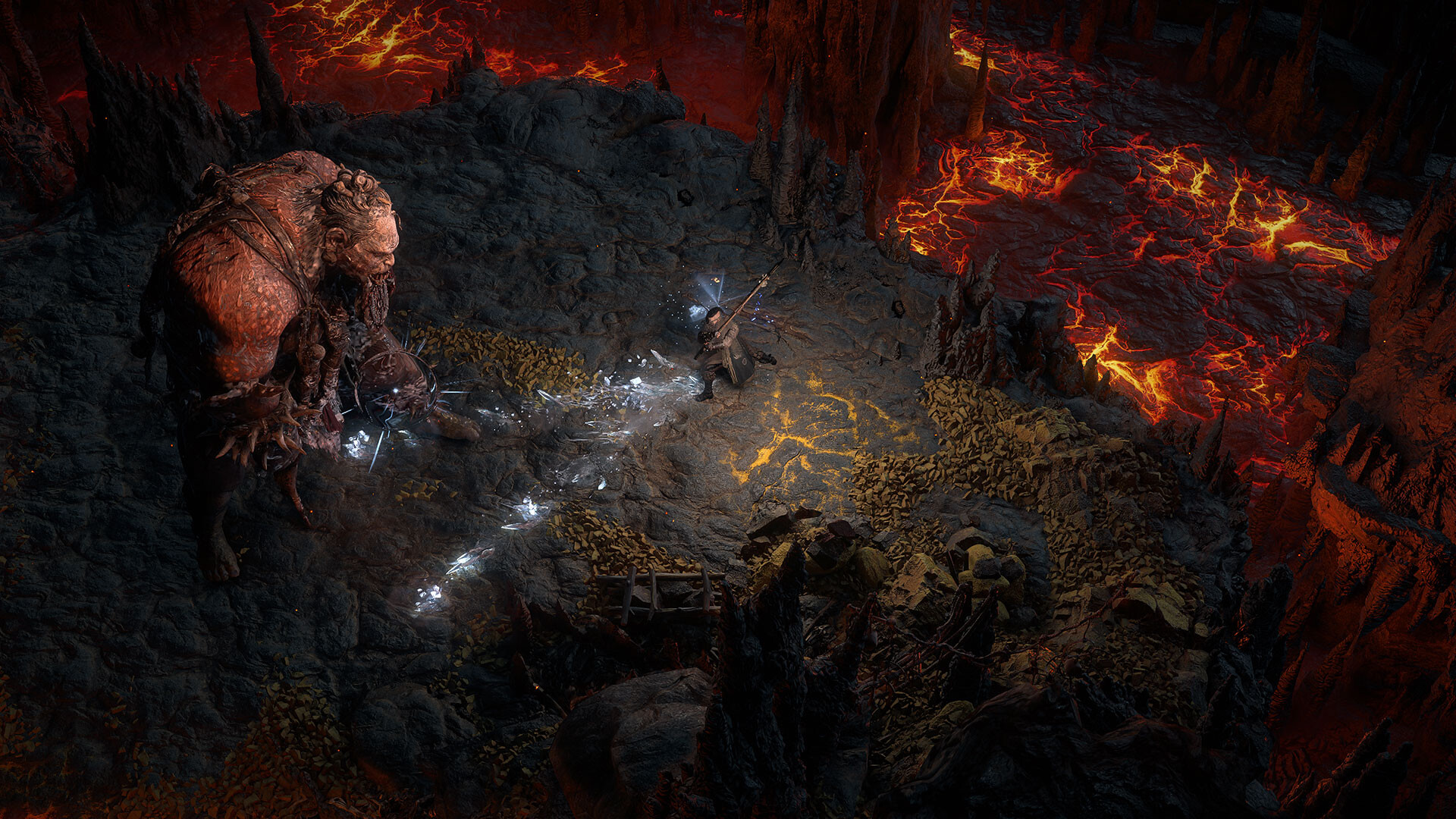
Points come from two campaign-and-endgame trials, not from levelling or the main passive tree. A character can earn four pairs for a maximum of eight Ascendancy Points, and each pair comes from a trial tier that is harder than the previous one, with two available routes: the Trial of the Sekhemas and the Trial of Chaos. You are not locked into one: you may mix them instead of committing to one trial for the entire character, and either trial alone can grant all 8 points. The two trials feel completely different to play. Trial of the Sekhemas is a survival gauntlet built around an Honour resource, based on PoE1’s Forbidden Sanctum, while Trial of Chaos is a wave-based Ultimatum arena where you accept escalating afflictions. If you’re planning your route through the early game alongside the rest of the story, the same instinct that makes people search for a campaign skip is worth keeping in mind here, since your first ascension is tied directly to Act 2 and 3 progress, not something you can rush past.
Not everyone has the evenings for this — Path of Exile 2 boosting covers the same ground with someone else on the keys.
Step-by-Step: Unlocking Your First Ascendancy Points
Follow this sequence to get it done fast.
-
1
Reach the Act 2 trial quest
pick up the questline that leads to your first Trial of the Sekhemas entrance, usually through Balbala's quest chain.
-
2
Clear the first floor and fight the boss
a single completed floor is enough to unlock your Ascendancy Class and grant your first 2 points.
-
3
Pick your ascendancy at the Altar
once you complete a qualifying trial you unlock the Altar of Ascendancy, where you pick your Ascendancy class from the three options tied to your base class.
-
4
Run the Act 3 Trial of Chaos
this awards your third and fourth points and locks in the first half of your ascendancy tree.
-
5
Push into endgame trial tiers
use a Djinn Barya Level 60+ to unlock points 5 and 6 in the Trial of Sekhemas, then unlock points 7 and 8 in a Level 75+ version of either trial.
Best Trial Method for Farming Ascendancy Points
Neither trial is objectively faster once you know your build’s strengths, but they reward very different playstyles, which is why the “best” method question doesn’t have one answer.
Tip
Both trials grant the same points, so run whichever fits your build: the Trial of the Sekhemas favors ranged and fast builds, while the Trial of Chaos is usually more forgiving for tanky melee builds.
| Method | Speed | Effort | Best For |
|---|---|---|---|
| Trial of the Sekhemas | Fast if you avoid Honour loss | Punishes bad positioning | Ranged and fast, evasive builds |
| Trial of Chaos | Steady, wave-paced | Punishes squishy builds | Tanky melee and minion builds |
| Mixing both trials | Depends on keys available | Requires tracking point counts | Players who found spare keys of either type |
| High-tier endgame runs (Barya/Ultimatum) | Slower, gear-gated | High, needs Honour resistance or survivability | Finishing points 7 – 8 post-campaign |
Ascendancy by Class: What Each One Actually Plays Like
Every base class gets three ascendancy doors, and they tend to split cleanly between an offensive gimmick, a defensive or utility variant, and something stranger that rewards a specific playstyle. The two newest additions, added with the Return of the Ancients update, sit alongside the existing rosters rather than replacing anything.
Warrior: forge, war-cry or colossus
Warrior’s ascendancies split around melee power scaling in different directions: one leans into weapon crafting and fire-infused strikes tied to Kitava, another builds around totems and war-cry aggression, and a third pushes raw physical slam damage and tankiness. All three are self-found friendly early, since they scale off skills and passives rather than a single rare item.
Sorceress: elemental storms and time control
One Sorceress ascendancy is built around elemental storm casting, with lightning scaling and raw spell damage, while another leans on time-manipulation utility that trades some raw damage for control and safety. Sorceress ascendancies generally want spell-focused gear rather than a specific unique, so they’re workable with rare items you find yourself, though top-end scaling does want better wands and staves.
Monk: fists, illusions and unarmed runes
The Monk has three ascendancy options: Invoker, Acolyte of Chayula, and the newly added Martial Artist. The Martial Artist summons illusory bells, creates combat clones, and excels at unarmed fighting powered by runes socketed into the body, which makes it the most gear-dependent of the three since it wants specific rune sockets and gloves to come online. The other two Monk ascendancies lean more on skill combos and are friendlier to build with whatever weapon you’re already carrying.
Ranger and Huntress: projectiles, poison and beast companions
Ranger splits between a projectile-and-mobility ascendancy and a flask-and-poison ascendancy, with players able to change from a Pathfinder to a Deadeye if they respec, since both belong to the same base class. Huntress runs a ritual-focused ascendancy alongside its own separate roster, plus the new Spirit Walker. The Spirit Walker calls upon Azmerian animal spirits, infusing the power of the Stag for stampeding attacks, the Owl for enhanced projectiles, and the Bear to summon a giant companion, with a capstone power that combines all three for massive buffs. That spirit-beast kit leans on socketable idols, so it rewards a specific item type more than most other ascendancies do.
Witch, Mercenary and Druid: minions, gemcraft and the newest roster
Witch ascendancies generally split between minion-and-demon scaling and blood-based self-damage builds, both of which are workable on found gear since the payoff comes from passives rather than one rare drop. Mercenary’s kit leans on grenades and gem-socketing tech that rewards better gear the further you push it. Druid is the newest full class in the roster and its ascendancy options, including one built around nature and shapeshifting, are still the least battle-tested of the eight, so treat any strong claims about Druid ascendancy strength with more caution than the others.
What You Cannot Undo: Ascendancy Respec Rules Explained
This is the part that actually drives the search traffic, so it’s worth being blunt about it. Your base class choice, made at character creation, is permanent for that character forever — a Ranger cannot become a Huntress on the same save, full stop. You can only choose to ascend into an Ascendancy Class that is part of your base Class; as a Ranger you can switch between its own ascendancies, but you cannot become a Huntress ascendancy since that belongs to a different base class.
What used to be permanent — the specific ascendancy you picked inside that class — is no longer a life sentence. Redoing an Ascendancy Trial now allows you to respec which Ascendancy Class you have chosen at the Ascension device, but only if the trial would grant you the number of points you already have, and you must have zero points allocated in it first. In practice that means three separate costs stack up before you get a clean slate: refunding every point you’ve already spent, which costs five times more than respeccing a normal passive point; finding or re-clearing a trial tier that matches your current point count; and then re-picking at the Altar. None of that is instant, and the gold cost scales with your character level, so the earlier in a league you realize an ascendancy isn’t working, the cheaper the fix.
Warning
You must unallocate every ascendancy point before the game lets you swap — there’s no way to keep half your current tree and cherry-pick a different capstone. Budget spare gold before you commit to a full ascendancy change, and check current currency values through something like a Divine Orb farming guide if your stash is thin.
Common Misconceptions About PoE 2 Ascendancy Picks
Myth: picking wrong means starting a new character
This was true in earlier builds of the game but isn’t anymore. Ascendancy respec has existed within your base class since an earlier patch, so a bad first pick costs gold and a re-cleared trial, not your whole save.
Myth: the strongest ascendancy today will still be strongest next league
Ascendancy strength moves with every balance pass. The Return of the Ancients update alone reworked existing ascendancies and changed how core defenses like life leech and energy shield recovery function, which shifted several ascendancies up or down without touching their names or nodes at all.
Myth: every strong build needs a rare unique item to work
Some kits, like rune-socketing Monk builds or idol-stacking Huntress builds, genuinely want a specific item type to click into place. Plenty of others, particularly Warrior and Sorceress ascendancies, scale mostly off passives and skill gems and are entirely playable on rares you find yourself.
Our Take: Which Ascendancy Should You Pick?
Pick for playstyle first, tier list second, and don’t treat either choice as sacred.
Tier lists for PoE 2 ascendancies get rebuilt every patch because GGG keeps touching survivability mechanics, skill scaling and the ascendancies themselves between leagues — the Return of the Ancients update alone reworked multiple existing ascendancies while adding two brand-new ones. Any ranking you read is a snapshot of one patch’s numbers, not a permanent truth, and it’s usually built around specific criteria like early-league viability with self-found gear versus late-game bossing potential, which don’t always agree with each other.
The fear that drives most of this search — picking the “wrong” ascendancy and being stuck — is mostly outdated. The real cost isn’t permanence anymore, it’s friction: refunding points at five times the normal rate, re-clearing a trial tier, and losing some momentum on a fresh league start. That’s a real cost worth avoiding by reading class breakdowns before you ascend the first time, but it’s not the character-ending mistake it used to be. If you’re unsure, lean toward the ascendancy that matches how you already like to fight rather than whatever sits at the top of this week’s list.
Was this guide useful?
Path of Exile 2 services
Challenge League · Leveling
Level Boost 60-85
Any stretch between level 60 and 85, priced by the levels climbed · Run on your Challenge League character
Challenge League · Bosses & Driving
Interludes 1-3 Completion
All three Interludes cleared in party, typically inside half an hour · Run in the current Challenge League, on your…
Challenge League · Bosses & Driving
Any Act Boss Kill — Your Choice
Name any boss from acts 1 through 6 and we kill it on your account · Run in the current Challenge League, on your…