
On this page
The best MARVEL Tokon: Fighting Souls character to start with is whichever one has the highest Ease of Use rating on the select screen and matches a playstyle you already like, because the game is built so your first pick never locks you into a single fighter for the whole match. This guide breaks down which launch characters forgive mistakes, which demand precision, and how your first choice should actually shape who you draft next once your team expands from 2v2 to 4v4.
TL;DR
- Your first pick matters less than in a normal fighter — the roster expands mid-match and the whole team shares one health bar
- Captain America, Ms. Marvel, Iron Man, Spider-Man and Wolverine are the characters currently flagged as easiest to learn
- Storm and Danger are explicitly called out as the more advanced, technical picks
- Team building matters more than raw power — you want your second and third picks to cover gaps, not duplicate your starter’s role
- The game launched on August 6, 2026, but the competitive meta is still developing; use Ease of Use ratings as a starting point, not a permanent tier list
Why Your First Character Choice Isn't a Life Sentence
In a traditional one-on-one fighter, picking a character you’re bad at can sink an entire session. Tokon softens that pressure by design. You select four fighters for every match, though only two are active at the start — the full squad unlocks through Wall Breaks and round losses. That means a rough opening exchange with your starter isn’t a lost match, it’s the trigger that brings your next two characters into the fight.
The other reason the first pick matters less here than in something like a classic versus fighter is the shared resource pool. The team fights on one collective health total rather than separate life bars per character, and losing a round feeds directly into the comeback mechanic rather than eliminating a fighter outright — a system covered in more detail in our breakdown of why losing a round makes you stronger. Practically, that means an early mistake with an unfamiliar character costs you tempo, not the match.
The same route is available as Marvel Tokon: Fighting Souls boosting for anyone who would rather not sit the grind out twice.
Starting Characters Ranked by Difficulty to Learn
At launch, the clearest in-game signal on difficulty comes from the game’s own character select screen. When selecting a character, the EASE OF USE rating on the character select screen shows how many stars a fighter has, and the more stars a character has, the easier they are to use, making them a great choice for newcomers. Some of the most beginner-friendly characters include Captain America, Ms. Marvel, and Wolverine, while Iron Man and Spider-Man are also relatively easy to learn. On the technical end, characters such as Storm and Danger offer more advanced playstyles that may take additional time to master.
Hands-on beta coverage also provides useful detail, although balance may differ from the current live build. Ms. Marvel has good footsie tools and range, can chase down enemies when needed, has extra defensive tools with her Unique, and a surprise command throw she can use in a pinch for mixups. Iron Man flies and uses Repulsor Blasts with his Unique button, and can cancel into Free Flight mode after either move, which makes him a mobile air character good for getting into an opponent’s space. Separately, coverage of the wider cast notes that Doctor Doom, Magneto, and Loki are the kinds of characters that tend to reward technical players in Arc System Works titles — worth flagging if you’re drawn to villains but want to know what you’re signing up for.
Note
MARVEL Tōkon launched on August 6, 2026. The Ease of Use ratings above come from the live game’s character select screen, while some playstyle observations originated in beta coverage. Treat early tier lists as provisional until patches and a larger ranked sample stabilize the meta.
| Character | Role in team | Difficulty | Who it suits |
|---|---|---|---|
| Captain America | All-rounder / point character | Easy | Anyone who wants a straightforward, no-gimmicks fighter to learn the basics on |
| Ms. Marvel | Mid-range footsies, defensive Unique | Easy | Players who like spacing and want a safety net against rushdown |
| Wolverine | Rushdown / pressure | Easy | Players who want to get in close and stay aggressive |
| Iron Man | Mobile aerial zoner | Easy to medium | Players who like flight-based neutral and air combos |
| Spider-Man | Agile mixups | Easy to medium | Players comfortable with mobility over raw power |
| Storm | Elemental zoner | Advanced | Players ready to spend extra time in training mode |
| Danger | Technical mechanic-heavy | Advanced | Players coming from other Arc System Works fighters |
| Doctor Doom / Magneto / Loki | Technical, reward precise execution | Advanced (expected) | Players who enjoy a steeper learning curve for higher ceiling |

How Your First Pick Shapes the Rest of Your Team
Because the match expands from 2v2 to 4v4, the real decision isn’t “who is strongest,” it’s “what do my other three characters need to cover.” The 4v4 tag format sets the game apart, since each player picks 4 characters who dynamically swap in and out during combat, forcing you to think about synergies between all 4 rather than a single pick, and the point character in the first slot defines the dominant playstyle of the whole team. Pick an easy all-rounder like Captain America and you’ll want your second or third pick to add something he doesn’t have — range, air control, or a mixup tool — rather than another close-range brawler.
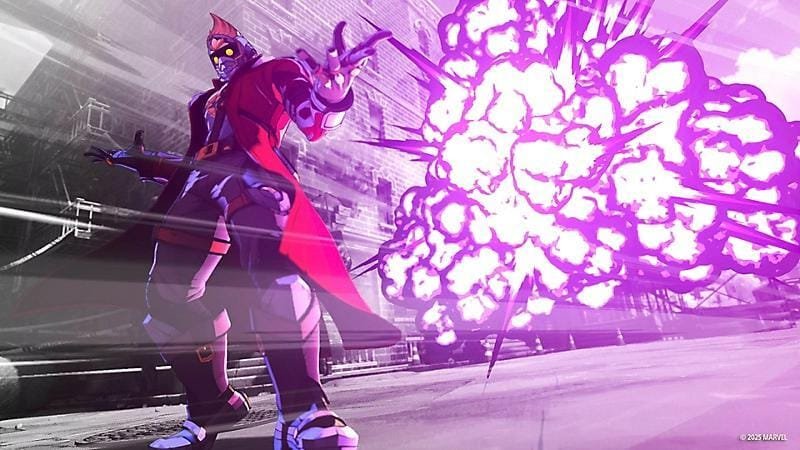
The base roster is already organized into five preset teams of four, each led by a marquee character, though you are not locked into these groups. Two of those groupings are confirmed as the Unbreakable X-Men pulling together Storm, Magik, Wolverine, and Danger, and the Amazing Guardians made up of Spider-Man, Ms. Marvel, Star-Lord, and Peni Parker. The other three confirmed team names — Fighting Avengers, Knights of Doom, and Samurai Outriders — exist, but full member lists for those weren’t broken down clearly enough here to state as fact, so don’t assume a character belongs to a given team without checking the roster yourself.
There’s a small cosmetic reward for experimenting here too. The game generates a custom team name based on your personal four-character selection, working off your point character in the first slot for the first word and the remaining three for the second word. It changes nothing mechanically, but it’s a decent way to test lineups without committing.
That last number matters for planning ahead: Arc System Works has confirmed that at least four more characters are coming as post-launch DLC, and Phoenix Cyclops has been confirmed as the first DLC character. If your starter and second pick don’t overlap in role today, a future DLC fighter is a reasonable way to fill whatever’s still missing rather than reworking your whole lineup.
| If your starter is | Gap it usually leaves | Look for a second/third pick that adds |
|---|---|---|
| An all-rounder (Captain America) | No answer to zoning or air pressure | A ranged or aerial character |
| A rushdown fighter (Wolverine) | Struggles if the opponent keeps distance | A projectile or mid-range tool user |
| A mid-range fighter (Ms. Marvel) | Can get out-aggressed at point-blank | A close-range assist to punish rushdown |
| A mobile flyer (Iron Man) | Weaker grounded neutral | A solid grounded anchor for when you land |
Step-by-Step: Your First Evening With MARVEL Tokon
Myth: An Easy Character Is a Weak Character
Ease of Use measures how forgiving the inputs and timing are, not how strong the character is in a real match. A high-star fighter like Captain America or Ms. Marvel is rated simple because the tools are direct, not because they’re capped in ceiling. Conflating the two is a common mistake carried over from other fighting games, and it doesn’t hold up the same way in a tag system where team synergy matters as much as any single character’s numbers.
Myth: You Need a “Meta” Team on Day One
There’s no ranked history, no patch data, and no tournament results for this game yet. Any claim about a definitive best team right now is a guess dressed up as analysis. What actually helps on day one is picking a starter you can execute consistently and building outward from the gaps it leaves, not chasing a tier list that will likely look different a few patches in.
Myth: Switching Characters Mid-Combo Is Mandatory Early On
The advanced assist-to-switch technique looks flashy in beta footage, but the official beginner material itself frames assists as the easier entry point before switching. Trying to force manual switches before you’re comfortable with basic chains and assists tends to cost more rounds than it wins early on.
Follow this sequence to get it done fast.
-
1
Run the tutorial battle first
the built-in Startup Battle walks you through the Light, Medium and Heavy chain inputs before you touch a real match.
-
2
Pick an Easy-rated point character
check the Ease of Use stars on the select screen and start with Captain America, Ms. Marvel, or another high-star fighter rather than the flashiest name.
-
3
Lean on assists before manual switching
new players tend to find assists easier to use than direct character switching, so get comfortable calling assists before trying assist-to-switch techniques.
-
4
Drill the universal combo route in training
practice the universal chain of Light into Medium into Heavy into Skill into a follow-up until it's consistent under pressure, before branching into character-specific routes.
-
5
Test two or three point characters in custom lineups
swap who leads your four-character team and see how the playstyle shifts before locking anything in.
-
6
Read up on the round-loss comeback system
understanding how a lost round strengthens your team changes how aggressively you should play your first matches.
Our Take: Is There Already a Best Starter?
Our Take
Pick the Easy-rated character whose playstyle you actually enjoy — the “best” starter is the one you’ll keep playing past week one.
Given how forgiving the structure is — shared health, mid-match roster expansion, comeback-oriented round losses — agonizing over a launch-day tier list is wasted effort. The gap between the easiest and hardest starters closes fast once you understand the shared systems like the Skill Gauge and assist mechanics, covered in the combat system breakdown. The bigger decision is whether your first three picks cover different roles, and that’s something you can only judge honestly after a few evenings with the roster, not from a launch-week spreadsheet that ignores your own results.
Was this guide useful?