
On this page
Status
MARVEL Tokon: Fighting Souls launched on 6 August 2026 on PS5 and PC. Written before launch; the mode and character advice below still holds, the launch-day timings do not.
Yes, more than most Arc System Works fighters — MARVEL Tokon: Fighting Souls builds several mechanics specifically to keep new players in a match instead of steamrolling them, even though the studio’s reputation for high execution ceilings still applies once you climb ranked. This guide breaks down exactly which systems work in a beginner’s favor, which ones still punish inexperience, and what to actually practice in your first week before the August 6, 2026 launch on PS5 and PC.
TL;DR
- A shared team health bar (Vital Gauge) means one bad character pick doesn’t end your match on its own
- Matches start 2v2 and expand toward 4v4, so you don’t need to learn a full team on day one
- Losing a round unlocks more teammates and grows your health pool — a built-in comeback tool, not just a skill gap
- Arc System Works still makes execution-heavy games, so long-term matches still reward frame data and combo knowledge
- Startup Battle and Training Mode are confirmed learning tools; deeper systems like ranked balance are still unproven at launch
What Beginner-Friendly Mechanics Are Confirmed in MARVEL Tokon
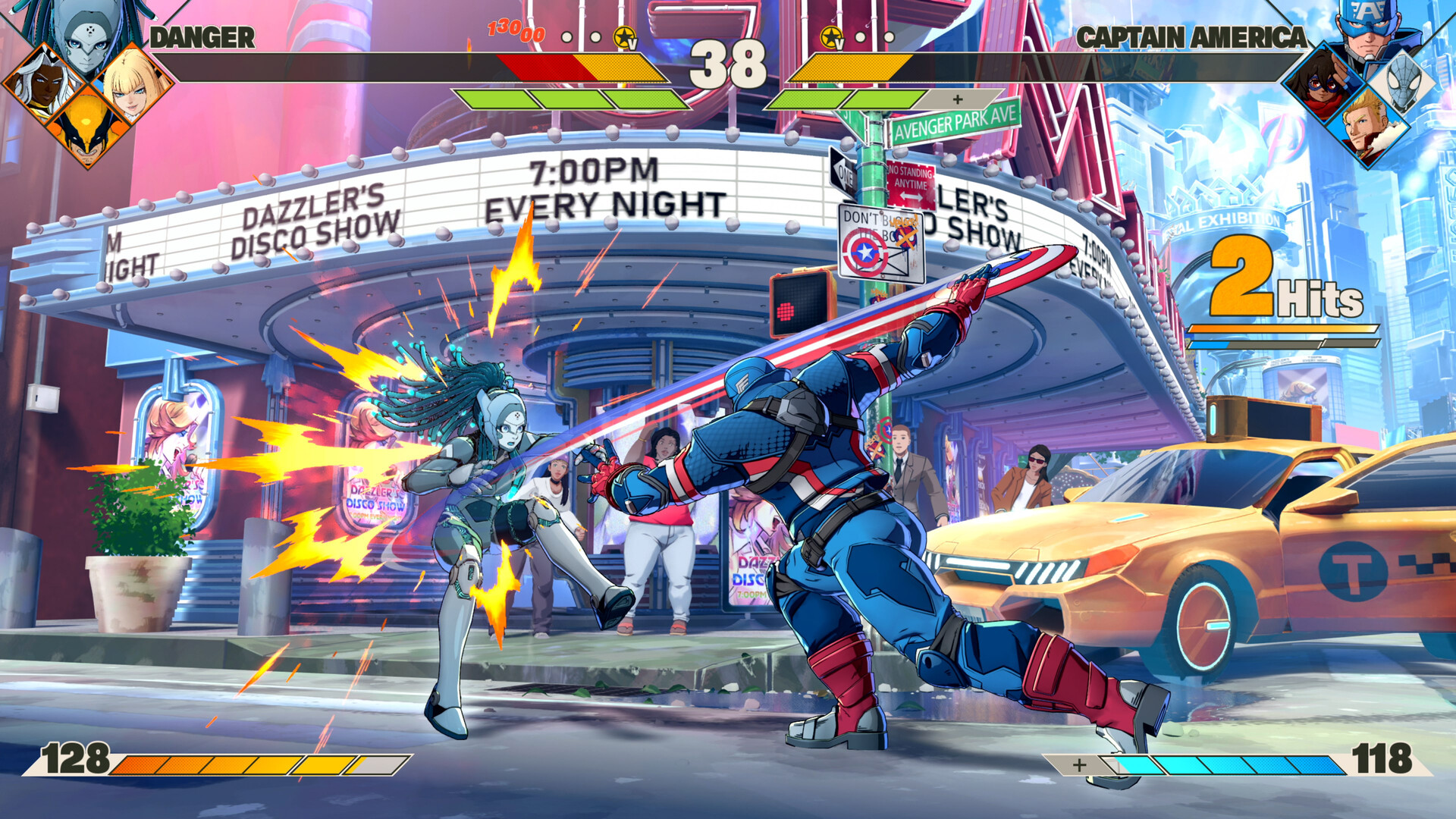
The core accessibility pitch comes from how the 4v4 format is structured. Instead of managing four independent characters and four health bars like older tag fighters, all four characters on a team share a single health bar called the Vital Gauge, and damage to any of them reduces the whole team’s health. Developers built this in on purpose: to resolve the difficulty of a 4v4 format, the developers introduced a shared health bar for the team, simplifying the experience for newcomers. That single decision removes an entire layer of tag-fighter complexity — you don’t need to track four separate health totals or worry about babying a low-health teammate on the bench.
On top of that, your entire squad isn’t available right at the round start — the match begins as a 2v2 battle with your point character and first assist slot. You only need to be comfortable with two characters to survive round one, and if you’re picking your starters carefully, the guide on which characters to start with covers exactly which of those early picks are the most forgiving.
| Mechanic | Helps a beginner | Still requires skill |
|---|---|---|
| Shared Vital Gauge | No juggling four separate health bars; one weak character doesn't sink the match | Every hit you take matters more since there's no bench to hide a character on |
| 2v2 into 4v4 expansion | You only need two characters ready at round start | Reading when to trigger Wall Breaks to unlock teammates faster still takes practice |
| Comeback teammate unlock on round loss | Losing a round doesn't just cost you — it grows your roster and health pool | Managing a bigger team under pressure is harder than managing a small one |
| Tōkon Assemble (team ultimate) | Gives a losing player a genuine one-shot comeback tool late in a set | Needs all four characters unlocked and a full Skill Gauge to use it |
| Quick Skills vs Command Inputs | Single-button Quick Skills let you play without motion inputs | Command Inputs deal more damage and build more gauge, so the ceiling favors motion-input players |
Not everyone has the evenings for this — Marvel Tokon: Fighting Souls boosting covers the same ground with someone else on the keys.
How the Comeback Mechanics Actually Close the Skill Gap
This is the part that separates Tokon from a standard tag fighter, and it’s confirmed, not speculative. Losing a round in MARVEL Tokon automatically unlocks another teammate, and as more teammates join, your team’s shared health bar increases. In practice, that means the player getting outplayed in round one is handed more tools — not fewer — heading into round two. A more mechanical breakdown of this system, including how Wall Breaks and round losses interact, is covered in the combat explainer on why losing a round makes you stronger.
The other comeback piece is the team ultimate. Tōkon Assemble is a team-up ultimate move that can only be activated once all four characters are unlocked, you’ve built up 150 Skill Gauge, and the opponent is close to losing the round. It’s designed as a closing punch for a player who’s behind, which softens — though doesn’t erase — the gap between a rusty newcomer and a sharper opponent.
Note
Community reaction to the shared health bar has been mixed since reveal — fans are not sure how they feel about all four characters sharing a single health bar, since it doesn’t reward smart switching or punishing an opponent’s tag the way older tag fighters do. That’s a legitimate design trade-off, not a bug.
Where MARVEL Tokon Still Plays Against Beginners
None of this makes Tokon an easy fighter to master, and it shouldn’t be sold that way. MARVEL Tōkon: Fighting Souls is developed by ARC SYSTEM WORKS, the studio behind the Guilty Gear series and Dragon Ball FighterZ — both franchises known for deep, execution-heavy systems that reward hundreds of hours of drilling. Early preview coverage backs this up: one hands-on preview described the current build as having a higher skill floor than before, with the game’s many mechanics now feeling tamed and controlled rather than chaotic for players who put in the reps. Over a long set or a ranked ladder, matchup knowledge, punish timing, and Wall Break routing separate a beginner from an intermediate player just like in any other Arc System Works title — the comeback tools shrink the gap, they don’t close it.
The control options split similarly. Skills can be performed with traditional Command Inputs, familiar to fighting game veterans, or with a Quick Skill option that executes moves off a single button, though Command Inputs deal slightly more damage and build more Skill Gauge. That means the easy button is genuinely easier to use, but it’s also genuinely worse in a long fight, which is an honest trade-off rather than a trap.
Step-by-Step: Your First Week With MARVEL Tokon
If you’re coming in with little or no fighting game background, learn things in this order rather than jumping straight into ranked matches.
Tip
Don’t feel behind if you stay on Quick Skills for your whole first week. If you’re new to fighting games, starting with Quick Skills while learning fundamentals is the recommended path, and you can add Command Inputs once you’re comfortable.
Follow this sequence to get it done fast.
-
1
Finish Startup Battle first
it's the interactive tutorial that teaches core mechanics step by step while you play as Captain America, covering normal attacks, combos, skills, and character-specific moves through hands-on drills.
-
2
Pick a high Ease of Use character as your point
the game rates each character's Ease of Use with a star system, and Captain America is rated five stars as the easiest to start with, so building your opening 2v2 around him removes a lot of early friction.
-
3
Start with Quick Skills, not Command Inputs
get comfortable with spacing and blocking before adding motion inputs on top.
-
4
Drill basic Link Attacks and blocking in Training Mode
it's a stress-free tool for testing moves and practicing specific situations against a stationary opponent with no match pressure.
-
5
Play Local Versus or casual online matches
reading real opponents is the only way to learn when to trigger a Wall Break or hold back for the round-loss comeback unlock.
-
6
Only then move to ranked
by this point you should know your point character's basics, your assist timing, and roughly when Tōkon Assemble becomes available.
What's Confirmed About Training Modes and Tutorials (and What Isn't Yet)
This is the part where a lot of pre-release hype outpaces what’s actually verified. Here’s the honest split five days out from launch.
What is solid: the game’s own store listing describes fighting as immersive and intuitive, with adjustable controls between traditional and quick inputs and easy chain combos meant to make jumping in simple. For the exact launch window and how the open beta led into it, the release date and beta timeline guide lays out the full schedule.
Confirmed: The Open Beta Already Tested These Systems
MARVEL Tōkon’s Open Beta ran July 24 to 26 on PS5 and PC, and it included both Startup Battle and Training Mode alongside online casual and ranked matches. That means the core beginner tools were live-tested with a real audience before launch, not just described in marketing copy.
Expected, Not Yet Confirmed: Post-Launch Difficulty Adjustments
Whether Arc System Works patches in additional accessibility options, matchmaking safeguards for brand-new players, or expanded tutorial content after launch is genuinely unknown right now. Treat any claim about post-launch difficulty tuning as speculation until it’s patched in.
| Feature | Status | Detail |
|---|---|---|
| Startup Battle | Confirmed | Interactive tutorial teaching core mechanics while playing as Captain America |
| Training Mode | Confirmed | Practice movement, assists, and combos with no pressure against a stationary opponent |
| Ease of Use star ratings | Confirmed | Every character has a star rating shown on the select screen indicating how easy they are to play |
| Deep frame-data tools (hitbox viewer, punish trainer) | Unconfirmed by Arc System Works directly | Mentioned in some community wiki coverage, but not verified in official patch or store material |
| Ranked matchmaking balance for new accounts | Unclear at launch | No official word yet on separate ranked tiers or protections for total beginners |
Common Misconceptions About MARVEL Tokon's Difficulty
Myth: A Shared Health Bar Means the Game Plays Itself
Sharing one Vital Gauge removes the need to manage four separate health totals, but it doesn’t remove the need to block, space, and punish correctly. Every hit still comes off the same shared pool, so bad defense is punished just as hard as in any other fighter — there’s simply one number to watch instead of four.
Myth: Starting 2v2 Means You Never Have to Learn the Full Roster
You can get through early matches on two characters, but the game’s most damaging team combo is only available once all four characters are unlocked and active, so ignoring the back half of your team caps your damage ceiling hard.
Myth: Losing a Round Guarantees a Comeback
The round-loss teammate unlock and Tōkon Assemble both help, but they’re tools, not guarantees — you still have to land the hits and use the extra characters correctly, or the comeback mechanics just give a better-equipped opponent more ways to finish you off faster.
Our Take: Is MARVEL Tokon Worth It for a New Fighting Game Player?
Our Take
Tokon is one of the more genuinely welcoming entry points Arc System Works has built, but it’s still an Arc System Works game underneath.
The shared health bar, staggered 2v2 start, and round-loss comeback unlock are real, confirmed design choices aimed at keeping new players competitive early — not marketing fluff. But the studio’s execution-heavy DNA from Guilty Gear and Dragon Ball FighterZ hasn’t gone anywhere, and Command Inputs still out-damage the easier Quick Skill option. Treat the early mechanics as training wheels that get you into matches fast, not as a replacement for actually learning to block, space, and punish.
Was this guide useful?