On this page
Helldivers 2‘s Galactic War changed fundamentally in June 2026 when patch 6.3.0 replaced standalone Major Orders with multi-stage Galactic Campaigns that run one to three weeks. This guide explains how Campaigns work now, how planet liberation actually contributes to the war effort, and how to read the war map to pick drops that matter instead of farming whichever planet has convenient matchmaking.
TL;DR
- Major Orders no longer exist as disconnected weekly challenges — Campaigns now run one to three weeks
- A Control Center terminal on your Super Destroyer shows campaign progress, rewards, and archives
- Every completed mission chips health from a planet’s HP pool; finishing full operations contributes more than partial runs
- Defensive campaigns win instantly if you liberate the attacking planet instead
- Planet Warfronts (the roguelite mode with three distinct mission types) is announced but not yet live
What Are Galactic Campaigns in Helldivers 2?
Galactic Campaigns are multi-week military operations spanning multiple sectors, replacing the old Major Order system that moved from one isolated objective to the next. Each Campaign offers its own reward if Helldivers win a majority of the Major Orders within it — not just medals, but gear like the Incinerator and Supply variants of the FRV that launched with the first Campaign. Arrowhead Game Studios added a Control Center terminal opposite the armory in your Super Destroyer where you check progress, rewards, and past campaigns, making it easier to follow the meta-game without leaning on community dashboards.
The shift matters because individual missions now sit within a larger military campaign, making every successful deployment feel more meaningful and forcing squads to pay closer attention to the galactic map before committing resources. Developed by Arrowhead and published by Sony Interactive Entertainment, Helldivers 2 launched in February 2024, and the June 2026 overhaul is the biggest structural change the Galactic War has seen since.
Where the grind outlasts the interest, Helldivers 2 boosting picks it up from wherever the account already stands.
How Major Orders Changed in Patch 6.3.0
Major Orders no longer exist as disconnected weekly challenges. Before 6.3.0, each Major Order was a standalone task that lasted about a week, often feeling repetitive with no continuity between objectives. Galactic Campaigns are described by Arrowhead as the next evolution of Major Orders, lasting one to three weeks and making current progress and potential outcomes clearer than before. Major Orders still exist *within* Campaigns — they’re the individual objectives — but the Campaign wraps them into a cohesive arc with its own narrative stakes and exclusive rewards.
The Control Center terminal features an archive that populates as each campaign concludes, so new and returning Helldivers can read up on previous campaigns. This replaced the old system entirely rather than running alongside it. If you log in mid-Campaign, the terminal shows exactly how the current operation is going, what objectives remain, and what you’ll unlock if Super Earth wins.
Planet Warfronts: Announced but Not Yet Live
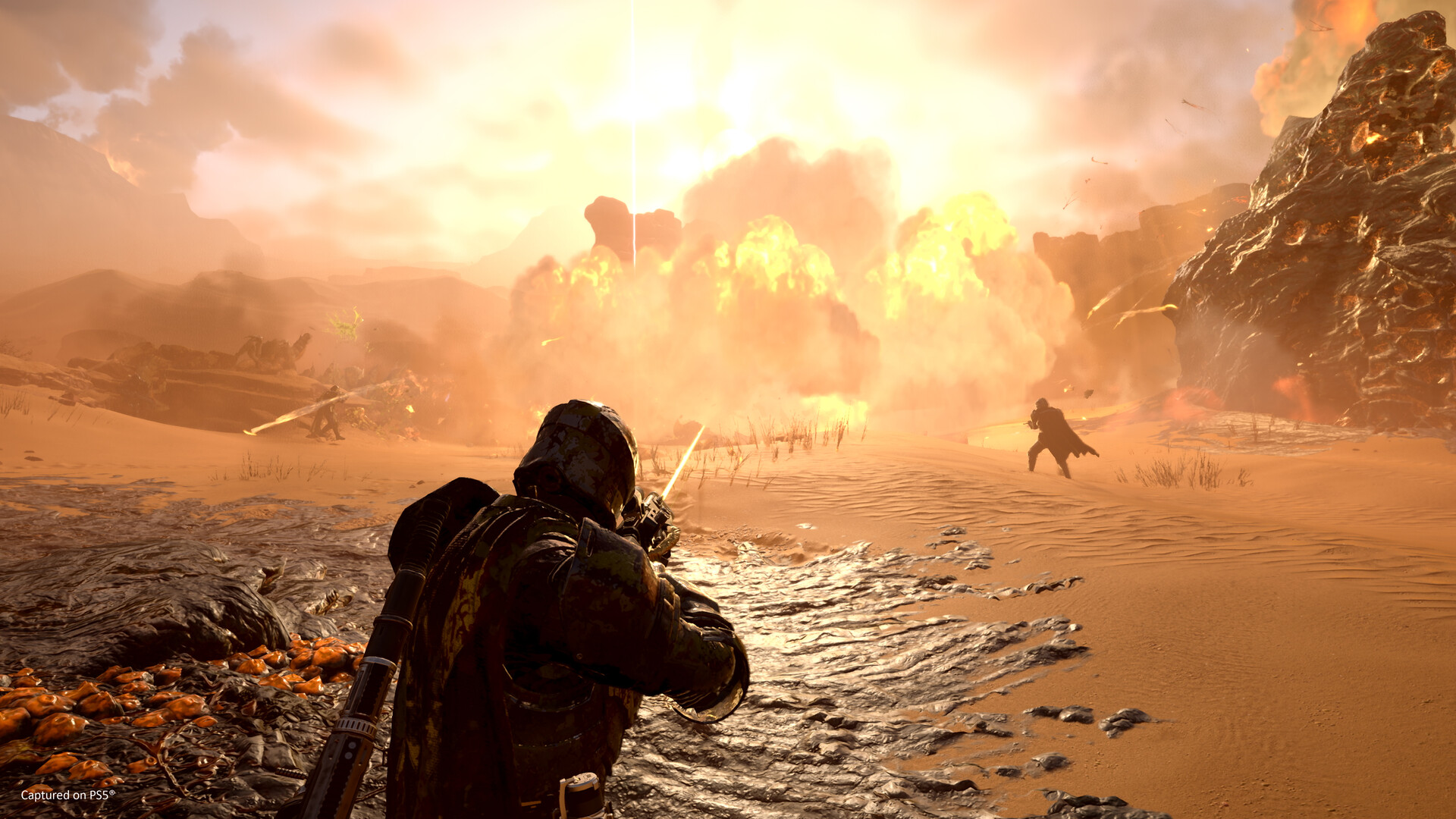
Arrowhead revealed Planet Warfronts — a roguelite-style system with dynamic missions — before the game’s launch, but the studio decided it did not yet have enough content to implement the concept to satisfaction. Planet Warfronts will feature three distinct mission types: Defend missions in liberated zones, Frontline War missions on the battlefront, and Behind Enemy Lines missions in enemy-held territory. Planet Warfronts does not yet have a release date, though Arrowhead has stated they now have the content needed to do it justice.
When it launches, players will encounter consequences based on progress toward planet liberation goals, such as liberating a city within a time limit or disabling enemy artillery at a specific location to unlock essential Operations. Until then, the current system is Campaigns with traditional mission distribution — you pick a planet under liberation or defense, drop into standard operations, and every completed mission contributes to the planet’s HP pool.
How Planet Liberation Actually Works
By completing Missions and Operations, players deal damage to a planet’s health pool, eventually depleting it and resulting in a successful campaign that secures control over the planet. The map shows War Progress for each planet as percentages — for enemy-controlled planets you see their percentage of control, and for planets you’re fighting for you see liberation progress. This progress is directly influenced by missions completed by Helldivers across all platforms; it’s a shared, persistent war where every single mission contributes to the overall galactic struggle.
Finishing a full operation (all three missions) contributes more than partial runs. The XP you earn at the end of each mission correlates to war effort, but operations left incomplete contribute less to the planet’s liberation meter. The enemy Decay Rate regenerates a fixed percentage of planet HP every hour, displayed in-game as Enemy Resistance, creating a persistent drain on progress during standard liberation campaigns.
Defensive campaigns work differently. In a defense campaign the planet is technically liberated but under attack from enemies on a neighboring planet; the blue bar doesn’t go down but must be filled within a time limit shown by the red bar — if you fill the blue bar the attack is repelled, but if the red bar fills first the world is lost and becomes a liberation campaign. If the planet the defense campaign is coming from is fully liberated while the defense is happening, that defense campaign is won instantly as all enemy forces disappear when their supply lines are cut off.
Tip
If a planet under attack has an attacker with less remaining health than what’s required to complete the defense, liberate the attacker instead — removing the attack source wins the defense automatically.
Step-by-Step: How to Read the War Map and Pick a Drop That Matters
Follow this sequence to get it done fast.
-
1
Open the Control Center terminal
Located opposite the armory on your Super Destroyer, it shows the active Campaign, current objectives, and what's at stake for rewards.
-
2
Check for an active Major Order
If there's an active Major Order dive on the specified planet, because decay rates are tuned for mass participation and dispersing effort across unrelated planets slows everyone's contribution.
-
3
Look for contested chokepoints if no Order is live
Find a contested planet that controls a supply line toward enemy staging areas; liberating a chokepoint opens new campaign fronts and can isolate enemy sectors from reinforcement.
-
4
Evaluate defensive campaigns for the gambit
If a planet is under attack, check whether the attacking planet has less health remaining than the defense requires; if so, liberate the attacker to win the defense automatically.
-
5
Commit to full operations
Finishing all three missions in an operation contributes the maximum liberation progress; partial runs still count but deliver less war effort.
-
6
Check planet status indicators
Icons show whether a planet is Under Attack (enemy is making a serious push), or Liberated (secure but can come under threat again).
Best Planets to Farm for Campaign Contribution
Note
The Impact Multiplier scales inversely with missions completed across all servers in a 30-minute window; logging in during off-peak hours (late night, early morning) means your per-mission contribution is meaningfully larger.
| Planet Type | Priority | Why It Matters | Best For |
|---|---|---|---|
| Active Major Order target | Highest | Decay tuned for mass effort; splitting the playerbase slows progress | Everyone |
| Chokepoint / supply-line planet | High | Liberating it opens new fronts, isolates enemy sectors | Coordinated squads |
| Defense campaign with weaker attacker | High | Liberate attacker to auto-win defense | Strategic players |
| High liberation % planet | Medium | Close to tipping; momentum effect helps finish fast | Quick-match solo |
| Low-player-count unrelated planet | Low | Effort dispersed; minimal contribution to active Campaign | Farming gear XP only |
What Galactic Campaigns Reward and Why They Matter
Each Campaign comes with its own potential reward if Helldivers are victorious in a majority of the Major Orders within it — not the medal grind of the old system. The first Campaign offered two new FRV variants (Incinerator FRV and Supply FRV) for the Illuminate front, exclusive gear you couldn’t unlock any other way. Medals still drop from completing operations, but Campaign rewards are the headline unlock.
The system offers more rewards than just medals if conditions are met, and lasts one to three weeks to better communicate how things are going and what’s at stake for the game’s world. The Control Center archive will eventually show every past Campaign and its outcome, giving returning players context on how the war evolved while they were away.
Campaign Rewards vs. Old Major Order Medals
Old Major Orders paid out medals — useful for unlocking Warbond items but repetitive as a weekly carrot. Campaign rewards are strategic assets: vehicles, weapon variants, and story consequences that reshape the meta. Losing a Campaign doesn’t just forfeit a medal batch; it can lock away gear or shift which factions control key sectors, affecting available missions and enemy types for weeks.
How Rewards Are Gated
Victory requires completing a majority of the Major Orders within the Campaign — not every single one, but enough to tip the scales. If the community fails too many objectives, the Campaign reward is lost and the war map reflects the defeat. This makes coordination and planet choice critical; farming a planet with low player count because it has convenient matchmaking actively harms the Campaign if it’s not a Major Order target.
Common Misconceptions About Campaign Contribution
Myth: Partial Operations Don’t Contribute to the War Effort
Partial operations contribute less than full three-mission runs, but they still chip health from the planet’s HP pool. The confusion stems from older community discussions where players debated whether incomplete operations counted at all. They do — every mission finished adds war effort — but finishing the full operation maximizes your contribution per time invested. If you’re solo queuing and the host quits after two missions, you still moved the needle.
Myth: You Need High Difficulty to Make a Difference
Difficulty is the highest-leverage variable in your control; enemy counts and reinforcement budgets shift at each tier, affecting the XP payout and thus the war effort contribution. Higher difficulty does contribute more per mission, but a successful Moderate run beats a failed Super Helldive. If you’re grinding planets for Campaign progress and can’t consistently clear Helldive, drop to a difficulty you can finish reliably — volume of completions matters more than single-mission heroics if you’re chasing liberation percentage.
Myth: The War Map Is Scripted and Your Drop Doesn’t Matter
Some players believe the war is entirely game-master controlled (Joel, Arrowhead’s community manager, is often cited as “pressing a button” to decide outcomes). Progress is directly influenced by missions completed by Helldivers across all platforms; it’s a shared, persistent war where every single mission contributes. Arrowhead does tune decay rates and planet HP pools to shape narrative pacing, but the community’s aggregate effort determines whether a planet falls or holds. Choosing a Major Order target over a random planet objectively contributes more because the decay and reinforcement math is balanced around mass participation on that objective.
Our Take: Is the Campaign System Worth the Hype?
Our Take
The Campaign overhaul makes the Galactic War feel cohesive for the first time, but the system leans heavily on community coordination that isn’t always there.
Replacing weekly Major Orders with multi-week Campaigns solves the repetition problem. Before 6.3.0, objectives felt disconnected — liberate this planet, then next week defend an unrelated sector with no narrative throughline. Campaigns bundle objectives into an arc with real stakes: exclusive gear you can’t unlock later, story consequences that reshape the map, and a Control Center terminal that actually explains what you’re fighting for. The FRV variants from the first Campaign are legitimately useful on the Illuminate front, and knowing that losing the Campaign means they’re gone creates urgency.
The weak link is player behavior. The system rewards focus — everyone diving the Major Order planet — but public matchmaking still sees a chunk of the playerbase farming whatever planet has the best XP-per-hour or ignoring the war map entirely. Decay rates are tuned for mass participation; dispersing effort across unrelated planets slows everyone’s contribution, and there’s no in-game mechanic forcing players toward the objective beyond the terminal and community pressure. If you’re in a coordinated squad or follow community trackers like Helldivers Companion, the Campaign system is a massive upgrade. If you’re solo queuing and half your teammates are grinding medals on a planet with no active Major Order, it’s frustrating.
The Promise of Planet Warfronts (when it launches) could fix this by making every planet type matter tactically — Defend, Frontline, and Behind Enemy Lines missions with unique modifiers and roguelite progression. Until then, the current Campaign system is the best version of Helldivers 2’s meta-game yet, but it lives or dies on whether the community reads the map. For returning players or anyone who burned out on the old weekly grind, this is worth diving back in for — just make sure you’re actually dropping on a planet that moves the Campaign forward, and consider pairing up with players who track the war seriously. For a deeper look at high-difficulty tactics once you’ve picked your planet, check out our Super Helldive guide.
Was this guide useful?
Helldivers 2 services
Ship & Warbonds
Warbond Unlock & Level
The number of Warbonds you set on the slider, each opened and completed to the last page · Done when every ordered…

Leveling
Leveling
Your level and primary weapons pushed together · Unlocks gear and ship slots as it goes
Super Credits & Medals
Samples Packages
Common, Rare and Super Samples farmed · Funds the ship module upgrades they gate