On this page
Eternal War fights are decided by order, not damage output: whoever strips the other side’s armor first, and whoever controls the distance first, wins the exchange before either player’s raw DPS number ever matters. This is the PvP breakdown our Space Marine 2 coverage has been missing — it skips the map-by-map walkthrough and the weapon tier list to focus purely on the mechanics that stay true across balance patches: how armor turns fights into discrete chunks instead of a smooth trade, why the two-per-class team limit forces real compositions, and how the two Patch 14 arenas change the pace of that fight without changing its logic.
TL;DR
- Armor breaks in chunks, not a slider — whoever cracks the opponent’s segment first gets the next exchange on their terms
- Melee bypasses armor entirely and hits health directly, which is why closing distance matters as much as breaking armor
- Eternal War caps each team at two players per class, so trios are built around pairings, not three copies of the same strongest kit
- Sanctum and Facility, added in the Confrontation Update, aren’t just new geometry — they run at different tempos
- Saber has never published exact TTK or damage-per-hit figures, and community calculations disagree, so treat any hard TTK number online with suspicion
Class Leveling to 25 + Perks
One class or all classes at level 25
How Armor Works in Space Marine 2 PvP
Every loadout in Eternal War runs on a base health pool topped with armor segments, and the split between the two is what makes gunfights feel like a series of discrete beats rather than a continuous drain. By community testing (Saber publishes no health table), players have 100 HP and 30 HP per armor segment, which equates to 160 HP for classes with 2 armor segments, 190 HP for classes with 3 armor segments and 220 HP for classes with 4 armor segments. Firearms and equipment have to chew through that armor pool before they touch health at all. Melee doesn’t play by that rule: melee attacks bypass armor and are able to damage health directly, while firearms and equipment only damage health after depleting the armor first.
That split is the whole reason “who has more DPS” is the wrong question. A ranged duel is really two separate fights stapled together — break the armor, then finish the health — and each one resets the tactical picture. A melee hit skips straight to step two. That’s also why grenade tuning matters more than it looks: Krak Grenades are stronger against Heavy because, since Patch 14, they always destroy the Iron Halo — the Heavy’s deployable energy shield, a separate layer from its armor segments — so one well-placed throw removes the cover a Heavy digs in behind, and the ordinary armor-then-health fight starts immediately.
Why exchanges are discrete, not smooth
Because armor sits in fixed segments rather than a continuous bar, a fight doesn’t slowly tip toward one side the way a health-only shooter would. It snaps: one segment is up, then it’s gone, and the moment it’s gone the fight’s math changes completely — melee options open up, burst weapons suddenly threaten a kill, and the player who lost the segment has to disengage or die. That’s the “discrete” part of the thesis. There’s no gradual bleed to manage; there’s a threshold, and crossing it flips who’s dictating the next three seconds.
| Armor state | What changes | Who benefits |
|---|---|---|
| Full armor | Firearms tickle at best; only melee threatens real damage | The player with distance and cover |
| One segment cracked | The exchange tips — the next hit lands on health, not armor | Whoever broke the segment first |
| Armor fully stripped | Any hit, ranged or melee, is now lethal-adjacent | Whoever closes or holds distance next |
If the hours are the obstacle rather than the fight itself, Space Marine 2 boosting is run hands-on by a booster from your region.
Space Marine 2 PvP Classes: What Each One Holds and Who Beats It
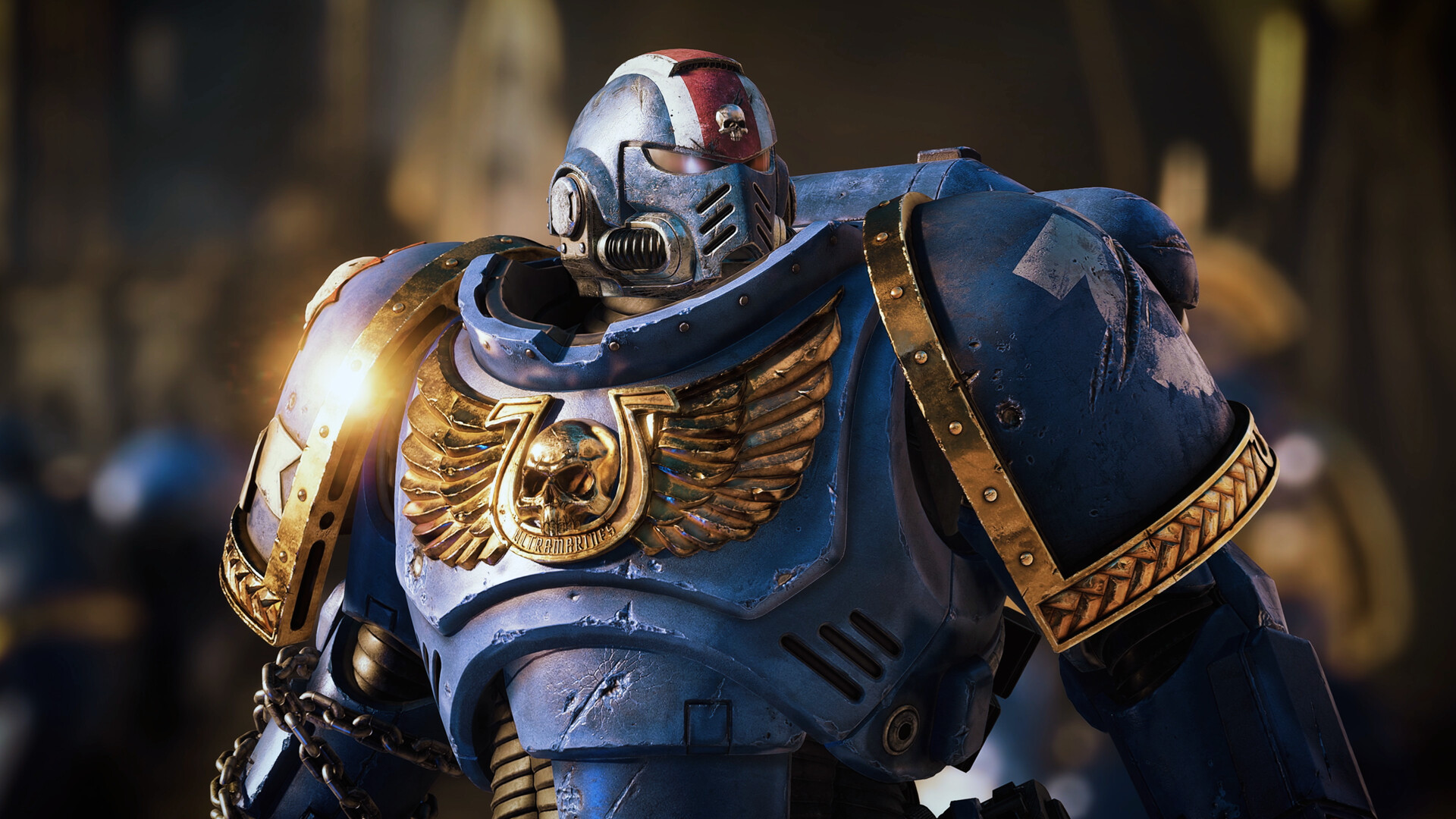
Eternal War currently runs seven classes after the Techmarine joined in Patch 12, completing the roster alongside Tactical, Assault, Sniper, Vanguard, Bulwark and Heavy, and it’s fully playable in PvP. Every class is built to hold a specific type of exchange — a range band, a chokepoint, a burst window — and every class has a matchup that quietly ignores whatever it’s good at. That’s the actual skeleton of the meta, and it’s the part a raw weapon tier list can’t show you; if you want per-weapon numbers instead, that’s a separate breakdown, not this one.
| Class | What it holds | Who it loses to |
|---|---|---|
| Tactical | Balanced mid-range trades, flexible loadout | Anything that closes distance before it can peek and reposition |
| Assault | Some of the strongest melee weapons that take away tons of enemy health once it's in range | Sustained ranged fire before the Jump Pack closes the gap — the ability can make it an easy target |
| Vanguard | A Grapnel that rapidly closes distance for an immediate melee hit on isolated targets | Being caught by numbers — it's more lightly armored, so it folds much more quickly when outnumbered |
| Bulwark | A protective storm shield and a banner that repairs the armor of nearby allies | Focused fire — Patch 14 lowered the damage needed to knock it out of shield stance from 300 to 200 |
| Sniper | Long sightlines and punishing anyone caught crossing open ground | Compact, indoor maps — long-range rifles struggle to find value where sightlines are severely limited |
| Heavy | The heaviest guns in the game, though it has no melee weapons at all | Grenade pressure — a Krak always destroys its Iron Halo shield since Patch 14 — before it can dig into a chokepoint |
| Techmarine | A Servo-Gun that keeps firing on locked targets while the Techmarine fights, giving it area denial and crowd control | Fast single-target flanks that slip past the turret's coverage entirely |
The Two-Per-Class Limit and Why It Forces Real Compositions
Eternal War limits each team to two players per class, and mixed teams are harder to break than six players chasing the same highlight play. That single rule is doing more balance work than most people give it credit for. Before caps like this existed as a hard constraint, a coordinated group could just stack whatever was strongest that patch — the old advice that two Heavies in a team is always ideal since they can hold chokepoints without issues is exactly the kind of stacking the cap is designed to prevent at scale. With the limit in place, a trio can’t just triple down on one answer; it has to cover at least two different problems.
In practice this means a squad of three is really solving for pairings, not power level. You want one piece that opens a fight, one that survives being caught mid-armor-break, and one that finishes once the order has already tipped. None of the following are official meta calls — they’re illustrations of how the constraint shapes choices.
Tip
Pick your class based on what’s already on your team before the match starts. If two teammates are already running the same kit, taking a third copy just wastes the flexibility the class cap is trying to give you.
| Trio archetype | Example pairing | What it solves |
|---|---|---|
| Anchor + support | Heavy, Bulwark, Tactical | Holds a point while armor gets repaired mid-fight |
| Breach + finish | Vanguard, Assault, Sniper | Grapnel opens the gap, melee finishes, ranged covers the retreat |
| Zone denial | Techmarine, Heavy, Bulwark | Locks down a corridor rather than chasing kills across the map |
Sanctum and Facility: Two Arenas, Two Different Paces
The Confrontation Update brought two more Eternal War maps, Sanctum and Facility, and the two are built to feel almost opposite in tempo rather than just different in layout. Sanctum is a medium-sized map built for dynamic battles, with open combat areas and fast routes to a central hotspot for intense firefights. Facility runs the other direction: it’s one of the most compact and fast-paced PvP environments added to the game, favoring constant rotations, tight sightlines, and flank-attack styles over Sanctum’s high-ground control and structured objective play.
That pace difference matters for the class matchups above — a Sniper that dominates Sanctum’s open ground can find itself irrelevant on Facility, where long-range rifles struggle to find value in the corridors. This isn’t the place to break down callouts, rotations, or objective spots on either map in detail — a full map-by-map guide already covers that ground, and it’s worth reading separately if you want the tile-level layout rather than the pace-level read.
Step-by-Step: Reading Who's Winning an Engagement Before It Ends
Follow this sequence to get it done fast.
-
1
Check the armor state first, not the kill feed
glance at whether your target's segment indicator has already cracked before you commit to the exchange.
-
2
Identify who's closing distance
a Vanguard grapnel or an Assault jump means the fight is about to skip straight to a melee, health-only exchange.
-
3
Track grenade and ability cooldowns
a Krak Grenade removes a Heavy’s Iron Halo shield in one throw since Patch 14, leaving only its armor segments between you and its health.
-
4
Watch your own class composition
if your trio already used its breach tool, don't force a second engagement expecting the same opening.
-
5
Decide push or reset based on the broken order
if you cracked their armor first, press; if they closed distance first, disengage rather than trade on their terms.
Why Nobody Should Quote You Exact TTK Numbers
Saber Interactive has never published official time-to-kill figures, per-hit damage tables, or armor-break timers for Eternal War, and the numbers that do circulate online come from community testing that doesn’t agree with itself. Even the community’s own tier lists carry that uncertainty openly — one widely-read ranking flags itself as “a tentative tier list” the authors plan to keep revising, and other guides note plainly that rankings may vary on different websites. Any article, video, or spreadsheet handing you a precise TTK in milliseconds is presenting a guess as a fact.
Warning
Treat any hard TTK or damage-per-second number for Eternal War as an estimate at best. Balance patches change weapon radii and cooldowns often enough — Patch 14 alone cut Vanguard’s ability cooldown from 30 to 18 seconds and raised its damage from 10 to 25 — that a number posted six weeks ago may already be wrong.
All Weapons + Currency
100% Weapon Mastery on every weapon
Common Misconceptions About Eternal War PvP
Myth: more DPS always wins the trade
Raw damage per second only matters if you’re the one who gets to apply it uninterrupted. Since armor absorbs firearm damage in a fixed pool before health, and melee skips that pool entirely, a lower-DPS class that breaks the armor segment first or lands the melee hit first often wins a fight that a naive damage calculator says it should lose.
Myth: three of the current best class is the strongest team
The two-per-class rule makes this impossible in ranked team play anyway, but even where it isn’t enforced the logic doesn’t hold — a trio needs someone to open distance, someone to survive the opening, and someone to finish, and one class rarely does all three at once.
Myth: melee is a weak, situational option in a shooter
Melee bypassing armor to hit health directly makes it one of the most decisive tools in the mode, not a fallback. A well-timed melee hit can end an exchange a ranged weapon would still be chewing through armor to finish.
Our Take: What Separates Good and Bad Trios in Eternal War
Our Take
Eternal War rewards reading the order of a fight, not memorizing a tier list.
The two-per-class limit is the best design decision in the mode because it stops the obvious solution — stack the strongest kit — from ever being available, forcing players to actually think about pairings. Every future balance patch will move numbers around, but armor-as-a-threshold and distance-as-a-resource aren’t going anywhere, which is why they’re worth understanding over any specific weapon’s current damage figure.
If there’s a real weakness in the system, it’s that new players lean on tier lists that go stale within a patch or two instead of learning to read the armor state on their HUD. That habit outlasts every balance pass Saber ships.
Space Marine 2 services
Class Leveling
Single Class — 4th Prestige
One class at 4th (maximum) Prestige · Optional: the class levelled to 25 after the last Prestige
Unlocks
All Currency & Armoury Data
20 Workshop Arsenal Data · 20 Artifact Arsenal Data

Unlocks
Full Unlock — Everything in the Game
PvE: every class at 4th Prestige and level 25, every class perk · Every weapon and its perks, every armour set — Siege…