On this page
Gyldenblod farming means grinding golden-outlined zones, full container sweeps, blue quests, and merchant resells inside a raid, then extracting before you die or your Gylden Jar fills up. Gyldenblod is the core currency in Mistfall Hunter, the dark-fantasy PvPvE extraction ARPG from Bellring Games and Skystone Games. It sits underneath every meaningful decision in camp: gear replacement, crafting, and progression all run through it, which is why a dead run costs more than the loot you were carrying.
TL;DR
- Gyldenblod only counts once you extract — a full Jar or a full bag means nothing if you die on the way out
- Golden-outlined zones, container sweeps, blue quests, and Richie resells are the main income sources
- The Gylden Jar caps what you can carry per run, so leaving before it fills is often correct, not lazy
- Never extract with less than your entry cost — bailing early on a bad run is a calculation, not a loss
- Chaos Mode raises loot quality but also raises risk, and it does not automatically pay more per hour
| Currency | What it does | How you get it |
|---|---|---|
| Gyldenblod | Core in-raid currency spent on camp upgrades, gear, and crafting | Looted in raids, banked only on successful extraction |
| Fate Coins | Premium cosmetic currency bundled with certain editions | Purchased or granted through edition bonuses |
| Soul Coins | Smaller currency tied to launch mail and select rewards | Awarded through in-game mail and events, not farmed in raids |
Where to Get Gyldenblod in Mistfall Hunter
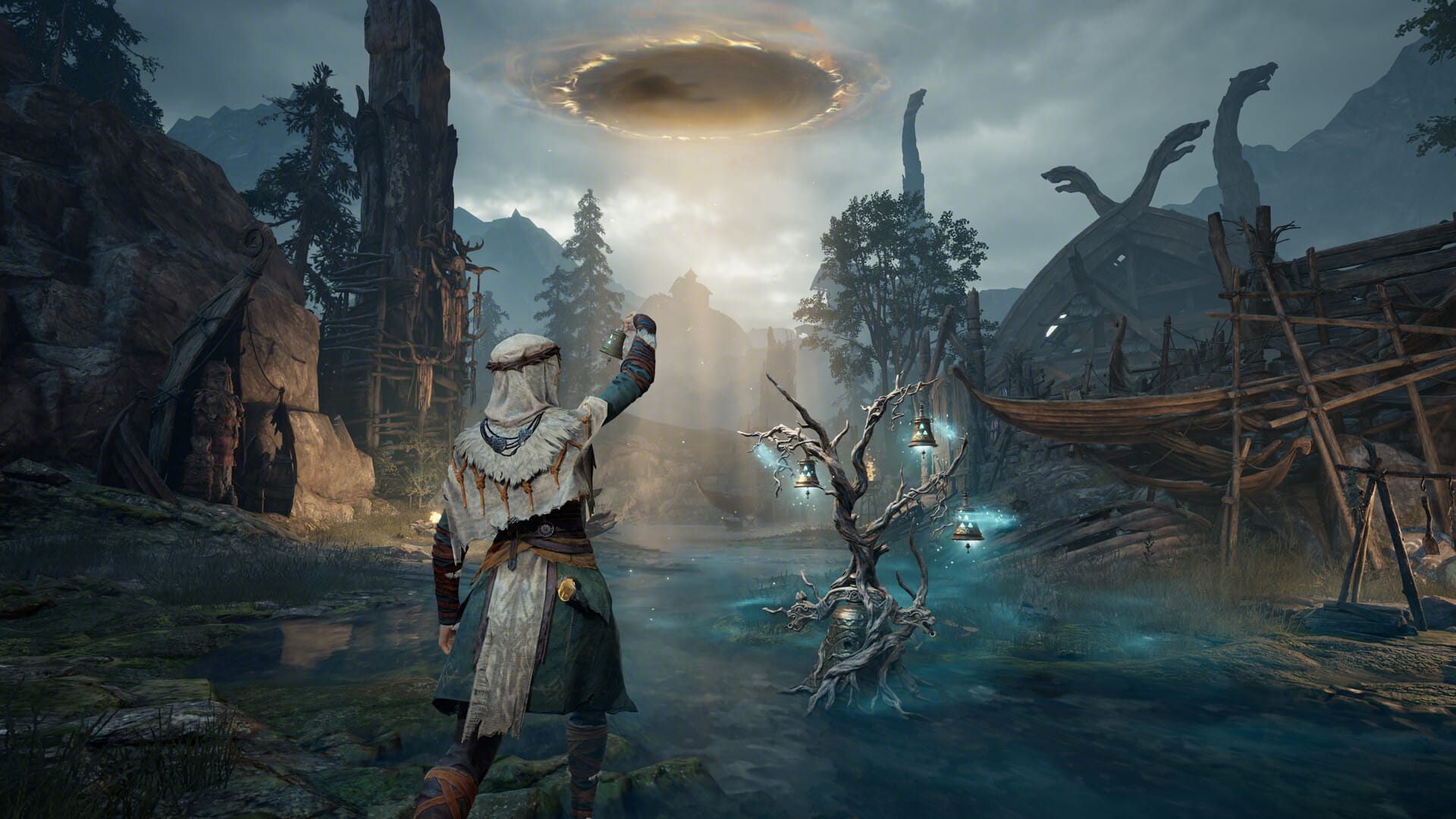
The fastest way to farm Gyldenblod is not one location, it is a habit: hit the richest area first, then loot everything on the way to the exit instead of chasing a single jackpot chest. Each map features a specific zone outlined in gold; fighting within this area offers a higher chance of obtaining the most valuable loot, though you will also encounter PvE and PvP enemies more frequently. The golden outlined areas on the map contain improved loot yields, and hitting the one you spawn closest to is generally a good idea since you can take its offerings before enemy players arrive. Beyond the marked chests, good loot can be found in all containers in the game, so make sure to take the time to stop and loot everything. Short blue-marked objectives scattered around the map add extra currency for very little detour, and in the area of the map marked by a coin bag you’ll find Richie the Merchant, where buying discounted items and reselling them elsewhere is one of the cleanest no-combat income streams available. Picking a class built for this kind of quiet routing matters more than it looks — the best starting class comparison covers which kits actually support a low-combat loot loop.
| Source | What you get | Requirement | Who it suits |
|---|---|---|---|
| Golden-outlined zones | Higher-value loot and denser Gyldenblod drops | Fast rotation before rivals arrive | Players comfortable with contested fights |
| Full container clears | Steady, incremental currency and materials | Time spent looting barrels and crates, not just chests | Cautious or solo players |
| Short blue quests | Small guaranteed reward for a nearby objective | Minimal detour from your existing route | Anyone stacking small wins |
| Richie resale flips | Currency from buying discounted items and reselling | Knowing current auction prices before buying | Players who want zero-combat income |
Anyone who would rather not spend the evenings on it can hand Mistfall Hunter boosting to our crew instead — same account, same progress, played by hand.
The Gylden Jar Cap and the Break-Even Rule
These two mechanics are why “how much you gathered” is the wrong question. Gyldenblod collected inside a raid goes into the Gylden Jar, which starts with a capacity of 200. Once it caps, you cannot pick up more field gold until you extract, so that limit rewards frequent trips over marathon runs. The only way to raise that ceiling is at camp: you raise the ceiling through the Gyldenblod Pool upgrade, which also unlocks Spirit Infusion for leveling alts. Until you invest in that upgrade, a long, greedy run is not more profitable than a short one, it is just riskier for the same payout.
Why the Jar Cap Shortens Your Run
Once your Jar is full, every additional minute in the mist is pure downside — you are still exposed to other players and to the map timer, but you have nothing left to gain from the currency side of the run. The correct move is to treat a filled Jar as an extraction trigger, same as a full bag of gear. For the full breakdown of exit options once you are ready to leave, the extraction guide covering all four ways out is worth reading alongside this one, since knowing your nearest exit changes how aggressively you can push a golden zone.
The Break-Even Rule: Never Leave With Less Than You Paid
Community wikis frame this bluntly: the most reliable income source is to extract with at least 500 Gyldenblod per run, and the rule of thumb is to never leave a match with less than your entry cost. That 500 figure is a floor some guides use as a target, not a hard-coded number in the game, so treat it as a planning anchor rather than a guarantee. The practical version of the rule: if a run is clearly not covering what your gear cost to bring in, walking to the nearest exit right now is the correct play, not a failure. Extraction games punish greed far more than they punish caution.
Warning
You can only bank what you successfully extract, so if you die, you lose everything that was in your Jar, as well as all the carried loot. A full Jar you never cash out is worth exactly zero.
Best Gyldenblod Farming Methods
No single route works every match because maps are procedural and player density shifts run to run, but a few approaches consistently outperform aimless wandering.
Tip
Upgrade the Gyldenblod Pool as early as your camp allows. A bigger Jar means each individual run can carry more, which directly shortens how many trips you need to hit a given target.
| Method | Speed | Effort | Best For |
|---|---|---|---|
| Golden zone rush | Fast | Medium, contested | Players who can win early fights |
| Full container sweep | Slow, steady | Low combat | Solo or cautious players |
| Richie flip loop | Medium | Low, requires price checking | Players who dislike combat entirely |
| Blue quest chaining | Medium | Very low | Anyone padding a route |
| Chaos Mode farming | Variable, higher ceiling | High | Geared, confident players only |
Step-by-Step: An Evening of Gyldenblod Farming
Follow this sequence to get it done fast.
-
1
Pick a low-risk loadout
gear you can afford to lose, since it will eventually get contested or you will die to something dumb.
-
2
Drop into the nearest golden-outlined zone
hitting the one you spawn closest to means you take its offerings before enemy players have time to make their way to contest the spot.
-
3
Loot every container on the way out
, not just marked chests, and grab any blue quest that sits directly on your path.
-
4
Swing past Richie the Merchant
if the coin bag icon is near your route, buy anything visibly underpriced, and hold it for resale.
-
5
Check your Jar and your bag against your entry cost
before pushing further — if you are already ahead of break-even and the Jar is close to full, head for the nearest exit instead of chasing one more room.
-
6
Extract
and repeat with the next run, adjusting your route based on where the last one got contested.
Gyldenblod Rewards and What You Unlock
Gyldenblod is the currency behind camp progression, and every meaningful camp system draws from the same pool. Key upgrades include the Goddess Statue, which improves healing from Springhorns, the Warehouse, which expands storage slots, the Shop, which unlocks the Premium Shop, and the Auction House, which adds auction slots for trading. Deciding what to build first matters a lot early on, and the camp upgrades priority guide breaks down which of these actually pays off fastest for a farming-focused camp.
| Reward | How you get it | Why it matters |
|---|---|---|
| Gyldenblod Pool level | Spend Gyldenblod and materials at camp | Raises your Gylden Jar cap, letting each run carry more |
| Warehouse space | Camp upgrade purchase | Lets you hold more loot between runs instead of dumping it early |
| Auction House access | Camp progression, reported to unlock around mid-level camp tiers | Turns rare drops into far more currency than a vendor sale |
Chaos Mode: Is It Worth Farming There for Money?
The optimal mode to farm gold is generally considered Chaos Mode, since it increases the quality of loot you find, but it ups the difficulty as well. That trade-off is exactly why it is not a blanket upgrade for everyone. Only choose this setting if you are comfortable with the strategy or with Mistfall Hunter in general — to begin with, Normal is fine. Higher loot quality does not help you if it also raises your death rate enough to erase what you extracted with. If you are still learning routes, fights, or your class kit, farming Normal mode consistently will very likely out-earn a Chaos run you don’t survive.
Common Misconceptions About Gyldenblod Farming
Myth: More Time in the Mist Means More Money
Past your Jar cap, extra time buys you nothing on the currency side and only adds exposure. Once the Jar is full and your bag is solid, the clock is working against you, not for you.
Myth: PvP Kills Are the Best Income Source
Killing other players can drop their loot, but the Jar cap limits how much that fight is actually worth, and the risk of losing your own run in the process rarely pays for itself compared to a quiet loot loop.
Myth: Chaos Mode Always Pays More Per Hour
Better loot quality is real, but it is measured against a harder mode with a higher death rate. A survived Normal run beats a lost Chaos run every time, and the community numbers floating around for either mode swing wildly depending on gear, class, and luck.
Our Take: Is Gyldenblod Farming Worth the Grind?
Our Take
The grind is fine, but the mindset needs to shift from “loot more” to “extract clean.”
Mistfall Hunter‘s economy punishes greed harder than it rewards patience, since anything sitting in your Jar or your bag when you die simply does not exist. The break-even rule and the Jar cap both push toward shorter, more disciplined runs over marathon sweeps, and that is a genuinely different skill than farming in games where currency banks the moment you pick it up. Early community numbers on how much a clean run should return vary a lot between sources, which fits a game only days into launch getting hotfixed — treat any specific figure you see as a rough reference, not a target you have failed to hit.
Was this guide useful?
Mistfall Hunter services
Leveling
Character Boost 1-8
Character taken from level 1 to 8, any class · Covers the flattest stretch of the early game
Leveling
Character Boost 1-12
Character taken from level 1 to 12, the cap · Any class, chosen at checkout
Camp & Bundles
Camp Improvements
Camp upgrades worked through on your account · Permanent progress: it survives a bad run