On this page
Waking Nightmares are Diablo 4‘s new Season 15 encounter system: three separate types of fights that recreate memories from across the series, running as part of Season of Hell’s Legacy (live since September 15, 2026, on patch 3.2.1). Blizzard’s own season overview describes them as encounters showing memories and nightmares from key events from Diablo’s past, rebuilt with updated visuals for Diablo IV. This guide covers all three types, how the biggest one escalates into a Pinnacle Capstone at Torment 10+, and the one thing Waking Nightmares are for beyond loot: switching which Prime Evil’s Splinter you carry.
TL;DR
- Waking Nightmares come in three types: the largest are multi-level Capstone-style dungeons, the second is standard-length fixed dungeons, and the smallest are sudden one-room open-world encounters.
- The largest type is first met in the Seasonal Questline, then replayable as a Capstone on Torment levels, and as a Pinnacle Capstone at Torment 10+ for greater risk and bigger loot.
- To change your Splinter of Evil, the overview sends you back to the largest Waking Nightmares; the panel recap ties a switching resource to the most difficult ones.
- Blizzard says nearly twenty bosses return, naming Nihlathak and the Maggot Queen, plus heroes like Leah; the full list is not in the official posts.
- Not in the official posts: the full location list, the name of the switching resource, and whether the system stays after the season.
What Are Waking Nightmares in Diablo 4?
Waking Nightmares are three types of encounters showing memories and nightmares from key events from Diablo’s past, and while the settings and fights will look familiar to longtime players, they’ve been rebuilt with updated visuals and encounters designed for Diablo IV. They sit inside Season 15’s identity as a 30-year anniversary celebration, alongside Legacy Uniques and Rebirth, and they tie directly into the seasonal Splinter of Evil system developed by Blizzard Entertainment. The three types differ enormously in scale, from a full multi-level dungeon to a single ambush that appears while you’re walking through the open world.
If you’re setting up a fresh Season 15 character before touching any of this, the Season 15 prep checklist covers what to sort beforehand.
| Type | Where | How You Enter | What It's For |
|---|---|---|---|
| Largest (Capstone-type) | Recreated Prime Evil showdown locations from the Seasonal Questline | First via the Seasonal Questline, then replayed as a Capstone on Torment levels, or as a Pinnacle Capstone at Torment 10+ | Loot on Torment difficulties; the overview also sends you back here to change your Splinter of Evil |
| Dungeon-type | Fixed locations across the world, same as normal dungeons | Walk in like any standard dungeon (e.g. the Den of Evil from Diablo II) | Standard dungeon-style rewards while recreating a familiar Diablo moment |
| Open-world (smallest) | Open world; no location list in the official posts | Appears in the open world; the cited official posts do not specify the trigger | A quick one-room fight against a returning boss (like Queen Araneae) or a monster wave (like dagger-wielding Flayers) |
Players short on time can put Diablo IV boosting alongside a normal playthrough rather than in place of one.
The Largest Waking Nightmares: Questline, Capstone, Pinnacle
Blizzard’s overview describes the largest type as “multi-level, Capstone-type dungeons that recreate events from historic showdowns with the Prime Evils.” The Seasonal Questline is where you meet them: its three showdowns are the echoes of Diablo (Tristram Cathedral), Baal (Arreat Summit) and Mephisto (Durance of Hate), each of which hands you a Splinter of Evil. Afterwards the same encounters can be replayed for rewards on Torment levels; as with every Capstone, the difficulty is fixed rather than scaled to your character.
From Torment 10 upward the same encounters open as Pinnacle Capstones, “for greater risks and bigger loot” in the overview’s words; the official panel recap adds only that they belong to “the highest Torment levels.” Output Lag’s report from the BlizzCon panel quotes Lead Encounter Designer Owen Leach describing the Pinnacle versions as balanced toward Torment 13 — a press account of the panel, not a line in Blizzard’s written notes, so the access threshold to plan around is Torment 10+, and Torment 13 is the reported tuning target.
Dungeon-Type Waking Nightmares
The second type, per the overview, is “standard-length dungeons that also recreate familiar moments from Diablo’s past, such as the Den of Evil from Diablo II,” with “fixed locations across the world, just like normal dungeons.” Output Lag’s second panel report adds detail Blizzard’s posts don’t: about ten of these overworld dungeons, which can take Nightmare Dungeon keys, with Tal Rasha’s Tomb among them — a press account, not verified by us in-game. Whether any access condition applies is not stated in the posts checked.
Open-World Waking Nightmares
The third and smallest type of Waking Nightmares appear suddenly in the open world, and entering one drops you into a one-room encounter with a past boss like the giant spider Queen Araneae, or waves of memorable monsters such as dagger-wielding Flayers. Neither the season overview nor the panel recap gives coordinates, a trigger condition, or a spawn rate for these — the only description published is that they appear suddenly while you’re out exploring. The same Output Lag report puts the pop-up count at about fifteen and names Na-Krul from Diablo: Hellfire among the returning bosses — again a press account of the panel.
How to Switch Your Splinter of Evil
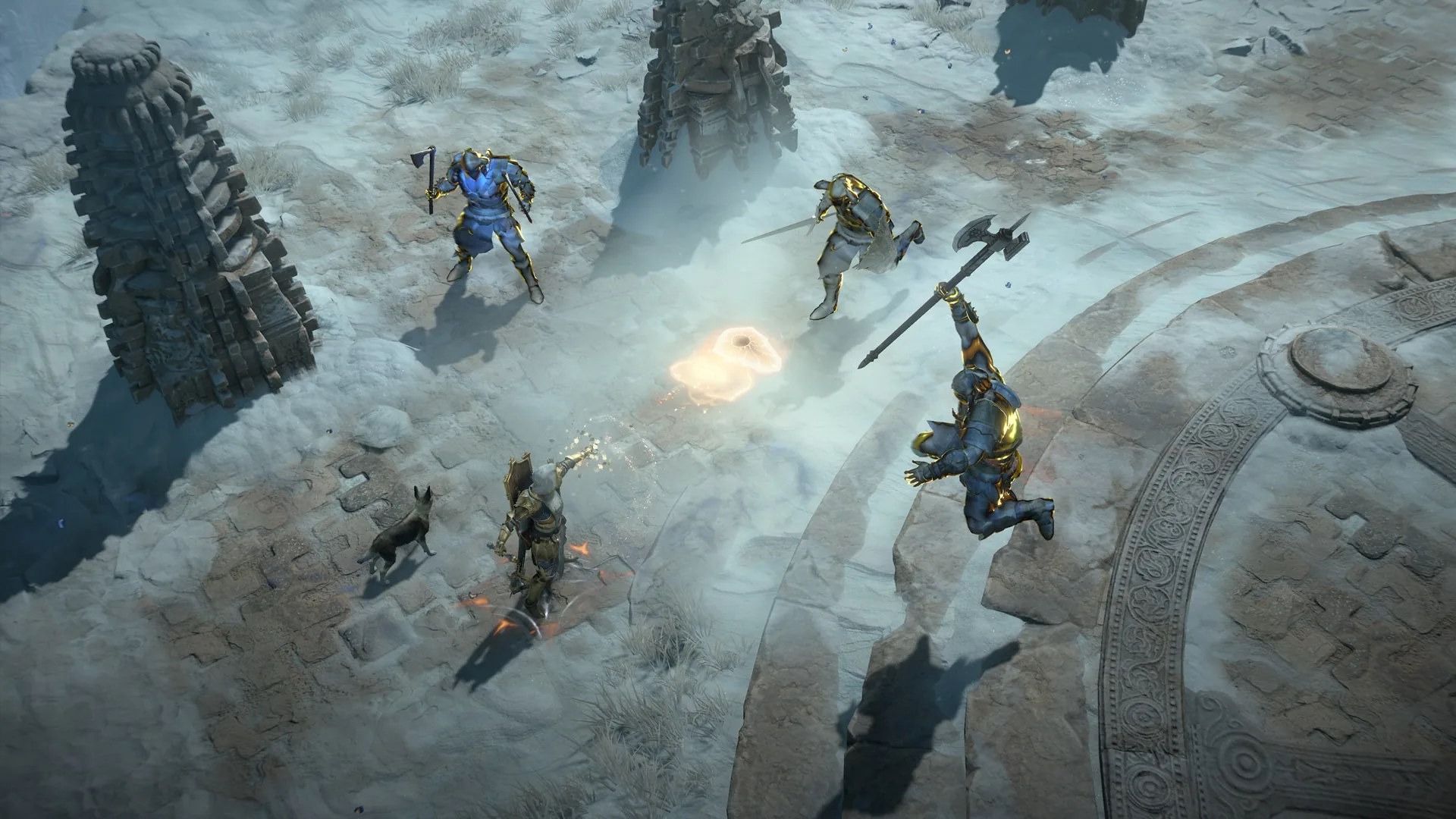
Waking Nightmares aren’t only a loot source. Once you’ve chosen which Prime Evil’s Splinter to wear and started building reputation, the official posts describe how to change course: when you’re ready to pursue a different path, return to the largest Waking Nightmares to change the Splinter you wield. To choose a different Prime Evil reputation track and rewards, you acquire another Splinter from the largest Waking Nightmares, since you can only bear one Prime Evil Soul Splinter at a time. The panel recap adds a second layer to this: by defeating the most difficult Waking Nightmares, you can earn a rare resource to switch whose Splinter of Evil you bear. Neither the season overview, the panel recap, nor the 3.2.1 patch notes name this rare resource or state how much of it you need.
Two official statements, then, and no stated link between them: the overview says return to the largest Waking Nightmares, the recap says the switching resource comes from the most difficult ones. Neither names a Torment level or the Pinnacle version as a requirement for switching, so this article does not either. For the mechanics of the two Splinter systems themselves — Prime Evil Splinters versus the separate Soul Splinters socketed into jewelry — the site’s Splinters of Evil versus Soul Splinters guide covers the reputation tracks and Iconic Powers in detail rather than repeating them here.
Soul Splinters have their own upgrade path through the Horadric Cube — see the Season 15 Horadric Cube recipes guide.
Who and Where: The Names Blizzard Has Confirmed So Far
Blizzard says nearly twenty bosses return, naming Nihlathak and the Maggot Queen, along with heroes such as Leah. The settings pull from across the franchise’s history: Blizzard’s panel recap states you’ll be visiting memorable settings from Diablo I, Diablo: Hellfire, II, III, and Diablo Immortal, all recreated with updated graphics, in addition to confronting the Echoes of the Prime Evils. Beyond those examples plus the Den of Evil, Queen Araneae, and Flayers named in the season overview, the full list of locations and bosses is not published in either the overview or the panel recap. Output Lag’s panel reports put the total at about thirty (roughly ten dungeon-type and fifteen pop-ups) and add Tal Rasha’s Tomb and Na-Krul to the names — press accounts, listed as such in Sources.
Named Bosses and Heroes
Confirmed by name: Nihlathak, the Maggot Queen, and Leah, alongside the “nearly twenty” total figure Blizzard gives without listing every entry.
Named Locations and Encounters
Confirmed by name: the Den of Evil (dungeon-type), Queen Araneae’s fight, and Flayer monster waves (both open-world type), plus the three Prime Evil questline locations — beneath Tristram Cathedral, Arreat Summit, and the Durance of Hate.
Play Order for a Season 15 Character
The order below follows what the official posts describe; it is not a tested optimal route.
If you’re bringing an existing character into the season instead of starting fresh, the Rebirth and War Plans guide covers how progress carries over.
The order the official posts describe.
-
1
Play the Seasonal Questline
the largest Waking Nightmares are met here for the first time, as the echoes of Diablo, Baal and Mephisto; each hands you a Splinter of Evil.
-
2
Pick a Prime Evil Splinter to wear
start building reputation on that track and unlocking modifiers and Iconic Power upgrades through War Plans.
-
3
Replay the largest Waking Nightmares
after the questline they can be replayed for rewards on Torment levels; like all Capstones they have a fixed difficulty.
-
4
At Torment 10+, the Pinnacle version opens
greater risks and bigger loot per the overview; a press report puts the tuning target at Torment 13.
-
5
Dungeon-type and open-world Waking Nightmares as you meet them
the dungeon type has fixed map locations; the open-world type appears while exploring.
Changing your Splinter
This is separate from the sequence above and not tied to any step in it. The overview says: return to the largest Waking Nightmares to change the Splinter you wield. The panel recap adds that defeating the most difficult Waking Nightmares earns a switching resource. Its name, amount and any Torment requirement are not in the official posts.
Myth-Busting: Common Misconceptions About Waking Nightmares
Myth: Waking Nightmares Are Confirmed as a Permanent System
The overview calls the Legacy Uniques permanent additions on both realms and says nothing equivalent about Waking Nightmares. Community guides disagree with each other on this point and none cites a Blizzard statement, so in the official posts we checked the question is open.
Community Location Lists: What They Prove
Blizzard’s posts give no coordinates, trigger or spawn rate for the open-world type. Community lists may well be accurate — the thing to check is how each entry was verified and whether the list claims to be complete, not who published it.
Our Take: Are Waking Nightmares Worth Chasing?
Our Take
For switching your Splinter, the largest encounters are the ones to watch first.
The dungeon and open-world types you will meet while playing the season; they drop loot like other encounters, but no specific or exclusive rewards for them are described in the posts checked. The largest type is where both official statements about changing Splinters point, and where the Pinnacle loot tier lives — so that is our priority, not a ranking of the other two.
Sources and Confidence
This table separates what the studio has confirmed from what comes out of press previews, and what is still just circulating. Each claim below is tied to the post and the game version it describes.
| Claim | Where it comes from | Status |
|---|---|---|
| Waking Nightmares are three encounter types rebuilt from Diablo’s past | Blizzard Entertainment (Diablo IV news) | Official |
| Largest Waking Nightmares open as Pinnacle Capstones at Torment 10+ | Blizzard Entertainment (Diablo IV news) | Official |
| Defeating the hardest Waking Nightmares earns a rare resource to switch Splinters | Blizzard Entertainment (What’s Next panel recap) | Official |
| Lead Encounter Designer reportedly said Pinnacle Capstones are balanced toward Torment 13 | Output Lag | Press report – not independently verified |
| Designer reportedly quoted approximate counts of about 10 dungeon-type and 15 pop-up Waking Nightmares | Output Lag | Press report – not independently verified |
| A community guide expects Waking Nightmares to stay after the season | Skycoach.gg | Community-reported; primary source not verified |
Was this guide useful?
Diablo IV services
Seasonal · Leveling
Level Boost 1-70 — Self-Play
We take your character from 1 to the level 70 cap without ever touching your login · Run on the Seasonal Realm, on the…

Seasonal · Pit & Dungeons
Infernal Hordes Run — Torment 1-4 · Seasonal
This is the most direct source of greater affix gear and the materials that go with it · One complete run per order, on…
Seasonal · Mythic Uniques
Melted Heart of Selig · Seasonal
The amulet that converts incoming damage into resource drain instead of health loss · Also a large quality-of-life gain…