On this page
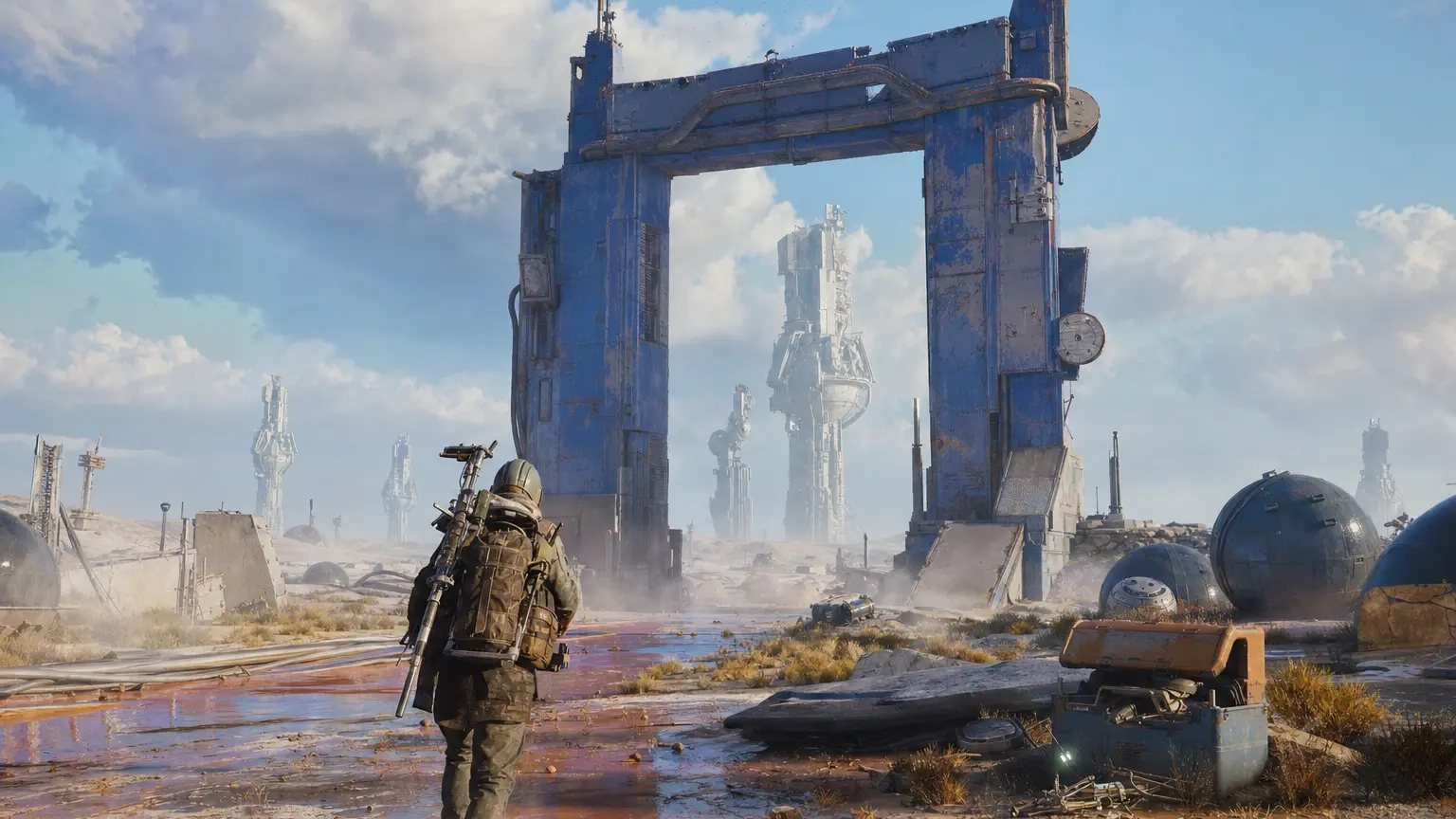
Blue Gate is the first proper raid map in ARC Raiders’ progression, sitting ahead of Dam Battlegrounds, Spaceport, Buried City and Stella Montis, which means every single player passes through it before anything harder. Mechanically it’s a mountain pass: a mix of narrow tunnels, an underground complex, and open snow-covered plateaus stitched together by chokepoints. Blue Gate forgives mistakes better than any later map does, so building the habit of running a planned route instead of wandering pays off long before the stakes go up. This guide covers how the map is laid out, which point types are worth the risk, how the key and puzzle system works here, and how to build a first route that actually makes sense.
TL;DR
- Blue Gate is the entry map — low punishment for mistakes, which is exactly why it’s where you should learn to route instead of freestyle.
- The map rewards tunnel and chokepoint movement; the open plateaus are where snipers and ARC patrols win fights you didn’t need to take.
- Locked doors need keys found as random drops, and the loot behind them is generally solid but not guaranteed to be worth a dedicated detour.
- Multiple environmental puzzles (fuze boxes, button sequences, colored-line paths) gate some of the best loot on the map.
- Point layouts get adjusted by patches — treat any named route as a template, not a memorized path.
Account Leveling
Account level pushed raid by raid on your profile
How Blue Gate's Layout Shapes Every Loot Route
The map’s terrain does most of the talking before you even see another raider. Blue Gate is a mountainous area with little cover between the POIs, which makes it one of the most dangerous maps to traverse. That’s the core design tension: the open sections between points of interest look like shortcuts but are actually sightlines for anyone holding higher ground. Its center is a heavy PvP zone, and the outside area is constantly patrolled by boss ARCs. Fighting on the exposed plateau almost always favors whoever set up first, since you’re the one crossing open ground into a prepared position.
The interior tunnel network is the counter to that. Underground passages and the connecting shafts let you move between clusters of loot without exposing yourself to the long sightlines that dominate the surface. The safest loot strategy relies on the tunnel network, avoiding the exposed surface. A vertical shaft-style connector links the lower tunnels to the surface and works as a fast way up or a quick escape, but it comes with the same exposure risk in reverse: it’s risky since you’re visible from above and vulnerable during ascents, so it’s best used for quick escapes after looting or when ambushed underground. Patrols tend to sit at these chokepoints on purpose — the doorways, stairwells and shaft exits — because that’s where raiders are forced to funnel through.
Tip
Loot value ratings show on the in-raid map after you drop in. Check that overlay before committing to a POI instead of guessing from memory — it changes what’s actually worth the detour on that specific run.
| Point type | What you typically find | Risk level |
|---|---|---|
| Residential clusters / Village-style buildings | General containers, crafting materials, occasional blueprints | Low to medium — mostly other raiders, few ARC patrols |
| Underground complex / central facility | Weapon crates, ammo, medical supplies, high-tier loot near key rooms | High — described as one of the most active PvP zones on the map |
| Fortress-style ruins (southern part of map) | Puzzle-gated cellar loot, weapon cases | Medium to high — long approach, ARC patrols along the route |
| Church/refuge-style ruins (northwest) | Puzzle-gated cellar with rare and epic-tier loot | Medium — puzzle takes time, which is its own exposure risk |
| Open plateau / surface between POIs | Scattered field crates, little else | Very high — sniper lines and boss ARC patrols with no cover |
Where the grind outlasts the interest, ARC Raiders boosting picks it up from wherever the account already stands.
Locked Doors and Keys: Are They Worth the Detour?
A chunk of Blue Gate’s best loot sits behind doors that simply won’t open without the matching key. Keys grant access to hidden rooms, extra areas, and valuable rewards scattered across the map, and each key unlocks a unique location. The rooms are worth knowing about specifically because the drop pool behind them skews rarer than open-floor containers. Each key grants access to stashes with valuable loot, including rare weapons, blueprints, crafting resources, grenades, ammo, consumables, and rare components like sensors, advanced electronics, and mechanical parts. There’s a well-known cross-map wrinkle too: players can find the key in residential areas across various maps, including Dam Battlegrounds, Blue Gate, and Buried City, so a key you pick up on a different map earlier can end up being the exact one you need on your next Blue Gate run.
Blue Gate currently has multiple confirmed key rooms — there are four key rooms in Blue Gate by one count — but the honest caveat is that layouts and counts shift as the game gets patched, so treat that number as a floor, not gospel. Once inside, holding the room matters as much as reaching it: the best way to keep your hold on a key room is using a door blocker, placed on the door as soon as you enter to keep other players from straight up entering the room and taking away your precious loot.
Is chasing a key worth it?
By most player accounts the math favors going for it once you already have the key in hand — the failure case is rare. Using keys is generally worthwhile since it’s uncommon for the game to reward you with anything less than useful or expensive loot. The catch is what it costs you to get there: a key room that sits deep in the PvP-heavy central complex isn’t the same bet as one tucked in a low-traffic ruin. Weigh the walk, not just the reward.
Do puzzle keys carry more loot than random-drop keys?
Rooms gated by an environmental puzzle instead of a key drop tend to hold noticeably better loot, per multiple player accounts, since the developer clearly wants that extra effort compensated. On Blue Gate these puzzles offer valuable rewards like purple and gold-tier loot and also unlock crafting blueprints that help improve your gear. If you have to choose between hunting a random key drop and committing to a known puzzle, the puzzle is usually the more reliable investment of time.
Warning
If you die before extracting, whatever is in your backpack — including unused keys — is lost to whoever finds your body. Use a key the moment you’re near its door rather than banking it for later in the same raid.

Blue Gate Puzzle Mechanics: What Gates the Best Loot
Blue Gate is generally regarded as having more environmental puzzles than any other current map, and they’re the main reason its top-tier loot isn’t just sitting in an open crate. The Blue Gate map has the largest number of environmental puzzles in ARC Raiders. The mechanics repeat a few basic patterns rather than being fully unique per location.
The switch and button locations are usually randomized between raids rather than fixed, so memorizing exact spots from an old guide or video is a losing strategy — you’re better off learning the general area and searching methodically. If you want a broader sense of how Blue Gate’s puzzle density compares to a special timed event on the same map, the Harvester event puzzle and legendary blueprint guide covers a separate, appearance-limited puzzle layer worth knowing about.
| Puzzle style | What it asks of you | Reward tier |
|---|---|---|
| Fuze / relay puzzle (fortress-style ruin) | Depositing fusion cells into relay points scattered around the location to unlock a bunker. | High chance of high-tier loot, blueprints, and epic weapons. |
| Button/switch sequence (church-style ruin) | Interacting with several switches hidden around the building, in randomized spots each run. | Rare and epic-tier loot per most accounts |
| Colored-line / terminal puzzle (central facility) | Reading a color on a terminal, then following the matching colored lines on the ground to a loot room. | Mixed loot rooms, gateway to the map's highest-value area |
| Carried-item puzzle (batteries/fuel cells) | Carrying items to slots while restricted in mobility or weapon use, sometimes triggering an alarm | Chest-level loot at the end of the path |
Building a Route for Different Goals
A run for crafting materials and a run for blueprints are not the same route, even on the same map. Materials for your workbenches sit mostly in general containers, resource nodes and low-risk residential clusters — you want volume and speed, not a single high-value target. Blueprints and rare components cluster around key rooms, puzzle-gated cellars, and the central complex, which means accepting more risk for fewer, heavier hits. If your goal is filling out the skill tree or upgrading a specific bench tier, a materials-first loop that skips the contested center entirely is usually the faster path; if you’re hunting a specific blueprint, you have to go where the puzzles and key rooms are, PvP pressure and all. The workbench upgrade priority guide is worth checking before you decide which materials are actually worth the detour this raid.
| Route goal | Speed | Risk/effort | Best for |
|---|---|---|---|
| Materials sweep (residential + resource nodes) | Fast | Low | Workbench upgrades, low-risk solo runs |
| Puzzle detour (fortress or refuge cellar) | Slow | Medium | Players hunting specific rare/epic gear |
| Key room push (central complex) | Medium | High | Squads with backup for contested loot |
| Full loop (materials + one puzzle) | Medium-slow | Medium | Players still learning the map's layout |
Step-by-Step: First Sensible Blue Gate Run
Follow this sequence to get it done fast.
-
1
Check the loot-value overlay on drop-in
decide your priority POI before you start moving, not after you see a firefight already happening.
-
2
Route through tunnels, not the plateau
plan your path along the underground network and only cross open ground at the shortest possible point.
-
3
Hit low-risk containers first
clear residential and resource points on the way, since they're cheap to loot and build up your material stock for free.
-
4
Commit to one puzzle or key room max
pick a single high-value target for this run instead of trying to clear every locked door.
-
5
Use a door blocker the second you're inside a contested room
this buys you time to loot instead of getting rushed the moment you open the door.
-
6
Extract the moment your bag is heavy
greed on the way out is how most Blue Gate deaths happen, not the fight to get in.
the Queen Boss Kill
The Queen cleared during a Harvester event
Common Misconceptions About Blue Gate
“Open-field fights are winnable if you have good aim”
Aim doesn’t fix a sightline disadvantage. On terrain this exposed, whoever set up first on high ground wins most exchanges regardless of skill gap — the fix is avoiding the exposure, not out-shooting it.
“Every key is worth a dedicated trip”
Not every locked room justifies detouring across a hostile map. The loot behind most doors is solid, but a key room buried deep in the contested center isn’t the same value proposition as one on your existing path.
“Puzzle solutions are fixed, so a memorized route always works”
Several of Blue Gate’s puzzle elements — switch and button positions especially — spawn in randomized spots between raids. A route built entirely around remembered exact locations breaks the moment the game rolls different spawns.
Our Take: Is Chasing Blue Gate's Full Loot Worth It?
Our Take
Blue Gate is worth learning properly precisely because mistakes here are cheap — later maps won’t give you that room to fail.
The map’s real value isn’t any single key room or puzzle chest, it’s that it teaches route discipline before the punishment for wandering gets severe on maps like Buried City or Stella Montis. Chase materials on the easy loop, save puzzle and key detours for when you’ve got backup or a clear extraction plan, and don’t treat any published route as permanent — the layout gets touched by patches often enough that the underlying principle matters more than the specific path.
Was this guide useful?
ARC Raiders services
Leveling & Progression
Quest Completion
The quests you named, completed on your profile · Quest rewards handed in to the trader
Gear & Items
Trophy Display
Five-stage Display Case worked through · ARC parts collected and submitted to the Project

Currency & Resources
Hourly Farming
Coins, XP, materials and rare loot, by the hour · You set how long, we keep the gains coming