On this page
Mercenaries are field encounters, not shop NPCs — you do not hire one by paying a vendor, you beat one in a wagered duel and it fights alongside you for a limited stretch of the map. Mercenaries are temporary sword-for-hire allies you encounter in maps, and you can gear them up, hand them uniques, and scale their power, though for regular characters they only stick around for a limited number of areas. The mechanic ran as the Mercenaries of Trarthus league in 3.26 and was kept on first showing: it is permanent core content now, not a rotating league. That’s the headline: Mercenaries aren’t a rotating league mechanic anymore, they’re core content, and Grinding Gear Games built an entire third Scion ascendancy, the Luminary, around keeping them for good.
TL;DR
- Mercenaries are field NPCs you challenge to a duel, not units you buy from a vendor
- You wager Gold on a specific item they’re carrying — win it and the item, lose and the gold’s gone
- Regular classes keep a hired mercenary for a limited number of areas only
- Only the Luminary Scion ascendancy can hire mercenaries permanently and swap their gear
- Mercenaries never count as party members, so they don’t inflate monster life or drop rates
Where to Get Mercenaries in Path of Exile (Hiring Guide)
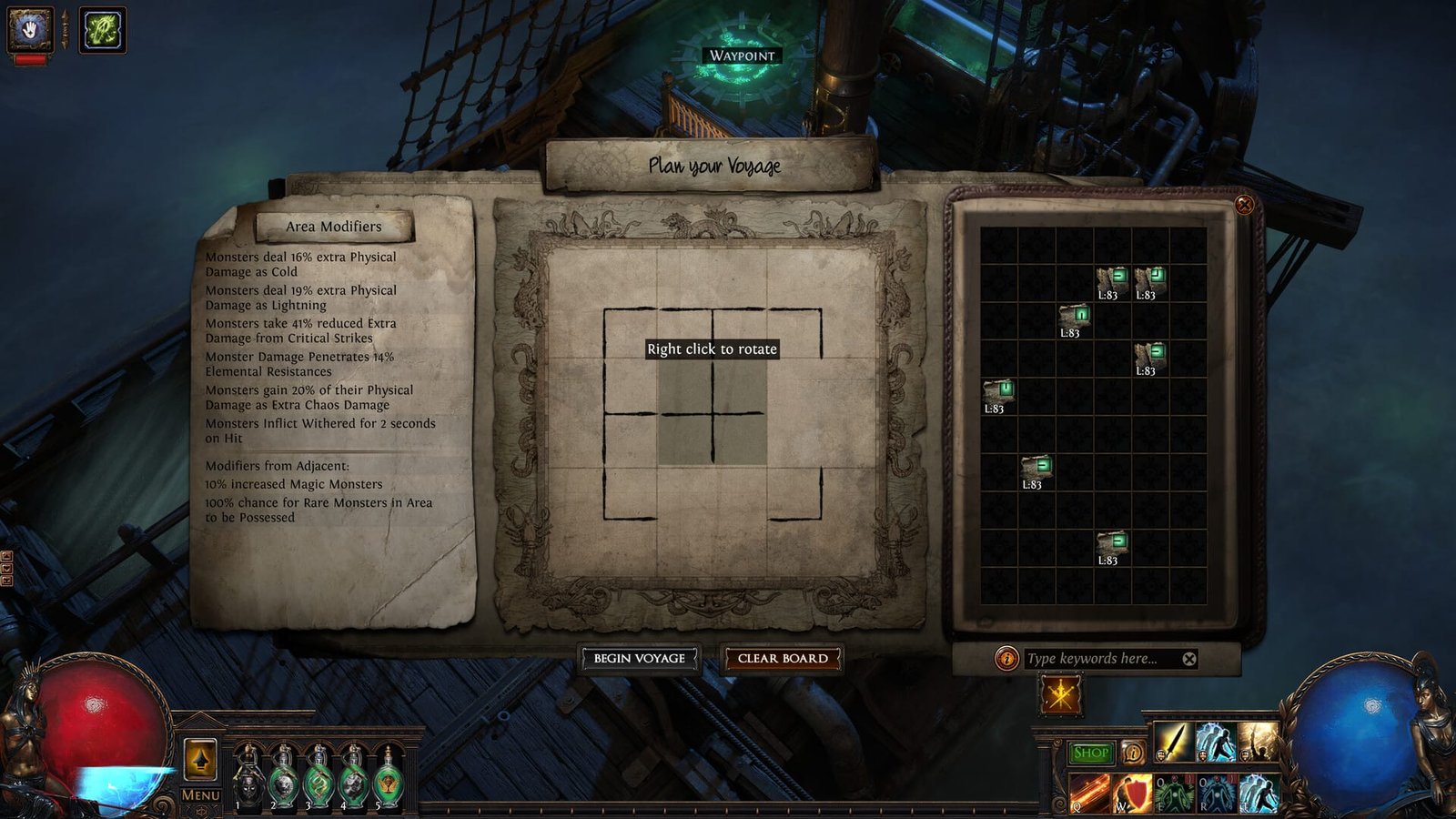
You’ll start running into Mercenaries partway through the campaign. They appear from Act 3 onwards, standing in the open and waiting to be challenged. A handful of specific zones guarantee a spawn every time — you are guaranteed to find a Mercenary in the following Campaign Areas: The Sceptre of God, The Grand Arena, The Ridge, and The Hidden Underbelly, and Mercenaries found in these areas will not have any Rucksack items. Outside those guaranteed rooms, they show up as random field encounters both in the story and later in maps. They will have a special marker on the minimap, and upon approaching, they will be either neutral or hostile, and you can interact with them, with clicking on them triggering a betting duel. Once you’re into the Atlas, dedicated Atlas passives and scarabs let you chase them on purpose rather than hoping for a random pull — useful once you’ve already read up on how Voyages and the wider 3.29 Voyages system slot into your Atlas plan for the league.
If the mechanic is clear but your Atlas is still the bottleneck, Full Atlas Completion unlocks all 118 maps so you can start target-farming Mercenaries with Atlas passives and Trarthan Scarabs instead of waiting on campaign or map progression.
Anyone who would rather not spend the evenings on it can hand Path of Exile boosting to our crew instead — same account, same progress, played by hand.
Step-by-Step: How to Hire a Mercenary in PoE 3.29
A hired mercenary scales its stats and skills to whatever area you are in, capped at level 68. The gear you can equip is capped separately — by the level of the area where you found it, not where you are now. That cap matters more than it sounds — grab a mercenary in an early zone and you’re stuck gearing it with early-game items no matter how deep into maps you drag it along.
Warning
Losing the duel isn’t a soft fail. Your entire Gold wager is forfeited on a loss and the mercenary simply leaves, so don’t throw a wager you can’t afford at a fight you’re not confident about.
Follow this sequence to get it done fast.
-
1
Spot the marker
Mercenaries carry a distinct minimap icon in Act 3+ zones and in maps; approach to trigger the interaction.
-
2
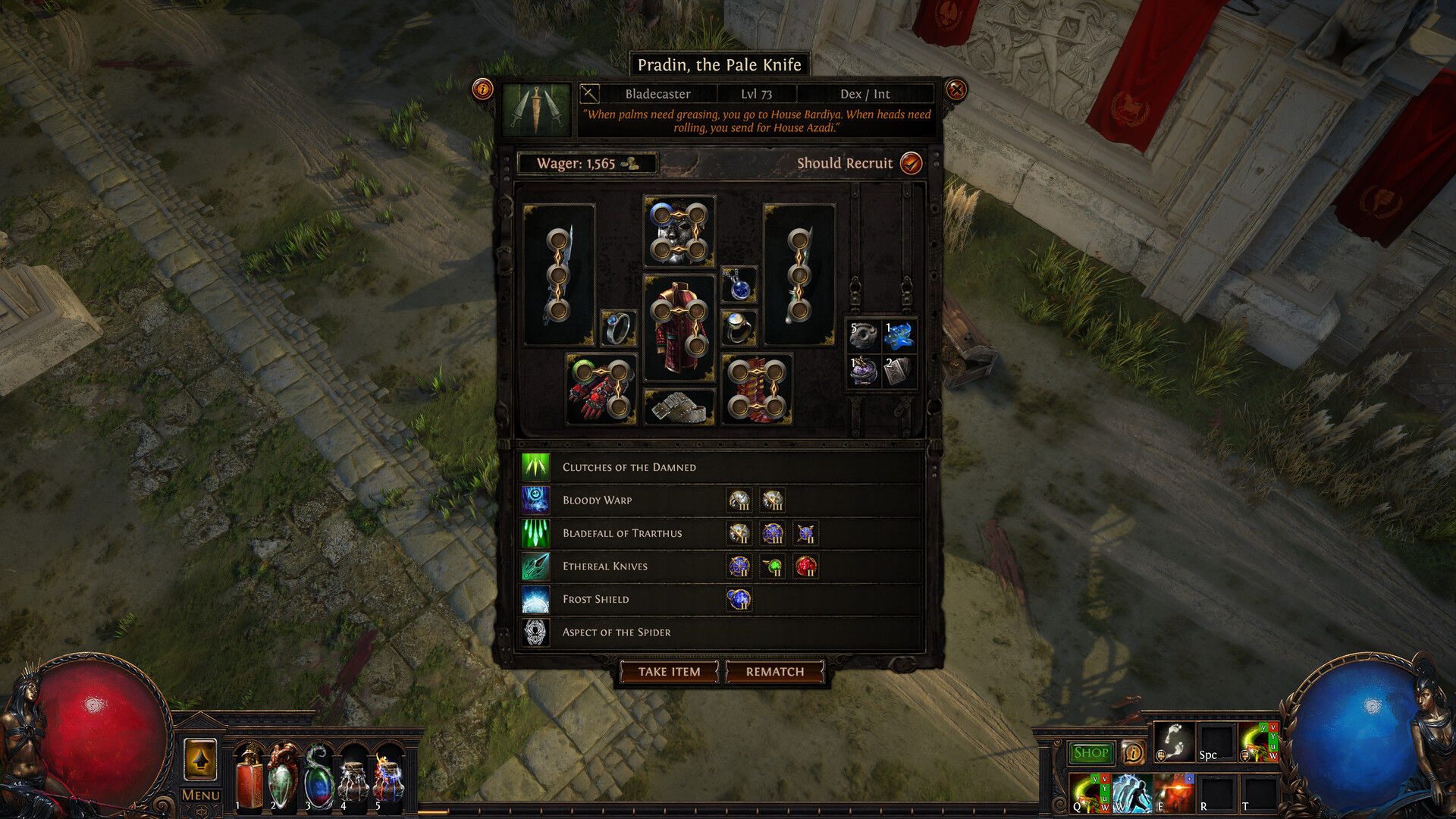
Inspect the wager item
check what gear they're carrying before you commit anything, since that's the one thing you're actually fighting for.
-
3
Set your Gold wager
you can accept a duel and wager Gold for an item the Mercenary carries.
-
4
Fight the duel
win and you take the item plus a temporary ally; if you lose, the gold you levied will be forfeited and the Mercenary teleports out, but win and the Mercenary will aid you as an ally for a number of areas, in addition to winning the spoils.
-
5
Request a Warrant if the offer's bad
in Map areas, if you don't like anything the Mercenary offers, you're able to request their Warrant, a promise to return and duel again at a later date with the same set of Skills but a new set of items.
-
6
Go permanent if you're Luminary
allocate the ascendancy's opening node to keep that mercenary for good instead of losing it after a set number of zones.
Best Mercenary Farming and Hiring Methods
Not every route to a mercenary costs the same amount of effort, and once you’re past the campaign the choice is really between hunting them yourself or buying the result on the trade site.
Atlas passives plus four new Trarthan Scarabs support dedicated farming: guaranteeing an encounter, adding Infamous or Wild Mercenaries, forcing Unique equipment, or pairing Mercenaries with Rogue Exiles. If your build’s still coming together and you’re deciding whether to grind these out yourself, it’s worth cross-checking against one of the league-start build breakdowns before committing scarab currency to a specific merc archetype.
| Method | Speed | Effort | Best For |
|---|---|---|---|
| Guaranteed campaign zones | Fast, one-time | Low | Getting your first taste of the mechanic |
| Atlas passives + Trarthan Scarabs | Steady, repeatable | Medium | Deliberately farming for Luminary gear or Warrants |
| Random map encounters | Unreliable | Low | Casual pickups while mapping normally |
| Buying Warrants on trade | Instant | Currency cost only | Skipping the RNG for a specific skill package |
Mercenary Rewards: What You Actually Unlock
A temporary hire from any class
Basic mercenaries provide an aura and some combat support, comparable to a typical 2-point ascendancy node, while strong mercenaries like an Infamous Kineticist can provide multiple buffs while clearing faster than the player at times. This is what every non-Luminary character gets — a strong but time-limited helper, not a build pillar.
A permanent Luminary mercenary
The Luminary can permanently keep up to three Mercenaries at once, with one active in combat while two remain in reserve, and the class opens up two distinct build directions where you either support your Mercenary or your Mercenary supports you. Unlike regular Mercenaries, you can change their equipped items — that gear-swap right is the entire reason the ascendancy exists.
A tradeable Warrant
For players looking for top-tier mercenaries, mercenaries are bundled into items called Warrants for easy trading between players, and before trading you can view the mercenary’s skills, support gems, and starting equipment. This turns a bad RNG roll into a currency problem instead of a dead end.
Mercenaries are a lever you pull while the character underneath them is still climbing — and that climb is the part that actually gates your league. If you are still working toward maps rather than optimising inside them, our level 1 to 100 walkthrough covers the route the hiring pool assumes you have already run.
Common Misconceptions About PoE Mercenaries
Myth: hiring costs a fixed price
There’s no price tag on a mercenary. You choose your own Gold wager against a specific item they’re holding, and the amount you’re willing to risk is the only “cost” that exists at the point of hire.
Myth: any class can keep a mercenary forever
The Mercenaries are temporary allies that aid you in battle after you defeat them in a duel, and if you want to make their services more permanent, you have to go for the Luminary ascendancy class, specifically with the ascendancy node that lets the Luminary hire a Mercenary permanently. Everyone else is renting, not owning.
Myth: a mercenary buffs your loot like a second player
Mercenaries do not count as party members, so they do not increase monster life or item quantity and rarity. Bringing one along is pure combat help, not a loot multiplier.
Our Take: Are Mercenaries Worth It in 3.29?
Our Take
Worth engaging with casually on any build, worth building around only if you’re actually playing Luminary.
For a normal character, a mercenary is a free combat cooldown you stumble into while mapping — inspect the item, risk some Gold you’d otherwise dump on the Currency Exchange anyway, and take the temporary help if you win. There’s little downside because the system was clearly designed not to compete with your own build: no party scaling, no permanence, no commitment.
Luminary is the harder sell right now. Early reports describe the ascendancy as build-defining but not free — permanent mercs took a hidden damage nerf compared to the 3.26 Mercenary league, which has left many day-one Luminary players struggling to clear yellow and red maps without heavy investment. That’s a single early read on a mechanic four days old, so treat it as a caution flag rather than settled fact. If you’re chasing a specific skill package on the trade site, expect prices to be volatile this early — one source pegged a high-level mercenary Warrant with a skill perfectly suited to the meta at between 10 and 50 Chaos Orbs, though that number will move a lot as the economy settles and shouldn’t be treated as a stable price check yet.
Tip
Evaluate every encounter by the skill package first, not just the visible item. A defensive aura, curse, exposure, recovery tool, or crowd-control skill may matter more than the visible item wager — a Warrant is worth requesting even off an ugly gear roll if the skills underneath are good.
Was this guide useful?
Path of Exile services
Challenge League · Leveling
Powerleveling — Custom Range (1-100)
Pick your start and target level, 1 to 100 · Full act completion and three Labyrinths

Standard · Atlas & Bosses
Full Atlas Completion — All 118 Maps
All 118 Atlas maps completed · Unlocks the full Atlas passive tree and bonuses

Challenge League · Leveling
1-70 Leveling + All 10 Acts + 3 Labs + 24/24 Skill Points
Levels 1 to 70 with all ten acts cleared · Three Labyrinth runs completed