On this page
Voidstones are the four endgame items that raise the base tier of every map on your Atlas, and each one sits behind a pinnacle boss fight rather than a drop table you can just farm. This isn’t a side-grade like a scarab or a map device fragment — it’s a permanent multiplier on the density of every map you’ll run for the rest of the league, which is exactly why the order you collect them in matters more than most players assume. Endgame progression effectively splits into “before Voidstones” and “after Voidstones,” because the jump in monster count and reward density per map tier is the single biggest step-change in the entire game.
TL;DR
- Voidstones raise the base tier of every map on the Atlas — this is a permanent multiplier, not a one-time upgrade
- Four stones exist, each tied to one Atlas quadrant and one pinnacle boss encounter
- The Searing Exarch and The Eater of Worlds currently share a single stone, so the “four bosses, four stones” idea circulating online is outdated
- The bottom-left quadrant (Exarch/Eater) is the fastest first stone because it unlocks automatically as you map
- A pinnacle boss can end a run instantly through a scripted mechanic — gear level does not save you from a mistimed phase
| Voidstone | Quadrant | Unlocked by |
|---|---|---|
| Eldritch Voidstone | Bottom-left | Defeating both The Searing Exarch and The Eater of Worlds |
| Ceremonial Voidstone | Bottom-right | Defeating The Maven (regular fight, no Uber required) |
| Decayed Voidstone | Top-right | Defeating The Shaper and The Elder |
| Originator Voidstone | Top-left | Completing Eagon's Memory chain into the Incarnation of Dread |
All Four Voidstones
All four stones socketed: every map starts at max tier
Where to Get Voidstones: Every Quadrant, Boss and Path
Each Atlas quadrant hides its own progression chain, and none of them overlap — you can genuinely work on more than one at a time once you know what triggers each. Bottom Right – Maven Voidstone After completing the Maven’s questline and defeating her, you will receive a Voidstone that can be placed in this slot, while Top Left – Eagon Voidstone gives you a series of quests tied to special maps called Memories, eventually leading to invitations for bosses such as Moment of Loneliness, Moment of Trauma, and Moment of Reverence. The top-right quadrant runs on old-school Atlas influence: you must complete the unique maps located in this paper and progress through the encounters that lead to The Elder and The Shaper, since special maps with the Elder or Shaper influence spawn fragments that need to be collected and combined to unlock the fight. The bottom-left quadrant is the one that unlocks itself almost without you noticing, since running enough maps under Exarch or Eater influence eventually hands you the invitation on its own. Once socketed, a Voidstone upgrades all maps within that quadrant to Tier 16 and enables the chance for maps to become Nightmare Maps, which function similarly to Tier 17 maps and are also required for additional Atlas Passive Points.
| Quadrant | Voidstone | Boss | What opens the path |
|---|---|---|---|
| Bottom-left | Eldritch | Searing Exarch & Eater of Worlds | Map with Exarch/Eater influence, then quest invitations that unlock as you clear more maps |
| Bottom-right | Ceremonial | The Maven | Witnessing map bosses under Maven's influence, then a Maven's Invitation |
| Top-right | Decayed | Shaper & Elder | Guardian fragment maps combined into the two boss fragment sets |
| Top-left | Originator | Incarnation of Dread | Eagon's Memory map questline culminating in the Incarnation fight |
If the hours are the obstacle rather than the fight itself, Path of Exile boosting is run hands-on by a booster from your region.
Step-by-Step: Unlocking Your First Voidstone
Tip
Start the bottom-left quadrant first. It progresses passively while you map for currency, so by the time you’re geared enough to attempt Maven or the guardian bosses, the Eldritch Voidstone is often already sitting in your inventory.
Follow this sequence to get it done fast.
-
1
Finish the campaign and open the Atlas
Voidstone progression only starts once you're mapping post-campaign, so get through the story first if you haven't already.
-
2
Run maps until the Envoy appears
this NPC shows up on a map once you've progressed far enough and starts unlocking the Maven, Exarch and Eater symbols on your map device.
-
3
Assign Exarch or Eater influence to your maps
activate one of the two symbols in the map device before opening a map to push that questline forward.
-
4
Clear the required number of influenced maps
the game tracks how many maps you need before it hands you a boss invitation; this scales as you go, so expect the count to climb the deeper you get.
-
5
Fight the mini-bosses and pinnacle encounter
both chains gate you behind a sub-boss before the actual pinnacle fight, so budget for two hard fights per stone, not one.
-
6
Socket the Voidstone once it drops
place it in its Atlas slot immediately; it applies retroactively to that whole quadrant.
Best Voidstone Order: Which Quadrant to Start With
There’s no forced order, but the quadrants are not equally accessible early on, and that changes the pace of everything else you do on the Atlas. The bottom-left chain (Exarch/Eater) needs no special fragments and unlocks through normal map progression, which makes it the obvious starting point. Maven and the guardians both gate you behind fragment collection or witnessing requirements that take longer to set up, so pushing them second or third — once your build and Atlas passives are stronger — tends to go faster overall than trying to rush all four in parallel.
| Approach | Speed | Effort | Best for |
|---|---|---|---|
| Bottom-left first, then clockwise | Fast | Low early, rises later | Fresh league starters who want a Tier 16 quadrant ASAP |
| Maven-first rush | Slow | High | Players who already have a strong build and want boss splinters early |
| Guardians (Shaper/Elder) first | Medium | Medium | Players comfortable with fragment farming and older Atlas influence mechanics |
| Buying invitations in trade | Fast to the fight, not to the kill | Currency-dependent | Trade league players who want to skip the setup grind but still have to win the fight |
How Many Pinnacle Fights Do You Actually Need?
This is where a lot of outdated guides and old forum threads get it wrong. The classic version of this system — Elder, Maven, Searing Exarch, Eater of Worlds each dropping their own stone — is no longer how it works. The Searing Exarch and The Eater of Worlds currently share one stone, reducing the total required encounters. You still have to beat both bosses, but they only cost you one Voidstone slot between them, not two. The guardian side tells a similar story: current progression no longer requires fighting Uber Elder for basic progression, which cuts the required guardian fights in half compared to the old routing. Stack it up and the honest total sits at six mandatory pinnacle-tier kills across the four stones — Exarch, Eater, Maven, Shaper, Elder and the Incarnation of Dread — not eight, and not the “one boss per stone” math that still gets repeated online.
Pinnacle Bosses vs Map Bosses: Why They End Runs Instantly
A pinnacle boss isn’t just a bigger map boss
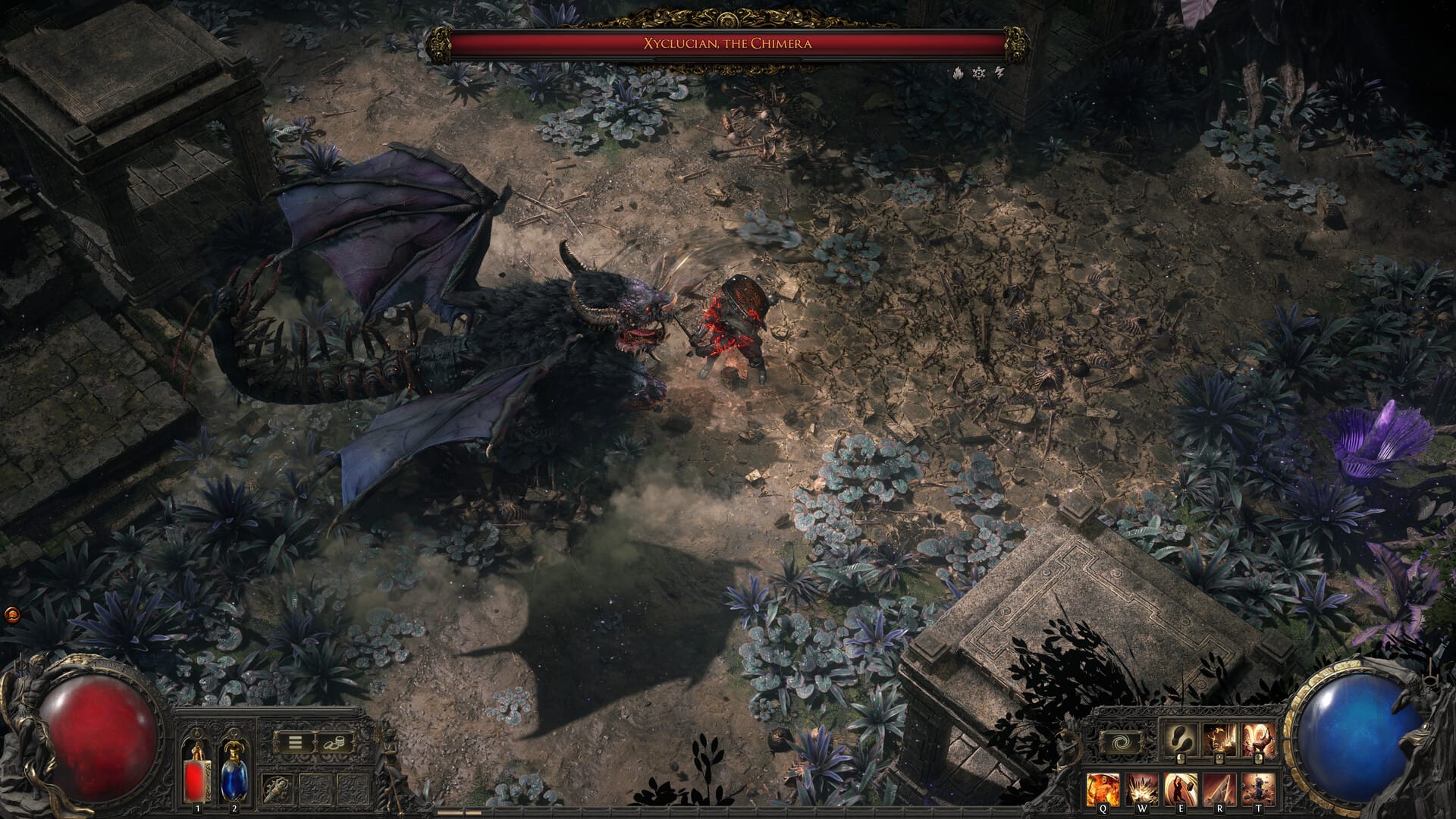
A regular map boss is a damage race with some telegraphed attacks you can gear or dodge around. Pinnacle bosses build entire encounters around a scripted mechanic that either resolves correctly or kills you outright, regardless of how much life or resistance you’re stacking. The Maven’s Memory Game is the clearest example: it stops the fight to force a sequence-memorization puzzle, and getting it wrong is not a damage-taken problem, it’s a run-over problem.
Character level doesn’t fix a mechanic check
This is the part players underestimate going into their first pinnacle attempt. You can be massively overgeared for the DPS check and still die to a phase transition, a beam you didn’t rotate out of, or a timing window you didn’t respect. Fights like the dual Shaper/Elder encounter demand tracking two bosses’ attacks at once, and no amount of extra passive tree damage changes that you still have to physically dodge it.
Myth: more Voidstones make bosses easier
Voidstones raise map tiers and juice mechanics, they don’t nerf the pinnacle fights themselves. Each encounter’s mechanics stay identical regardless of how many stones you’ve already socketed — the stones change what you fight afterward, not the fight you’re currently in.
1-70 Leveling + All 10 Acts + 3 Labs + 24/24 Skill Points
Levels 1 to 70 with all ten acts cleared
Voidstone Rewards and What Each Stone Unlocks
Don’t stop at one Voidstone
A single stone only raises its own quadrant. If you only ever run maps from that corner of the Atlas you’ll miss the density gains everywhere else, and your currency farming routes will stay capped well below what the endgame is actually built to support.
Atlas passives compound with Voidstones
Spending points on the Atlas passive tree before you’ve socketed any stones is fine, but the real payoff comes after — several of the strongest nodes scale with map tier, so a Tier 16 floor makes every point you’ve already spent worth more.
| Reward | How you get it | Why it matters |
|---|---|---|
| Tier 16 floor on a quadrant | Socketing the matching Voidstone | Every map in that quadrant now drops and scales as a much higher tier by default |
| Nightmare Map chance | Socketing all four stones | Opens access to content that plays similarly to former Tier 17 maps |
| Quadrant-specific bonuses | Each stone's unique effect once socketed | Stacks with the others rather than just adding tier — this is why collecting all four beats stopping at one or two |
Our Take: Are Voidstones Worth Rushing?
Our Take
Yes, and the order genuinely changes your league — but don’t skip the setup to save a few days.
Voidstones are the closest thing Path of Exile has to a hard endgame gate, and treating them as optional is a mistake early on: every map you run before socketing the first stone is running at a fraction of the density you’d get afterward. That said, chasing Maven or the guardians before your build can actually survive their mechanics wastes more time than it saves — dying repeatedly to a memorized phase costs more portals and currency than waiting two more days for better gear would have.
Was this guide useful?
Path of Exile services
Challenge League · Leveling
Powerleveling — Custom Range (1-100)
Pick your start and target level, 1 to 100 · Full act completion and three Labyrinths
Standard · Atlas & Bosses
Full Atlas Completion — All 118 Maps
All 118 Atlas maps completed · Unlocks the full Atlas passive tree and bonuses

Challenge League · Builds
Premium Meta Build — Full Content Clear
Tanky, high-damage setup for pinnacle bosses · Clears every piece of content without a gear check