On this page
Mortal Shell 2 launched worldwide on 20 August 2026, and the first wave of Steam reviews sits at Mostly Positive rather than the higher tiers some pre-launch coverage implied. This piece is not a review — it is a read on what the reception actually says a few hours in, what the negative reviews keep repeating, whether Cold Symmetry has responded to the technical complaints, and what you actually need to know before you hit install.
TL;DR
- Steam has the game at Mostly Positive within the first several hours of worldwide launch, below Very Positive and Overwhelmingly Positive
- Recurring negative-review themes: crashes (including on strong hardware), some progression-affecting bugs, no difficulty slider — though the Slayer Seal does lower the challenge at the cost of trophies — and long runbacks to bosses after checkpoints
- Positive reviews consistently praise the stamina-free combat as faster and more responsive than the original
- Cold Symmetry has publicly acknowledged crashes and shipped hotfixes since Advanced Access opened
- Install sizes are reported at roughly 32 GB on PS5, 31.6 GB on Xbox Series X|S, and around 70 GB on PC, which requires an SSD
Unlock All Weapons
Every primary weapon unlocked on the account
Is Mortal Shell 2 good at launch? What Mostly Positive actually means
Right now, in the first stretch after the worldwide unlock, the game’s Steam review score sits in the Mostly Positive band rather than Very Positive or Overwhelmingly Positive. That distinction matters because Steam’s tiers are not just a raw yes/no split — Very Positive and Overwhelmingly Positive generally require a stronger and more consistent ratio across a larger review sample, while Mostly Positive reflects a real but more mixed reaction, with a noticeably larger share of negative write-ups than the top tiers would allow. Critic scores, separately, have landed higher: Mortal Shell II currently holds an 85 on OpenCritic, rated “Mighty,” with 92% of critics recommending it, and an 84 on Metacritic for PC and 85 for PS5, and the original Mortal Shell scored 76 on OpenCritic for comparison. That gap between critic scores and the player rating is the actual story on launch day — critics who finished review builds are more positive than the wider player base is proving to be right now.
It is also worth remembering that aggregate scores can move as more reviews are added after launch, so treat any single snapshot, including this one, as a moment in time rather than a settled verdict.
Where the grind outlasts the interest, Mortal Shell 2 boosting picks it up from wherever the account already stands.
What the negative reviews keep coming back to
Pull up the recent negative reviews and a handful of complaints repeat far more than anything else. None of these are confirmed, measured defect rates — they are what players are reporting, over and over, in their own words.
On the crash front specifically, one Steam Community thread captures the frustration bluntly: a player wrote that “the crashes are such a buzzkill and downright annoying”, while others in the same thread reported dozens of hours with zero crashes at all — the experience is genuinely uneven rather than universal. A separate review from a wider outlet described glitches as a routine occurrence, including falling through the world and crashes to the PlayStation 5 dashboard happening at a high frequency even with the day’s latest patch, and noted a repeatable glitch that would break enemy AI and leave them wandering their preset paths. A PS5 review build also reportedly ran into a case where a crash caused permanent loss of recoverable currency after a death — a bug type, not a confirmed universal outcome.
Warning
If you crash near or after a death, do not assume your dropped currency is safe to recover later. At least one reviewer reported it being lost permanently after a crash interrupted the normal recovery state, so treat that as a real risk rather than a guaranteed inconvenience.
None of this is universal. Plenty of players are reporting clean runs with no crashes at all, and the discrepancy between “zero issues” and “constant crashes” in the same threads is itself part of the story — this looks like a launch with real but inconsistent stability problems rather than a uniformly broken build.
| What players report | Who it seems to affect | Is there a fix yet |
|---|---|---|
| Crashes, including on strong PC hardware and to the PS5 dashboard | A mix of PC and console players, not tied to any one GPU tier | Partial — hotfixes have targeted some crashes, others remain unresolved |
| Progression-affecting bugs, including a UI lockup tied to one item and a reported loss of recoverable currency after a crash | Players who hit specific triggers rather than everyone | Partially patched; some reports are still unconfirmed as fixed |
| No difficulty menu or slider | Players looking for an easier mode in the options screen, where there isn’t one | Partly a misconception. There is no slider, but the Slayer Seal — taken from the Magnificent Seat once you reach Marrow Keep — makes ripostes and executions restore health and Resolve and gives your Sidearm Break Damage. Equipping it disables trophies on that save, and because it sits in the world rather than in a menu, plenty of players never find it. |
| Checkpoint placement forcing long runbacks to bosses | Anyone repeatedly losing to a boss encounter | No fix announced; this reads as intentional pacing rather than a bug |
What the positive reviews are actually praising
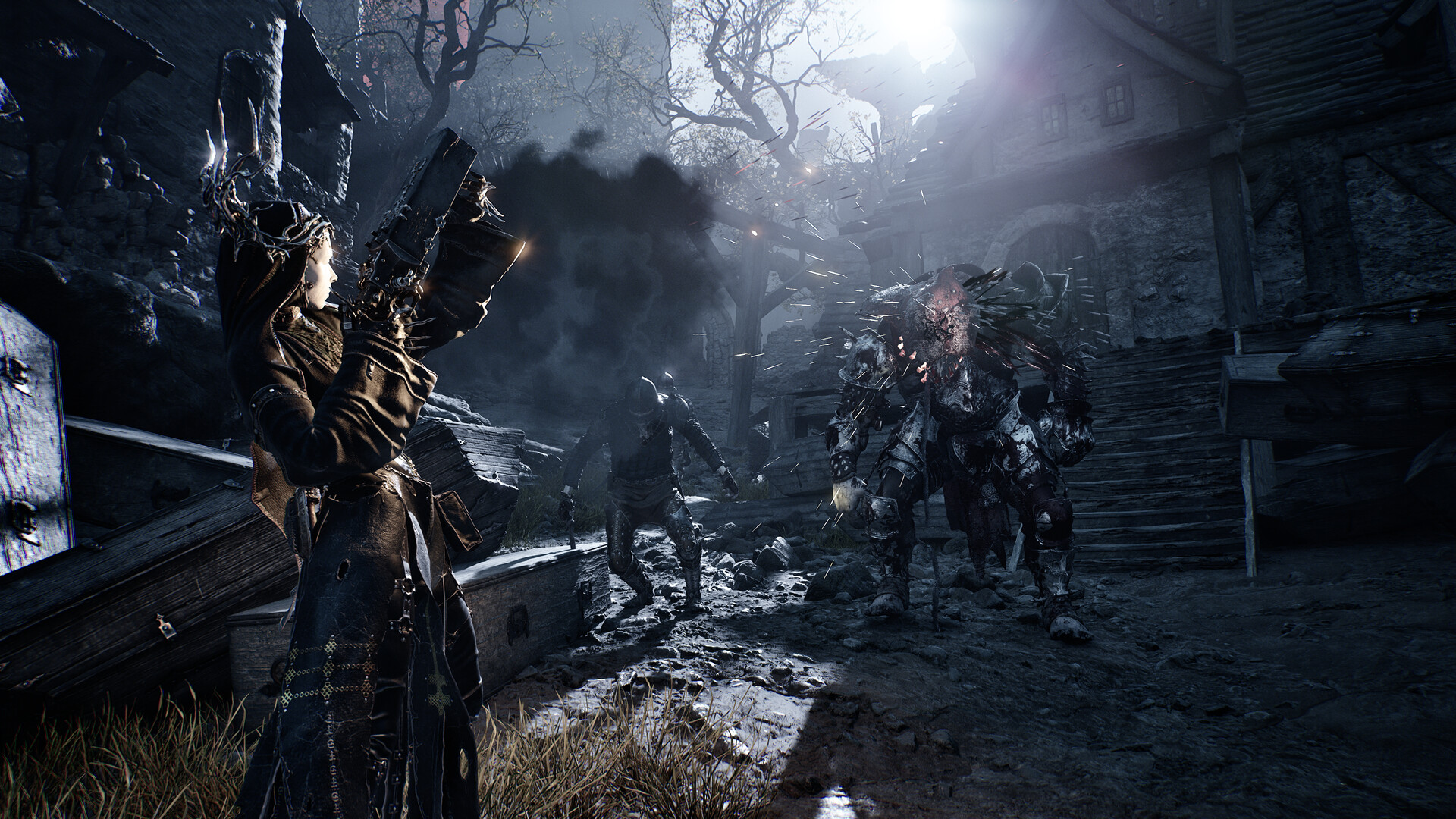
Set against the technical complaints, the praise is fairly consistent and centers on combat. The biggest change is the removal of the traditional stamina meter, so you no longer need to stop attacking or dodging simply because a bar has emptied, and fights encourage constant pressure while still punishing reckless attacks through committed animations and enemy counterattacks. Outlet coverage frames this as a genuine improvement over the first game rather than just a tweak — GameSpot highlights this change as one of the reasons combat feels substantially better than in the original. Reviews also point to the returning Shell system, which lets you inhabit different fallen warriors for different builds; if you’re deciding which one to start with, that’s covered in the site’s guide on which shell to pick first rather than something worth re-explaining here.
A Steam Deck-focused review summed up the moment-to-moment feel similarly, noting that dodging and parrying were precise, attacks landed and staggered enemies appropriately, which lines up with what the broader critic consensus is saying about the combat overhaul specifically, separate from the stability complaints.
Has Cold Symmetry or Playstack said anything about the crashes?
Yes, at least on the crash front specifically. Cold Symmetry posted directly in the game’s Steam Community discussions during Advanced Access, telling players: “Hey all, for any players experiencing crashes, we’ve just pushed a hotfix to the game’s default branch.” The studio has also confirmed the game crashes for some players when they open Settings, Keyboard Bindings, and posted a fix for it, and separately shipped a hotfix covering miscellaneous crash and stability fixes, a fix for one item locking up the UI when equipped from the beacon menu, and a fix for stealing enemy weapons mid-riposte. That confirms the studio is actively patching. What has not appeared, at least not yet, is any public statement addressing the visibility of the Slayer Seal or the checkpoint/runback criticism directly — those read as design decisions the studio hasn’t commented on, rather than bugs it has acknowledged needing to fix. Don’t read the silence on those two points as an admission either way; it’s simply unaddressed so far.
Tip
If the game crashes specifically on loading, launch-window PC coverage points to Frame Generation as a separate graphics option from the resolution upscaler, and turning it off is one of the first things worth trying before touching drivers or launch commands.
The honest cost of buying in right now
Cold Symmetry has already pushed multiple hotfixes since Advanced Access opened, which tells you two things at once: the studio is responsive, and the build you’d be installing today is not the finished, settled version of the game. If you buy now, factor in a roughly 70 GB PC download (or the console equivalents below) before you even reach a menu, the likelihood of at least one more patch landing in your first week, and the real chance — based on what’s in the reviews right now — of hitting a crash or a runback grind that a later patch might soften. That’s the actual price of playing on day one instead of waiting a few weeks: not a dollar cost, but a stability and patience cost.
The practical buying facts
For anyone installing today, the reported storage figures are worth checking against your own drive before you start:
Those edition prices and the early access window come from the Standard Edition at $49.99 and the Devout Edition at $59.99, with Devout including up to 72 hours of advanced access. If you’re past the buying decision and already in the game, the site’s guides on where to go in the first hours and how Tarforge upgrades actually work cover the systems questions this piece isn’t the place for.
| Platform | Reported install size | Notes |
|---|---|---|
| PlayStation 5 | ~32 GB | — |
| Xbox Series X|S | ~31.6 GB | — |
| PC (Steam) | ~70 GB | SSD required, not just recommended |
All Resources, Ore & Materials
Every crafting material the game drops, topped up
Step-by-step: what to do before you launch Mortal Shell 2 today
Follow this sequence to get it done fast.
-
1
Update your GPU driver first
several crash reports mention driver-related instability, and it's the lowest-risk fix to try before anything else.
-
2
Confirm free drive space against the platform figures above
the PC install specifically needs an SSD, not just free space on any drive.
-
3
Check for the latest hotfix before your first session
Cold Symmetry has already shipped more than one patch since Advanced Access, and running an outdated build increases your odds of hitting an already-fixed bug.
-
4
Turn off Frame Generation if you hit a crash on loading
this is the specific workaround launch-window PC coverage has pointed to.
-
5
Pick your starting Shell before committing hours
use the site's guide on which shell to pick first rather than guessing, since it shapes your early build.
Our Take: buy now or wait for patches?
Our Take
Mostly Positive is an honest label, not a red flag — but it’s also not a reason to ignore the crash reports.
The combat overhaul is real and reviewers across outlets keep landing on the same point: removing stamina makes fights faster and more aggressive than the original allowed. That part of the reception looks solid. The stability side is genuinely mixed rather than catastrophic — some players are logging dozens of crash-free hours while others are hitting multiple crashes a session, and Cold Symmetry is visibly patching rather than staying silent. If you can tolerate a launch-week build with an active hotfix cadence, there’s little here suggesting you’re buying a broken game. If crashes are a dealbreaker for you specifically — the difficulty complaint has an answer in the Slayer Seal, if you accept losing trophies for it —, waiting a couple of patch cycles costs you nothing but time, and the review score will likely settle into a clearer picture by then anyway.
Was this guide useful?
Mortal Shell 2 services
Weapons
Weapon Leveling — Per Level
Any weapon, one level at a time · Set the quantity to the number of levels you want
Progression
Tarforge Unlock
The Tarforge opened on your save · Upgrades stop being gated behind it
Progression
Map Opening
The world map uncovered across the whole game · Played through rather than edited in