On this page
Status
Written in the first week of Ranked Mode (30 July 2026). Beta Season 1 runs to 7 October 2026 and the ranked pool has grown since, so the queue-time picture below is a launch-week snapshot; the unlock rules (60 Standard wins, 15 wins on each of three heroes, eight calibration games) are unchanged.
Deadlock ranked queues are running long and matches feel uneven in week one because the new entry requirements have cut the eligible player pool down to a small fraction of the overall population, and that is the system doing exactly what it was built to do, not a bug that needs a fix. It is the second most-asked question this week behind the Haze problem in ranked, and the short version is: most players simply have not unlocked the queue yet, so whoever has is getting matched against a much shallower bench than usual.
TL;DR
- Long queues and rough match quality in week one are expected — Valve warned about this before launch
- Three entry requirements (60 Standard wins, 15 wins on each of 3 heroes, calibration) shrink the ranked pool hard
- High ranks and off-peak hours feel it worst because the eligible pool there is smallest
- Solo queue, playing during peak hours, and sticking to a one-rank duo spread are the only real levers you have
- An 8-game calibration in a thin pool is noisy — a high starting rank right now proves less than it normally would
The Three Requirements Behind the Thin Ranked Pool
Deadlock‘s Beta Season 1 launched with matchmaking split into a casual Standard Mode and a separate, seasonal Ranked Mode, and the ranked queue does not just open for everyone. Unlocking Ranked isn’t a single gate, it’s three separate counters that all have to clear before the queue button even lights up: at least 60 wins in Standard Mode, and at least three heroes with 15 unranked match wins each. The 60-win requirement applies to wins rather than matches played, so losing a Standard match does not move you closer to the total, and the same applies per hero. That means a player with 59 wins and two maxed-out heroes is still locked out until both counters clear.
For the full breakdown of every rank tier and how subrank promotions work, the Deadlock ranked mode unlock guide covers the ladder end to end. This piece is specifically about why the queue itself is behaving badly right now, not what the ranks mean. And if the three counters are the wall rather than the ladder behind them, Ranked Access exists to clear exactly those.
| Requirement | What it actually checks | Why it hits skilled players too |
|---|---|---|
| 60 Standard wins | Baseline game knowledge before results count toward a ladder | Even strong players who just started playing recently haven't banked the wins yet |
| 15 wins on 3 separate heroes | Proves you can actually pilot the heroes you'll queue with | Flex or utility players who rotate heroes often need three separate 15-win counters, not one |
| 8-game calibration, solo only | Seeds your starting rank inside the season | Capped below Oracle VI regardless of how the 8 games go, so even a strong run undersells you |
If the hours are the obstacle rather than the fight itself, Deadlock boosting is run hands-on by a booster from your region.
Why High Ranks Feel the Thin Pool Harder
The pain is not evenly distributed. A pool that is thin overall gets much thinner at the edges of the skill curve, because fewer people reach a high rank at all, and among those who do, an even smaller slice has actually met all three gates already. Ranked currently supports only solo or duo queues, duo partners must be within one full Rank of each other, and Eternus players can only queue with other Eternus players and must be within three subranks. Stack that rank-spread rule on top of a thin population and the matchmaker at the top of the ladder is drawing from a genuinely small group, which is exactly where queue times stretch the most and match quality gets shakiest. This is also tangled up with per-hero matchmaking behavior — see the Deadlock hero MMR explainer for how experience on a specific character changes who you get matched with, separate from your overall rank.
Valve itself flagged this trade-off, saying “we recognize that the party size and rank spread limits might be too restrictive, but we wanted to start off this way and then adjust in the future as needed.” In other words, the restrictions are intentional and provisional, not a launch oversight.

What You Can Actually Do About Long Queue Times
None of this is something you can patch on your own end. Ranked requirements, Rank Points, matchmaking rules, and server-side queue times are controlled by Deadlock and cannot be changed through local network settings or game boosters — a stable connection matters once a match starts, but it does zero for how long the matchmaker takes to actually form the lobby. What you can control is smaller and more boring: when you queue, who you queue with, and how wide a rank spread you’re asking the matchmaker to bridge.
Warning
Do not buy connection-boosting tools or network utilities expecting them to fix ranked queue times — the queue and matchmaker run entirely server-side, so nothing on your machine changes how many eligible players are in the pool.
Tip
If you have a friend close to your Standard win count, grind hero wins together in Standard first — there’s no party restriction there, and it sets you both up to duo in Ranked the moment you clear calibration.
| What influences queue | How much it matters | Can you work around it |
|---|---|---|
| Time of day / regional peak hours | Large — more concurrent players means a deeper pool to match against | Yes, queue during your region's busiest hours |
| Solo vs duo queue | Moderate — duo forces the matchmaker to seed two accounts together, which narrows options | Partially — solo queue draws from the widest possible pool |
| One-rank duo spread cap | Moderate to high at extremes, since a mismatched duo simply cannot queue | No — this is a hard Valve-set rule for now |
| Your current rank tier | High at the top of the ladder, low near the middle | No — fewer players exist up there by definition |
| Whether you've cleared all three unlock gates | Total — you don't queue at all until you clear them | Yes, this is the one thing fully in your hands |
Calibration From 8 Matches: Why an Early High Rank Means Less Right Now
Every player entering the new season goes through calibration, and it’s worth being honest about what that number can and can’t tell you. Calibration is 8 solo matches with a soft reset from your prior standing, capped at Oracle VI on the way out. Eight games is a small sample under normal conditions, and right now it’s an even noisier one, because those eight matches are being played inside the same thin, still-forming pool described above. A calibration run that lands you at a high rank this week is being measured against a partial field, not the settled mid-season population — treat it as a rough seed, not a verdict on your actual skill.
| Calibration fact | What it means for you |
|---|---|
| Solo-only, no exceptions | Parties are not allowed during calibration games |
| Soft reset, not a hard reset | Some history from your previous performance is retained and used to seed you into appropriate calibration matches |
| Hard rank ceiling | The highest rank achievable during calibration is Oracle VI, regardless of how dominant those 8 games were |
| Point swing per game | Wins and losses award or deduct Rank Points, averaging around ±250 points per game depending on match expectations and win streaks |
Common Misconceptions About Deadlock Ranked Queue Times
Myth: Long Queues Mean Matchmaking Is Broken
It isn’t broken, it’s throttled by design. Valve has warned that the first week or more will be unstable, as many players still need to meet the 60-win and hero-win requirements, meaning the pool starts thin and queue times, match quality, and team compositions are expected to be inconsistent until the population grows. That’s a stated trade-off, not a launch failure.
Myth: A Network Tool or Region Trick Will Fix Your Queue
Queue length is a server-side function of how many eligible players are online in your bracket at that moment. No client-side software changes that math — it can only affect your ping once a match has already started, which is a completely separate problem.
Myth: Your Calibration Rank Is Your Real Rank
An 8-game sample is always noisy, and one drawn from an unusually thin, still-forming pool is noisier than normal. Wait for a few dozen ranked games in a fuller pool before treating your placement as an accurate read on your skill.
Steps for Players Who Haven't Unlocked Ranked Yet
If you’re still waiting on access to the game entirely, that’s a separate bottleneck covered in the Deadlock access and invite guide — none of the above matters until you’re actually in.
Follow this sequence to get it done fast.
-
1
Check your Standard win count
open your rank history or profile hub to see exactly how far you are from the 60-win threshold, since only wins count.
-
2
Commit to three heroes early
pick three you actually want to play long-term, because each one needs its own 15 Standard wins before it's usable in Ranked.
-
3
Bank wins in Standard Mode deliberately
it has no party-size or skill-spread restrictions, so it's the low-pressure place to rack up both your overall total and hero-specific wins at once.
-
4
Confirm you don't have active sanctions
if you've had recent Low Priority or similar penalties, resolve those, since they can also block the Ranked queue on top of the win requirements.
-
5
Queue calibration solo
all eight games are solo-only, and remember the soft reset means your prior Standard performance still influences your starting seed.
-
6
Sync up with a duo partner afterward
both accounts need to finish their own 8 calibration games before you can queue Ranked together, and you'll still be capped to a one-rank spread.
Our Take: Is Deadlock's Ranked Rollout Actually a Problem?
Our Take
The rough week is a deliberate cost, not a bug, and it should ease as the pool fills.
Gating Ranked behind 60 wins and three separately-proven heroes is a blunt tool, but it’s the same bet other competitive games have made when launching a real ladder: a small, screened pool beats a huge, unscreened one for match quality over time. The pain right now — long waits, lopsided lobbies, a calibration rank that doesn’t mean much yet — is the visible cost of that bet, and it should fade on its own timeline as more accounts clear the gates over the following weeks, no fix required.
Was this guide useful?
Deadlock services
Rank Boost
Hero Mastery Leveling
Mastery levels on the heroes you actually play · Souls farmed and objectives taken in real matches
Rank Boost
Net Wins Boosting
A set number of net ranked wins · Losses do not count against your total

Rank Boost
Rank Boost
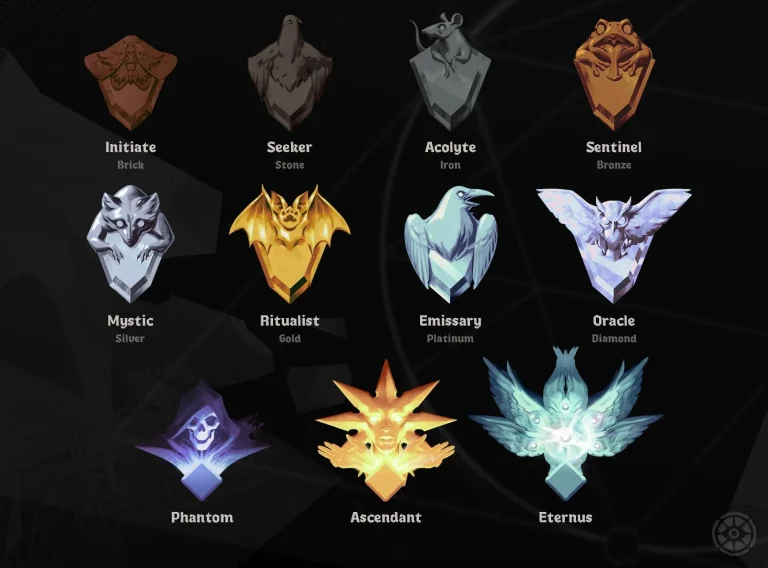
Pick your current and target badge · Every division from Initiate to Eternus