On this page
Deadlock‘s leaderboards are the ranked ladder’s top display case, and Eternus is the highest of the ladder’s tiers, sitting above Ascendant and Phantom. A July 30 matchmaking update tightened who gets to appear on those boards and made the climb to the very top behave differently from everything below it: instead of one set of rules for the whole ladder, Eternus now runs on a daily recalculated percentile system with its own party restrictions. This guide covers exactly what changed in the requirements, why Eternus is harder to hold than to hit, and what the practical path there looks like.
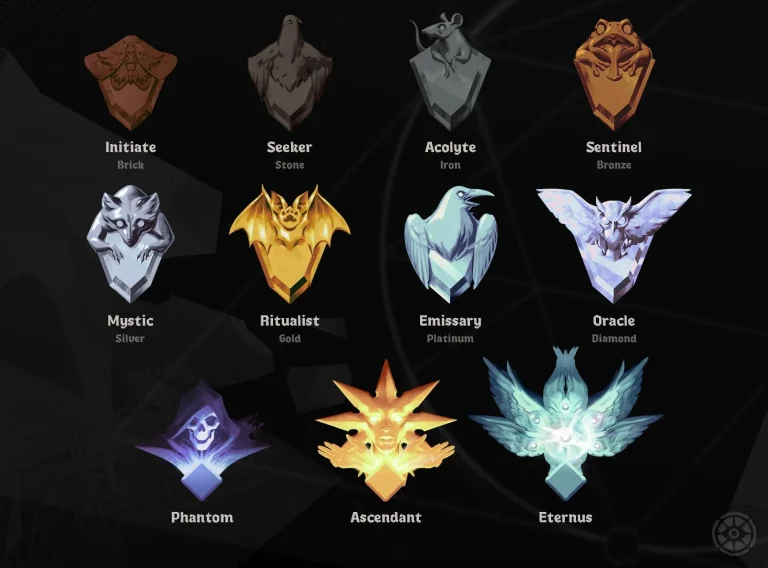
Deadlock‘s competitive ladder runs twelve tiers deep counting the uncalibrated placement state, and each tier below Eternus splits into six subranks numbered I through VI. Below is the full ladder for reference, since the terminology matters once you start reading requirement tables.
There are two separate boards worth knowing: a top 1000 Core MMR leaderboard as well as a top 1000 Hero MMR leaderboard for each hero, per region. Getting your name on either now takes noticeably more recent play than it used to.
TL;DR
- Global leaderboard eligibility jumped from 50 to 75 games played in the past 30 days.
- Hero-specific leaderboards now need 30 recent games (up from 20) plus a new 100 lifetime wins gate on that hero.
- Eternus subrank thresholds recalculate every day by percentile, not by a fixed point total like every rank below it.
- Eternus players can only party with other Eternus players within three subranks of their own.
- Your highest rank from Beta Season 1 is saved to your history permanently, even after the season resets on October 7, 2026.
| Tier | Position on the ladder | Progression system |
|---|---|---|
| Obscurus | Placement / uncalibrated | Calibration matches only |
| Initiate through Ascendant | Ten ranked tiers (Initiate, Seeker, Acolyte, Sentinel, Mystic, Ritualist, Emissary, Oracle, Phantom, Ascendant), each split into 6 subranks | Fixed Rank Points per subrank |
| Phantom | Second-highest tier | Fixed Rank Points per subrank |
| Eternus | Top of the ladder | Percentile-based, not a fixed point total |
What Changed in Deadlock's Leaderboard Requirements
The July 30 update didn’t touch the ladder’s tier names or subrank structure — it changed who is even eligible to show up on the board. Three things moved at once, and the new hero-specific lifetime-wins gate is the one that quietly cuts the most people, since it can’t be farmed in a short burst the way a 30-day game count can.
Warning
These are activity floors on a rolling 30-day window, not one-time unlocks. Slow down for a few weeks and you can drop off the global board even if your rank badge hasn’t moved.
| Requirement | Before | Now | Who it cuts |
|---|---|---|---|
| Global leaderboard eligibility | 50 games / 30 days | 75 matches in the past 30 days | Casual and part-time ranked players |
| Hero-specific leaderboard, recent games | 20 games / 30 days | 30 games on that hero in the past 30 days | Players who rotate heroes often |
| Hero-specific leaderboard, lifetime wins | No requirement | At least 100 lifetime wins with that hero | Newer one-tricks and anyone chasing a fresh pick |
Not everyone has the evenings for this — Deadlock boosting covers the same ground with someone else on the keys.
Why Eternus Works Differently From Every Rank Below It
Every rank from Initiate through Ascendant runs on a fixed point ladder: wins and losses shift your Rank Points by roughly 250 on average, with 1,000 needed for a subrank promotion and 2,000 for the final subrank before a new rank. That’s a stable target — hit the number, get promoted, done.
Eternus throws that out. Once you cross into Eternus I, there is no longer a fixed amount of points needed to progress from one subrank to the other, since thresholds are dynamically updated daily to segment the subranks on a percentile basis. In practice this means your subrank inside Eternus is a statement about where you sit relative to everyone else currently at the top on that day, not a number you can bank and forget. A quiet week where other Eternus players push harder can knock you down a subrank without you losing a single game.
Eternus Party Restrictions: Who You Can Queue With
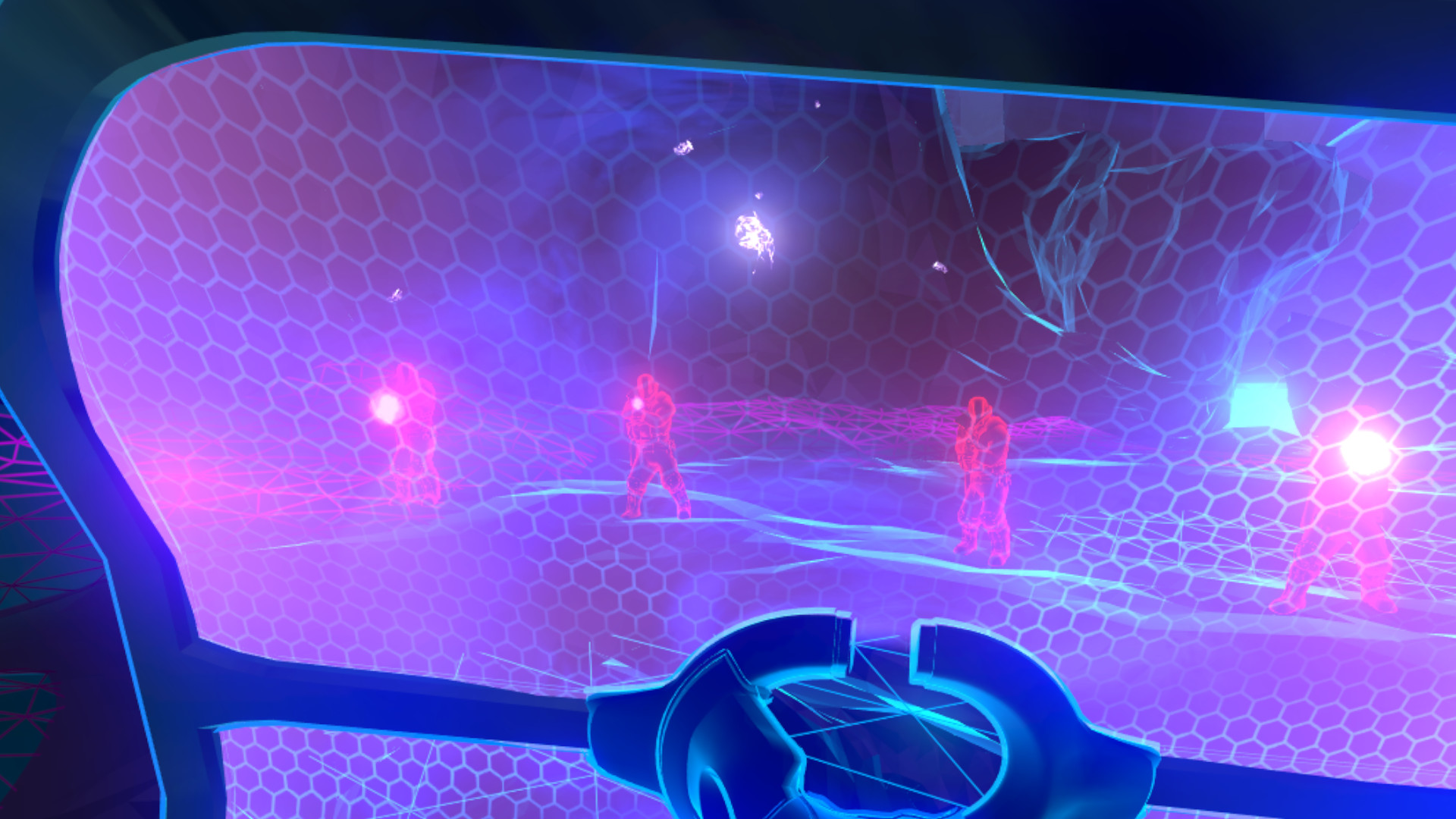
Party rules tighten the higher you climb, and Eternus has the strictest version on the entire ladder. Below Eternus, duo party members must be at most one rank away from each other — a Mystic can queue with a Ritualist. At Eternus that grace disappears: Eternus players can only queue with another Eternus player within three subranks of their own. Combined with the smaller Eternus population, this is part of why queue times get noticeably longer near the top of the ladder.
| Rank tier | Max party size | Skill spread allowed |
|---|---|---|
| Calibration | Solo only | You cannot be in a party during calibration |
| Below Eternus | Solo or duo | One full rank apart |
| Eternus | Solo or duo | Only with another Eternus player, within three subranks |
How to Reach Eternus and the Leaderboards
Follow this sequence to get it done fast.
-
1
Clear the Ranked access gates
you need 60 Standard Mode wins, 15 Standard wins on each hero you want to use, and at least 3 eligible heroes unlocked before Ranked queue even opens.
-
2
Get through calibration
an eight-game solo calibration phase with a soft reset of your prior rank decides your starting point, but nobody exits above Oracle VI regardless of how those games go.
-
3
Climb the fixed-point tiers
grind Rank Points through Initiate up to Ascendant, banking roughly 250 points per game toward each 1,000 or 2,000 point promotion.
-
4
Keep your 30-day activity alive
stay above 75 recent games for the global board and 30 recent games plus 100 lifetime wins on your main hero if you want to chase that hero's board too.
-
5
Enter Eternus and read the percentile, not the point bar
once thresholds go daily, consistent performance against the current Eternus pool matters more than any single win streak.
-
6
Find Eternus duo partners inside three subranks
outside that window you're queuing solo, so lock in a partner near your own standing early.
Best Ways to Climb Fast Toward Eternus
There isn’t one correct path up the ladder, but some approaches consistently move faster given how the point system and leaderboard gates are structured.
Sticking to a small hero pool also interacts with pre-game bans and hero swaps, since a narrower pool means fewer situations where your main gets taken or banned before lock-in.
| Method | Speed | Effort | Best for |
|---|---|---|---|
| One-hero specialization | Fast toward hero board | Medium | Players targeting the 100-win hero leaderboard gate |
| Standard Mode grinding first | Slow but required | Low | Anyone still clearing the 60-win access gate |
| Duo queuing with a stable partner | Moderate | Medium | Players below Eternus wanting steadier games |
| Solo grinding near season end | Fast for peak-chasing | High | Players aiming to bank a season-high rank |
Eternus Rewards and What the Peak Rank Unlocks
Deadlock‘s ranks aren’t a loot pipeline the way a battle pass is — the payoff is standing, not currency.
Your Season Peak Is What Gets Remembered
Because the highest rank you touch during Beta Season 1 is locked into your history at season end, a single strong night at Eternus counts the same on your record as an entire season spent holding it. That single fact changes the calculus for anyone near the top.
Ranks Don’t Give You Cosmetics Directly
The badge and the commemorative hideout item are separate from any cosmetic or currency systems in Deadlock — climbing the ladder buys status, not loot.
| Reward | How you get it | Why it matters |
|---|---|---|
| Rank badge | Reach and hold a tier | Visible signal of skill to teammates and opponents |
| Leaderboard placement | Meet the 75/30/100 eligibility floors | Public top-1000 visibility per region |
| Permanent season-peak record | Hit your highest rank any time during the season | The highest rank each player achieved during Beta Season 1 is permanently saved to their rank history, plus an in-game hideout item commemorating that peak |
Common Misconceptions About Reaching Eternus
Myth: Eternus Works Like Every Rank Below It
It doesn’t. Every rank up through Ascendant uses a fixed point target you can plan around. Eternus recalculates daily against the current pool of Eternus players, so the same performance that held a subrank last week might not hold it this week.
Myth: You Can Duo With Anyone Once You Hit the Top
Below Eternus, a one-rank spread is generous enough that most friend groups can queue together. At Eternus, that shrinks to three subranks with another Eternus player only — there’s no exception for a friend sitting in Phantom or Ascendant.
Myth: Playing a Hero Casually Gets You on Its Leaderboard
The 30 recent games requirement is only half the gate now. The new 100 lifetime wins condition means a hero you picked up last month, even if you’re playing it constantly, won’t qualify you for that board until the wins accumulate.
Our Take: Is Chasing Eternus and the Leaderboards Worth It?
Our Take
Chasing the peak beats trying to hold it.
Since a season’s highest rank is banked forever regardless of what happens afterward, the smart play is treating Eternus as a target to touch rather than a status to defend. Grinding to hold a daily percentile threshold for weeks is a different kind of effort than pushing hard for a short stretch and letting the record lock in — and only one of those is actually rewarded by how the system works. The tightened leaderboard requirements make the top of the board a genuinely thin space now, which is exactly the point: fewer names, less competition for the intent, and a real filter on who’s actually still active at the top.
Was this guide useful?
Deadlock services
Rank Boost
Hero Mastery Leveling
Mastery levels on the heroes you actually play · Souls farmed and objectives taken in real matches
Rank Boost
Net Wins Boosting
A set number of net ranked wins · Losses do not count against your total

Other Services
CBT Invite
A closed beta invite sent to your Steam account · Valve gates access behind existing players' invites