On this page
If you have time for only one gacha RPG in 2026, the choice between Genshin Impact, Wuthering Waves, and Honkai: Star Rail comes down to combat preference, time commitment, and whether you want open-world exploration or focused story progression. All three are live, polished, and stamina-gated—but they optimise for fundamentally different players. Genshin Impact is currently on version 6.7 (“Luna VIII”), released on July 1, 2026, with version 7.0 launching on August 12, 2026. Wuthering Waves version 3.5 released on July 10, 2026, adding the Mengzhou region. Honkai: Star Rail version 4.4, titled “In Ravages Does the Whistle Sound”, released on July 15, 2026, continuing the Planarcadia story. This guide breaks down every major decision point—combat, builds, daily sessions, endgame modes, and exploration—so you can pick the gacha that fits your play style, not a reviewer’s ranking.
TL;DR
- Combat decides most players: Genshin is party-swap elemental reactions, WuWa is action parry/dodge timing, HSR is turn-based strategy
- All three are stamina-gated (Resin/Waveplate/Trailblaze Power)—realistic daily sessions run 15-30 minutes
- Genshin and WuWa offer open-world exploration; HSR is linear mission-based, which some players prefer
- Build systems differ: Genshin artifacts vs WuWa Echoes (Data Bank gated, 12-point budget) vs HSR relics
- No objective winner exists—each game optimises for different players; pick by combat preference and time availability
Combat Systems: The Decision That Matters Most
Combat style alone eliminates one or two of these games for most players. Genshin Impact uses real-time party-swap combat built around elemental reactions—you quick-swap between four characters to trigger combos like Vaporize (Hydro + Pyro) or Freeze (Hydro + Cryo). Success depends on team synergy and timing your rotations, not reflexes. Wuthering Waves is pure action combat with parry and dodge windows; the game features Havoc element mechanics and rewards split-second timing over stat optimization. You can brute-force some content with better gear, but the core loop is Souls-like counters and i-frames. Honkai: Star Rail is turn-based—you plan rotations, manage Skill Points, and trigger follow-up attacks. If you hate action games, HSR is your answer. If you need twitch reflexes to stay engaged, Wuthering Waves delivers.
Genshin sits in the middle: casual enough for mobile play, deep enough for optimization. The new Stellar Reaction system introduced in versions 6.6/6.7, including Stellar-Conduct (Cryo + Electro) and Stellar-Swirl (Cryo + Anemo), generates team-wide elemental damage buffs rather than single-character triggers. Wuthering Waves is unforgiving if you miss parry windows—characters like Yangyang: Xuanling are Havoc main DPS units designed around Havoc Bane status mechanics. HSR’s turn-based structure lets you plan each move, pause mid-battle, and read every enemy buff.
Real-Time Party Swap vs Action Combat vs Turn-Based
Genshin’s party-swap system demands roster depth for elemental coverage. You cannot clear Spiral Abyss with one hypercarry—you need eight built characters for two teams. Wuthering Waves lets you focus on three Resonators per team, but skill expression matters more than gear. HSR rewards strategic team-building: a well-composed four-unit squad with proper buff stacking can handle all content, even with lower-rarity Light Cones.
Mobile vs PC Optimization
Genshin plays well on mobile but shines on PC with animation cancels and precise aim shots. Wuthering Waves is brutal on mobile—parry windows demand controller or keyboard precision. HSR is the only one genuinely optimized for phone play; turn-based combat means latency and touch controls do not sabotage you.
Build Systems: Artifacts, Echoes, and Relics
All three games gate your damage behind RNG gear systems, but the friction points differ. Genshin uses artifacts: five slots, main stat + four substats, farmed from domains using Original Resin. The grind is notoriously brutal—getting the right main stat with decent substats can take weeks. Wuthering Waves uses Echoes, which are absorbed from defeated enemies. Echoes have confirmed elements, weapons, and roles, and drop rates scale with your Data Bank level. The system locks better drops behind progression: higher Data Bank levels unlock better rarity and increase the cost budget from 10 to 12 points, letting you equip stronger Echo sets. HSR uses relics with similar RNG to Genshin, but the lower stat variance makes acceptable builds easier to hit.
Wuthering Waves’ Echo system stands out because it ties directly to combat: you absorb the monsters you fight, then equip them for stat bonuses and active skills. The Data Bank gate is real—early players struggle with 10-point cost limits and low drop rates, but once you hit higher Data Bank levels, the system opens up. Genshin’s artifact system has no such gate, but the substat RNG is worse. HSR sits between them: relics are farmable, but Trace materials and Eidolon dupes matter as much as gear.
| Aspect | Genshin Impact | Wuthering Waves | Honkai: Star Rail |
|---|---|---|---|
| Build System | Artifacts (5 slots, substat RNG) | Echoes (Data Bank gated, 12-point cost budget at higher levels) | Relics (4-set + 2-set, lower variance) |
| Stamina Resource | Original Resin (200 cap, 1 per 8 min) | Waveplate | Trailblaze Power |
| Daily Session | 15-20 min (commissions + resin) | 15-25 min (dailies + Waveplate) | 15-30 min (dailies + assignments) |
| Endgame Modes | Spiral Abyss (12 floors, resets 1st & 16th), Imaginarium Theater (monthly) | Tower of Adversity, Illusive Realm | Simulated Universe, other endgame challenges |
| Exploration | Open world (Teyvat + Snezhnaya coming Aug 12) | Open world (Huanglong, Mengzhou as of 3.5) | Linear mission-based (no open world) |

Time Cost: Daily Sessions and Stamina Gates
All three games use stamina systems to gate rewards, and all three respect your time more than older gacha games. Genshin’s Original Resin caps at 200, refilling at 1 per 8 minutes. A typical daily session takes 15-20 minutes: four commissions, spend 160-200 Resin on domains or bosses, done. Wuthering Waves uses Waveplate with similar pacing. HSR’s Trailblaze Power works the same way. The difference is in optional content: Genshin and WuWa tempt you with exploration, puzzles, and world quests that can stretch sessions to hours. HSR is mission-focused—if you skip story cutscenes, you are done in 20 minutes.
For players with limited time, all three are viable. None demand multi-hour daily grinds. The real time sink is exploration in Genshin and WuWa—if you are a completionist, expect to spend dozens of hours per region unlocking chests, Oculi, and puzzles. HSR does not have that problem (or that appeal, depending on your preference).
Endgame Modes: What You Play After the Story
Genshin’s endgame is Spiral Abyss and Imaginarium Theater. Spiral Abyss has 12 floors, resets twice a month on the 1st and 16th, and awards up to 800 primogems for a full clear. Version 6.7 serves as the final update before version 7.0, and HoYoverse skips version 6.8. Imaginarium Theater is a monthly roguelite mode with element restrictions that tests roster depth. If you do not have eight well-built characters, Abyss floors 9-12 will wall you. Wuthering Waves offers Tower of Adversity and Illusive Realm—similar concepts, but the action combat makes them feel more skill-based than gear checks. HSR’s Simulated Universe is a roguelite mode with blessings and random buffs; it is repeatable, but not infinite.
Genshin’s Abyss resets are the most frequent, giving you bi-weekly goals. WuWa’s Tower is less punishing if you miss a cycle. HSR’s endgame modes rotate but do not reset as aggressively. For players who need repeatable endgame content, Genshin and WuWa deliver more consistent challenges. For players who prefer story over endgame grinding, HSR is the better fit—you can ignore Simulated Universe and still progress.
Exploration vs Linearity: Open World or Story Focus
Genshin Impact and Wuthering Waves are open-world games. Version 7.0 takes players to Snezhnaya, the Tsaritsa’s frozen empire and the final nation on the Teyvat map. Wuthering Waves 3.5 added Mengzhou, a Huanglong sub-region, and introduced Yangyang: Xuanling, the first-ever SP (Special) character. You can ignore the main story and spend hours climbing, gliding, finding chests, and solving environmental puzzles. Honkai: Star Rail is not open world—it is mission-based with hub areas. You follow the story, unlock new planets, and progress linearly. For some players, that is a dealbreaker. For others, it is a feature: no FOMO about missing 200 chests in a region you explored for 10 minutes.
If you love Breath of the Wild-style exploration, Genshin and WuWa are your picks. If you want a tighter narrative experience without map-completion anxiety, HSR is the answer. This is not a flaw in HSR—it is a design choice that respects players who do not want to spend 40 hours per region hunting collectibles.
Players short on time can put Genshin Impact boosting alongside a normal playthrough rather than in place of one.
Step-by-Step: Choosing Your Gacha in 2026
Follow this sequence to get it done fast.
-
1
Identify your combat preference
Play a trial or watch gameplay. If you need action reflexes, pick WuWa. If you want turn-based strategy, pick HSR. If you want real-time party swaps with elemental reactions, pick Genshin.
-
2
Check your daily time budget
All three respect your time for dailies (15-30 min), but Genshin and WuWa add optional exploration that can stretch to hours. HSR is the most time-efficient if you skip story.
-
3
Decide on exploration vs story focus
If you love open-world exploration, Genshin or WuWa. If you prefer linear story progression, HSR. This alone eliminates one or two options for most players.
-
4
Look at endgame goals
Genshin's Spiral Abyss resets twice a month and demands eight built characters. WuWa's Tower is similar but more skill-based. HSR's endgame is less aggressive. Pick based on how much you care about repeatable challenges.
-
5
Test the build grind
Genshin's artifact RNG is brutal. WuWa's Echo system gates drops behind Data Bank levels. HSR's relics are more forgiving. If you hate gear RNG, HSR is the safest bet.
-
6
Consider platform
HSR is the only one truly optimized for mobile. Genshin works on phone but is better on PC. WuWa demands controller or keyboard for parry timing.
Common Misconceptions About the Three Gachas
Myth: Genshin Has the Worst Gacha Rates
Genshin, WuWa, and HSR all use similar pity systems (soft pity around 70-80 pulls, hard pity at 90). The difference is in currency income and 50/50 mechanics. Genshin is generous with Primogems from exploration and events. WuWa front-loads Astrite in new regions. HSR offers Stellar Jade through story and events. None are objectively worse—just different distribution patterns. Do not pick a game based on pull rates without checking the total currency income per patch.
Myth: Wuthering Waves Is Just Genshin with Better Combat
WuWa’s action combat is fundamentally different from Genshin’s party-swap system. If you loved Genshin’s exploration but wanted harder combat, WuWa delivers—but it is not a strict upgrade. The parry-and-dodge loop is Souls-like, not elemental reaction planning. Players who enjoyed Genshin for team synergy, not reflex challenges, will not automatically prefer WuWa.
Myth: Honkai Star Rail Is Easier Because It Is Turn-Based
Turn-based does not mean easier. HSR’s endgame modes demand proper team composition, Skill Point management, and buff stacking. You cannot brute-force content by dodging better. The skill ceiling is strategic, not mechanical. Players who assume turn-based means casual will hit a wall in later Simulated Universe stages.
Rewards and What You Unlock in Each Game
Genshin rewards exploration with Primogems, Oculi for stamina upgrades, and region-specific resources. Spiral Abyss awards up to 800 primogems per reset cycle (1st and 16th of each month). Events drop limited weapons, character skins, and talent books. Wuthering Waves showers new players with Astrite during the first few weeks, then settles into event-based income. Version 3.5 added Yangyang: Xuanling’s SP form and Suisui as featured characters. HSR’s story chapters unlock new characters, Light Cones, and Trailblaze Power cap increases. Players who log in between July 24, 2026, and the end of version 4.6 can claim either Gilgamesh or Archer for free.
All three games give enough free currency to guarantee limited characters every few patches if you save. Genshin and WuWa tie more rewards to exploration, which means time investment. HSR ties rewards to story completion and events. For players who hate open-world collectathons, HSR’s reward structure is cleaner.
Our Take: Pick by Player Type, Not by Ranking
Our Take
There is no objective best gacha in 2026—Genshin, WuWa, and HSR optimise for completely different players, and pretending otherwise is dishonest.
If you want open-world exploration with elemental reaction combat and do not mind artifact RNG, Genshin Impact is the pick. The game is polished, updated every six weeks, and has years of content to catch up on. Version 7.0 on August 12, 2026, opens Snezhnaya, the final major region—this is the best time to start or return. Genshin is for players who love Zelda-style exploration, team-building synergy, and do not need twitch-reflex combat.
If you need action combat with parry windows and Souls-like difficulty, Wuthering Waves is your answer. Version 3.5 released on July 10, 2026, and the game launched on Xbox Series X|S with full cross-progression. WuWa is for players who found Genshin too easy, want real-time skill expression, and do not mind a steeper learning curve. The Echo system is less RNG-heavy than Genshin’s artifacts once you unlock higher Data Bank levels, but the combat is unforgiving on mobile.
If you prefer turn-based strategy, hate open-world collectathons, or play primarily on mobile, Honkai: Star Rail is the obvious choice. Version 4.4 launched on July 15, 2026, continuing the Planarcadia story and adding the second half of the Fate/stay night [Unlimited Blade Works] collaboration with Rin Tohsaka (Quantum) and Gilgamesh (Lightning). HSR respects your time, optimizes for phone play, and delivers a focused narrative experience. It is for players who want gacha pull mechanics without the open-world time sink.
Honestly, the wrong move is forcing yourself to play all three. Pick the combat system you enjoy, commit to one game for a patch cycle, and ignore the FOMO. All three are generous enough to let free-to-play and low-spenders clear endgame content. The best gacha is the one you actually want to log into every day—and that is decided by combat preference and time availability, not meta rankings.
Genshin Impact services
Characters Leveling
Adventure Rank
Adventure Rank pushed to the target you set · Unlocks world tiers, gated content and Statue progression
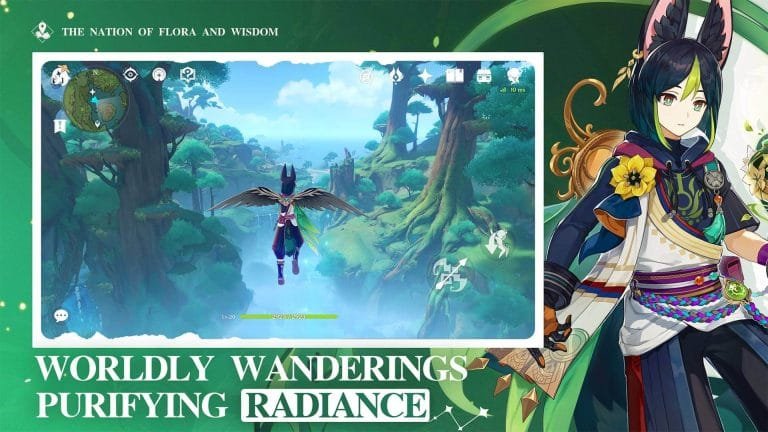
Regions Exploration
Chenyu Vale 4.4 — 100% Exploration
Region cleared to 100% · Spirit crab max
Events
Quests
Archon, Story and World quests cleared on your account · Includes the gated exploration and puzzle steps inside them