

On this page
Combat Outpost is the new version of Ground War coming to Call of Duty: Modern Warfare 4, and it changes the mode from a 24-player free-for-all into something with an actual sequence: capture an Outpost, earn resources from holding it, then spend those resources to push the next objective. This guide breaks down what’s confirmed about the loop, what it means for your role in a match, and the two beta maps built to test it.
TL;DR
- Combat Outpost is the next iteration of Ground War in Modern Warfare 4: 24v24 vehicle and infantry combat with an added resource economy.
- You establish Outposts, they generate resources, and those resources go toward unlocking further objectives instead of everyone just pushing one point.
- Two beta maps are set in Hajin: Imjin Farmland (open terrain, vehicles) and Wolves Stadium (vertical, indoor objectives).
- Activision has not published exact resource numbers, capture times, or the specific Killstreak list for the mode.
- Combat Outpost is only playable during the Open Beta weekend, not the early access weekend.
What Is Combat Outpost in Modern Warfare 4 Ground War?
Combat Outpost is Infinity Ward’s rebuilt version of Ground War for Modern Warfare 4. Ground War: Combat Outpost brings 24v24 vehicle and infantry combat to expansive play spaces, where players establish Outposts to earn resources, put those resources toward completing further objectives, and contend with powerful airborne Killstreaks. That’s the core pitch: instead of one big scramble over a handful of capture zones, there’s a resource step sitting between “take the point” and “win the match.”
It sits inside the same Modern Warfare 4 multiplayer suite as smaller-scale modes like Kill Block, standard 6v6 playlists, and Warzone Resurgence, but it’s built for a completely different player count and pace. Developer Infinity Ward and publisher Activision positioned it at Call of Duty: NEXT as the mode for players who want the biggest possible fight rather than a tight objective game.
| Mode | Player count | What defines it |
|---|---|---|
| Standard 6v6 (Hijack, Domination, etc.) | 6v6 | Small maps, single-objective focus |
| Ground War: Combat Outpost | 24v24 | Outpost capture feeds a resource economy for follow-up objectives |
| Kill Block | 3v3 / 10v10 | Modular arena built from randomized map "Slabs" |
Where the grind outlasts the interest, Modern Warfare 4 boosting picks it up from wherever the account already stands.
How the Combat Outpost Resource Loop Actually Works
The confirmed structure is simple to describe even though the exact numbers aren’t public yet. Combat Outpost is the next evolution of Ground War: you establish Outposts to earn resources, then put those resources to work completing further objectives, across large play spaces combining vehicle and infantry combat with powerful airborne Killstreaks overhead. That’s a genuine departure from older Ground War formats, where capturing a zone mostly just scored points or unlocked a vehicle spawn. Here, capturing feeds a resource that then gates what your team can do next, which is what gives the mode a queue of actions instead of a single objective everyone dogpiles.
Some early beta coverage has described Outposts also acting as extra spawn points and defensive perks while held, though that detail comes from beta impressions rather than an official Activision breakdown, so treat it as likely rather than locked in. What Activision has confirmed directly is the loop itself: capture, generate, spend, repeat, layered under 24v24 combined-arms combat.
Note
Activision hasn’t published exact resource amounts, capture timers, how many resources a given objective costs, or the full Killstreak list tied to Combat Outpost. Anything more specific than “capture, earn, spend” is currently unconfirmed.
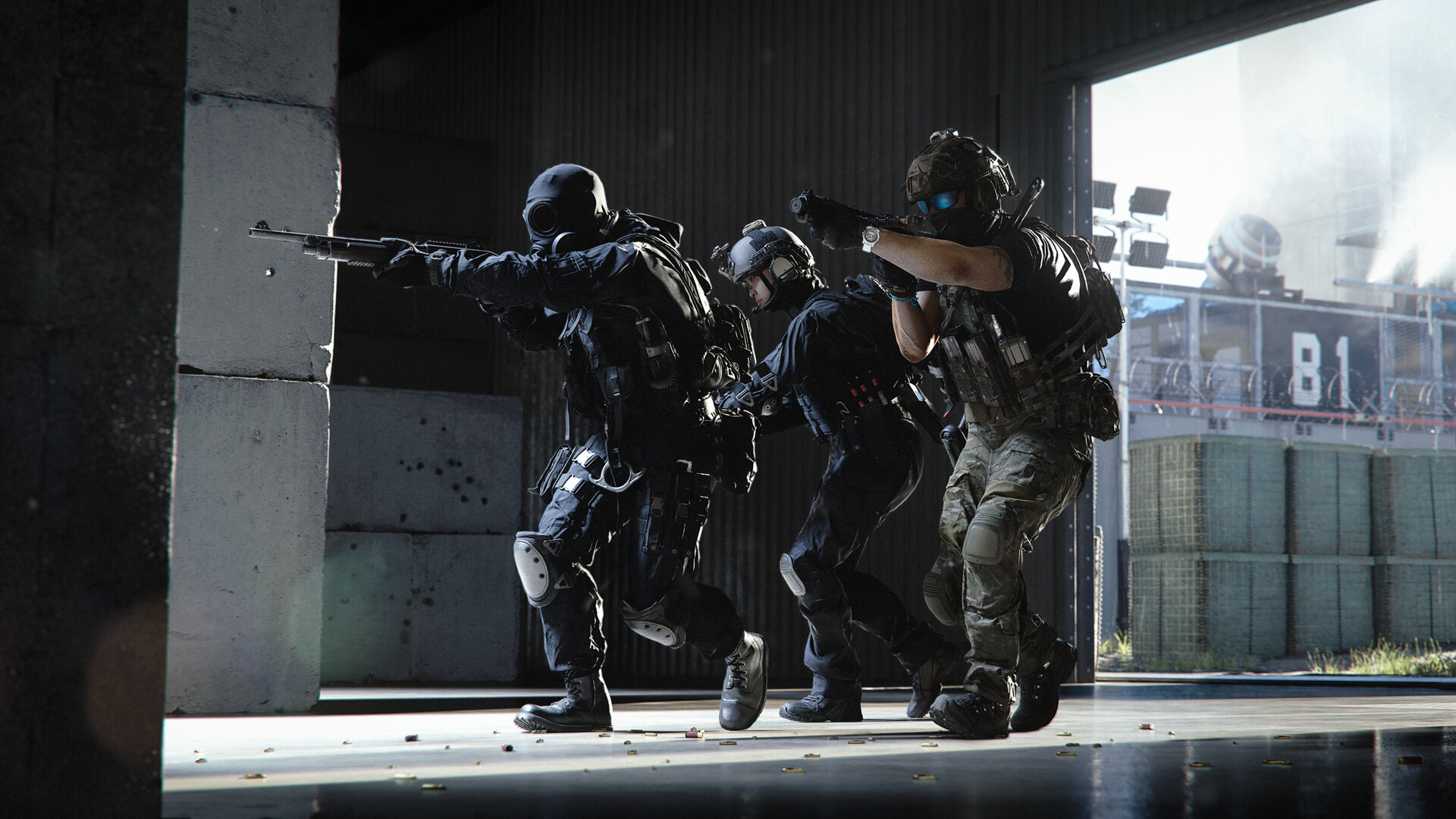
Why Kills Aren't the Whole Job: Player Roles in Combat Outpost
The resource loop changes what “being useful” looks like in a 24v24 match. Somebody has to actually plant and hold an Outpost long enough for it to generate anything, which is a slower, more exposed job than running kill-farming loops in a small map. Somebody else has to decide when the team has enough resources banked to commit to the next objective rather than sitting on them. And once resources are spent, the team needs bodies to actually push and hold whatever that spend unlocked, whether that’s a stronger position, extra armor, or backup on the ground.
None of that shows up on a scoreboard sorted by kills. A player camping an Outpost perimeter to keep it uncontested is doing exactly what the mode needs, even with a mediocre K/D. This is the same shift the franchise made with objective-based Domination and Hardpoint scoring years ago, just scaled up to a 48-player battlefield with an economy layered on top.
Who holds the Outpost
Whoever is defending a captured Outpost is protecting the resource generator itself. Losing it doesn’t just cost territory, it cuts off the income the team is relying on for the next push.
Who spends the resources
Resource spending is described as team-level rather than personal loadout currency, going toward shared objectives and Killstreak-level support rather than individual purchases, based on how Activision has framed it so far.
Who executes the next objective
Once resources unlock the next target, someone still has to physically take and hold it under vehicle and infantry pressure, which is where the mode’s normal Ground War chaos still applies.
Imjin Farmland vs Wolves Stadium: Why the Beta Maps Are Built Different
Both Combat Outpost beta maps sit in Hajin, the setting introduced for Modern Warfare 4’s campaign and shared world, but they’re deliberately opposite in layout. Two purpose-built Combat Outpost maps are coming to the Beta, both set within Hajin: Imjin Farmland and Wolves Stadium, offering distinctly different battlegrounds spanning open terrain, towering structures, and indoor objectives.
Imjin Farmland leans into vehicle combat: it takes place across the rural outskirts of Hajin, with open fields, waterways, farms, roads, rail lines, and a large mill that creates long sightlines and plenty of room for vehicles, while the flatter terrain makes vehicle movement and long-range engagements a major part of the map. Wolves Stadium goes the other direction, described as the more urban of the two Ground War maps, built around towering structures and indoor objectives rather than open sightlines. Putting one open map and one vertical map into the same beta test is a clear way to stress the resource loop under two very different combat rhythms before launch.
| Map | Terrain type | What it tests |
|---|---|---|
| Imjin Farmland | Open fields, waterways, a large mill | Vehicle play, long-range engagements, elevated sightlines |
| Wolves Stadium | Towering structures, indoor spaces | Vertical combat, close-quarters objective fights |
Step-by-Step: How a Combat Outpost Match Plays Out
The honest cost of actually seeing this loop for yourself before Modern Warfare 4 launches is narrow: Combat Outpost isn’t part of the early access weekend at all. Features like Combat Outpost aren’t available until the second weekend of the beta, and that Open Beta weekend runs from August 28 at 10:00am PT through September 1 at 10:00am PT. That’s roughly a four-day window to test the mode on both maps before it disappears again until the October 23 launch.
Follow this sequence to get it done fast.
-
1
Push toward an Outpost
combined vehicle and infantry squads move on one of the map's Outpost positions as the opening objective.
-
2
Capture and secure it
clear and hold the Outpost long enough to bring it under your team's control.
-
3
Let it generate resources
a held Outpost starts producing the resources the team needs, though Activision hasn't stated the rate.
-
4
Spend resources on the next objective
the team commits banked resources toward completing a follow-up objective further into the map.
-
5
Call in support
resource spending is tied to the mode's powerful airborne Killstreaks rather than personal streaks alone.
-
6
Repeat or defend
teams either keep pushing the resource chain forward or dig in to protect what they've already unlocked.
Common Misconceptions About Combat Outpost
Myth: It’s just a bigger version of normal 6v6 Ground War
The player count and vehicle combat aren’t new to the franchise’s Ground War format, but the resource step is. Older large-scale Ground War modes were about capturing zones for points; Combat Outpost adds a generation-and-spend layer that gates what objective becomes available next, which is a structural change, not just a bigger map.
Myth: K/D still tells you who’s carrying the team
A high kill count on an Outpost you don’t hold isn’t helping the resource economy. Since the loop depends on controlling generation points and committing resources at the right time, a player parked defensively on an Outpost can be doing more for the win condition than a top-fragger roaming the map.
Myth: The beta maps show the final Ground War map pool
Imjin Farmland and Wolves Stadium are described specifically as the beta’s Combat Outpost maps, not a confirmed final launch list. Betas typically test a subset of content, so treat these two as a proof of concept for the mode rather than the entire Ground War rotation at release.
Our Take: Is Combat Outpost Worth Caring About
Our Take
Giving Ground War an actual sequence of actions is the right fix for a mode that’s historically been a directionless scrum.
Ground War has always been the mode people load into for scale and mostly ignore for strategy, because there was nothing forcing coordination beyond “shoot the zone.” A resource loop that ties Outpost control to follow-up objectives gives teams a reason to communicate about something other than which flag is red. Whether it actually lands depends entirely on numbers Activision hasn’t shared yet: if resources are cheap and objectives trivial, this becomes cosmetic. If it’s tuned so that losing an Outpost genuinely stalls your team, it could be the most meaningful structural change Ground War has had in years. Worth testing in the beta specifically to see how that balance feels before forming a real opinion.
Was this guide useful?