
On this page
The GTA 6 wanted system is Rockstar‘s redesigned police-response mechanic, revealed in the Grand Theft Auto VI: An Extended Look special and explained by Rockstar North co-studio head Rob Nelson in an interview with IGN. The short answer to what everyone’s searching for: your wanted level no longer just tracks a crime, it tracks specific evidence about you, and you clear that evidence piece by piece instead of just outrunning a chase. This guide breaks down the four icons under the stars, what white versus red stars appear to mean, and what Nelson actually said about escaping.
TL;DR
- Wanted levels only start from a witness or a triggered alarm, not from the crime itself
- Four icons under the stars track clothes, face, vehicle, and whether you’re recognized as a couple
- Breaking direct police contact turns white stars red — what red means exactly hasn’t been explained
- Escaping on foot into alleys beats driving once you hit three stars in the city, per Nelson
- The wanted level caps at six stars, up from five in GTA 5
The Four Wanted Icons in GTA 6, Explained
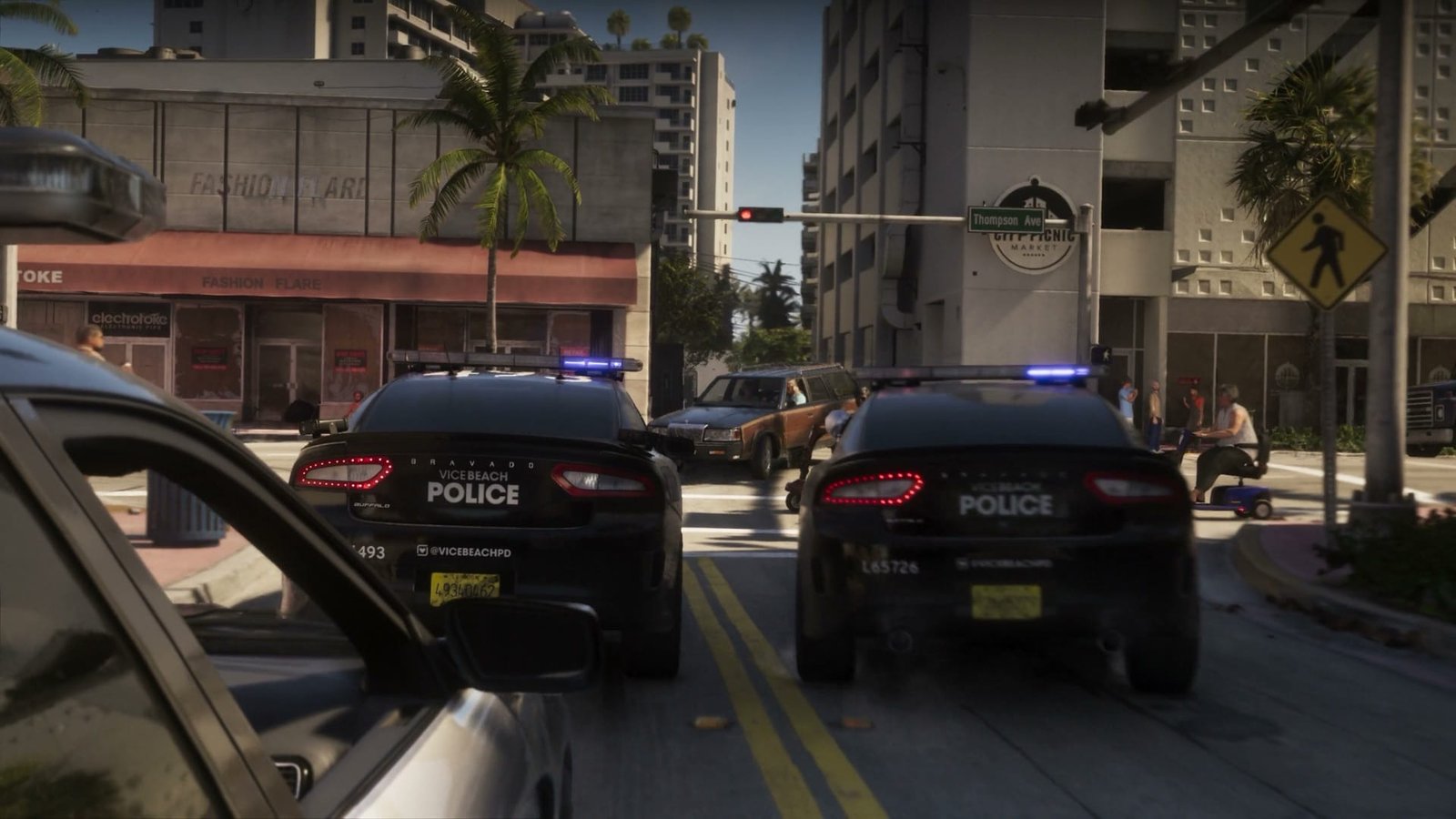
During the Extended Look’s car chase sequence, Jason and Lucia sit at a four-star wanted level with four small icons visible underneath the stars. Just below that, we see four icons representing how much the police recognize about Jason and Lucia: their clothes, their faces, their car, and the fact that they’re together. Each icon is effectively a separate piece of evidence, and the practical upshot is that losing the cops visually doesn’t clear all four at once — you have to deal with each one.
The IGN preview goes further on how each of those icons is actually cleared, and the clothing one is the least intuitive. Swapping a hat or putting on glasses is not enough to shake a clothing description — the preview describes needing a full change of outfit, while changing hairstyle can invalidate the physical description police are working from. A mask matters for a different reason: wear one during the crime and take it off afterwards, and police may never get an accurate description at all, even where CCTV caught the robbery. The scene of the crime also becomes a temporary search area that officers keep combing after Jason and Lucia have already left it, which is why simply leaving the block is not the same as being clear.
| Icon | What police know | How it gets cleared |
|---|---|---|
| Clothes | Your current outfit description | Confirmed as one of the four tracked traits; exact method for clearing it wasn't detailed beyond changing appearance |
| Face | Your physical identity | Not explained in the demo; treated as a separate trait from clothing |
| Vehicle | The car you're driving | Swap vehicles — they swap vehicles, removing the car icon from the screen, and watch a cop car that doesn't recognize the new vehicle roll right on by |
| Couple | That two suspects are traveling together | the police know we're driving, so we should just jump out of the vehicle. They also know we're a couple. You could split up, and that will also help lower the police's perception of you |
Anyone who would rather not spend the evenings on it can hand Grand Theft Auto 6 boosting to our crew instead — same account, same progress, played by hand.
How the GTA 6 Wanted System Actually Works
The biggest structural change from earlier games sits before any star even appears. “The wanted system in GTA 6 requires that someone witness the crime, or an alarm needs to be set off for it to be reported to the law,” Rockstar North co-studio head Rob Nelson tells IGN. That’s a real shift in approach: a robbery with no witnesses and no tripped alarm may not generate a wanted level at all, which changes how you’d plan any job that isn’t a scripted heist mission — sightlines and alarms matter before the shooting starts, not just your getaway after.
Once a wanted level does start, the demo showed it can climb to six stars. In the “Extended Look” car chase, Jason and Lucia have a four-star wanted level, but there are a total of six possible stars. That’s a change from “GTA 5,” which dropped the total to five stars overall. What each star level actually unlocks in terms of police response — how many units, what equipment, whether anything escalates past six — was not detailed in the reveal.
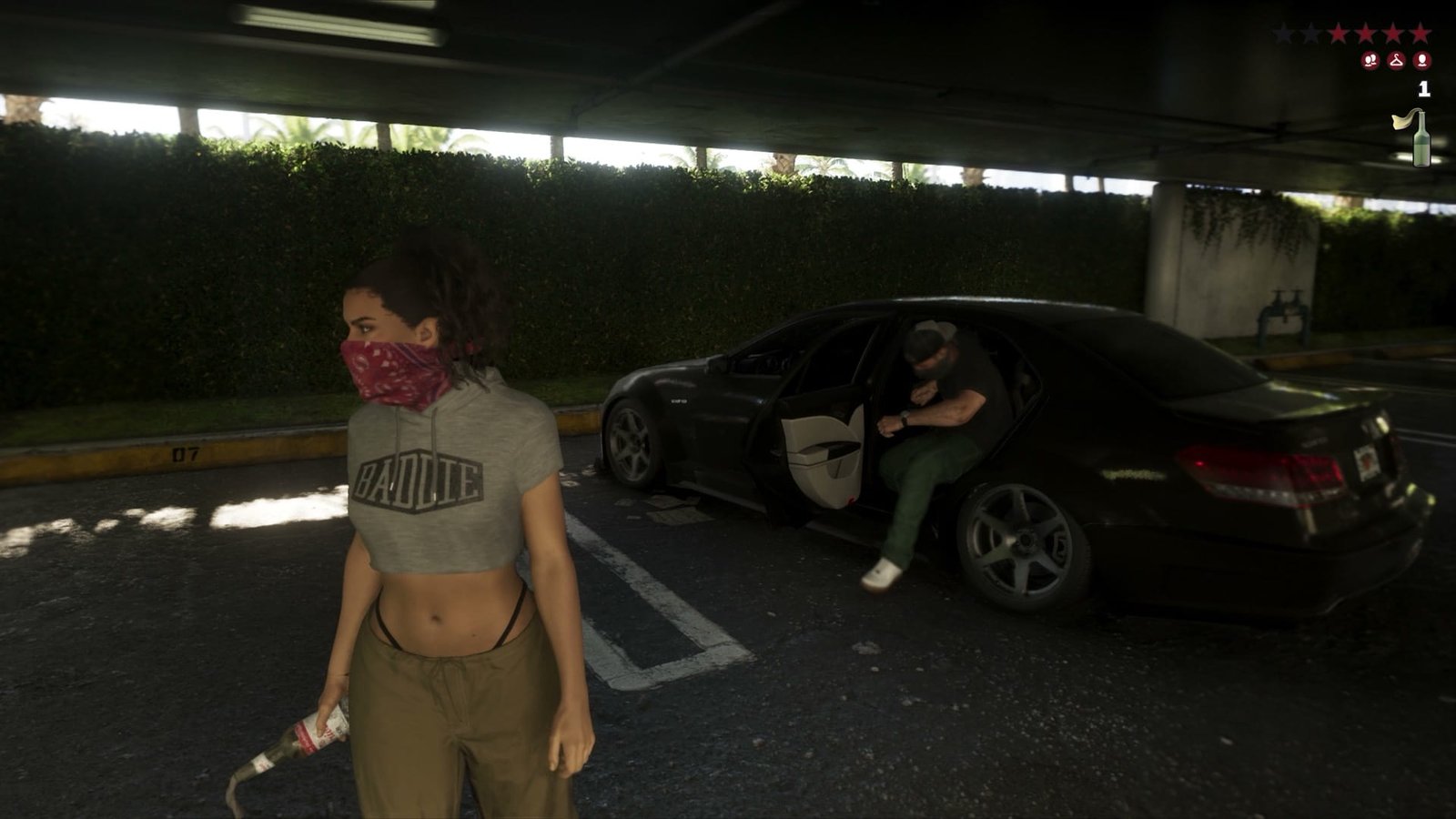
The color of the stars themselves also changes mid-scene. After Jason and Lucia lose direct contact with the chasing officers, later in the mission, they break direct contact with the cops, turning four white wanted stars into four red ones, presumably indicating that the police are still hunting you but are not in active pursuit. That’s worth being honest about: Rockstar hasn’t published a rulebook for what white versus red actually triggers or resolves. It reads, from the scene alone, like “still wanted, not currently chasing you” — but that’s an observation of one demo sequence, not a documented mechanic.
There is a documented piece of this that the demo scene alone does not explain. Preview coverage describes a new hollow wanted star, used when police know a crime has happened but hold no information about who did it — an outline instead of a filled star. That is the cleanest signal in the whole system: a filled star means they have something on you, a hollow one means they are searching blind. It also sits apart from the coloured elements under the stars, which are the four evidence icons rather than the stars themselves. So treat the white-to-red shift above as an observation of one chase, and the filled-versus-hollow distinction as the part that has actually been described. It is worth putting the two chase frames side by side, because the special shows both. At 15:30 the pair are still in the car: four white stars, and four icons under them — the pair, clothing, a face and the car. At 16:00, after they have dumped that car and walked away from it through a parking garage, the same four stars are red and only three icons are left. The car has dropped off the list. That is a description of two frames rather than a rulebook, but it is a good deal more specific than saying the colour changed.
| Star state | What it looked like in the demo | What we can say |
|---|---|---|
| White stars | Police actively chasing, lights on, engaged in pursuit | Confirmed as the active-chase state |
| Red stars | Same star count, after contact was broken | Likely "still wanted, no active pursuit" based on the scene — not officially defined |
How to Lose Cops in GTA 6 (What Nelson Actually Said)
Nelson gave a fairly direct breakdown of what actually works at different wanted levels, and it splits cleanly by star count and location. “One star is not going to be too difficult to get away from,” he told IGN, which lines up with one star mainly being a nuisance rather than a real threat. It’s a different story once things escalate in a dense area. “If you get three stars in the city, it can sometimes be challenging to get away in a vehicle, unless it’s a very fast vehicle or a sports bike. Your best option is usually to do this – get off the streets and get on foot into the alleys,” he said. Rockstar apparently built the traversal around this on purpose: “We put a lot of work into how you can navigate the world, trying to make everything as smooth as possible to really encourage this type of gameplay where you are running and getting out of the car, jumping and climbing fences,” Nelson added.
Step-by-Step: Breaking a GTA 6 Wanted Level
Warning
Nothing here confirms how long a wanted level takes to decay, what happens if you’re arrested, or which specific crimes generate which star count. Treat any number you see elsewhere for those specifics as speculation until Rockstar or a hands-on preview confirms it.
Follow this sequence to get it done fast.
-
1
Get out of the recognized vehicle
if police know what you're driving, staying in that car keeps feeding them the vehicle icon.
-
2
Swap to a different car if you can
the demo showed a cop car pass a swapped vehicle without reacting to it at all.
-
3
Split up from your partner
Nelson specifically called out that splitting from an accomplice lowers how easily the pair is recognized together.
-
4
Ditch the street entirely once you're past one star
at three stars in the city, going on foot into alleys is the option Nelson recommends over trying to outdrive a chase.
-
5
Break direct line of sight with pursuing officers
this is the point where the stars appear to flip from white to red in the reveal footage.
What We Don't Know Yet About the GTA 6 Wanted System
Star thresholds per crime
Rockstar hasn’t stated which crimes produce which star level, or whether that scales with location the way response intensity seems to in the city versus rural areas hinted at in Nelson’s comments.
How fast the level decays
No timer, cooldown, or decay rate has been shown or described. This is the biggest open question for anyone trying to plan around the system, and there’s currently no way to state an actual duration — that number simply hasn’t been published.
What happens on arrest or death
Earlier GTA games have used fines, weapon confiscation, or hospital/police station respawns. None of that has been confirmed for GTA 6, so assume it’s unconfirmed rather than carried over automatically from GTA 5.
Common Misconceptions About the GTA 6 Wanted System
Myth: Any crime instantly triggers a wanted level
Not according to Nelson. “The wanted system in GTA 6 requires that someone witness the crime, or an alarm needs to be set off for it to be reported to the law.” A crime with no witness and no alarm may not register at all.
Myth: Red stars mean you’re safe
Red stars still represent the same star count as before — the demo simply showed them appearing after the pair broke direct contact with police. That’s a status change, not confirmation the wanted level is gone.
Myth: The system works exactly like GTA 5’s
Star count alone jumped from five to six, and the addition of separate clothes, face, vehicle, and couple tracking is a structural change from GTA 5’s simpler star meter, not a cosmetic tweak on the same mechanic.
Our Take: Is the New Wanted System a Real Improvement?
Our Take
The witness/alarm trigger and the four-icon breakdown are the two changes that actually matter here.
Making the wanted level start from being seen or setting off an alarm, rather than from the act itself, pushes planning back to before the crime — that’s a meaningful design shift, not a coat of paint on the old star meter. The four icons giving you clear, separate ways to lower heat (swap the car, split from your partner, get off the street) also sound like they solve GTA 5’s biggest complaint, which was that cops always somehow knew where you were. Whether it holds up depends entirely on numbers Rockstar hasn’t shared yet: decay speed, arrest penalties, and how forgiving or punishing six stars actually feels. Right now this reads like a strong concept with the fine print still missing.
Sources and Confidence
Rockstar has officially confirmed only the presentation itself, that it was captured in-game on PlayStation 5, and the release date. Everything else below comes from press previews. This table says which is which.
| Claim | Where it comes from | Status |
|---|---|---|
| Wanted level caps at six stars | Rockstar Newswire · official video | Shown |
| A crime must be witnessed or set off an alarm | Rob Nelson (Rockstar North) to IGN, quoted by GamesRadar | Developer quote |
| Four icons: clothes, face, vehicle, the pair | GamesRadar — breakdown of the chase | Shown |
| A full outfit change is needed; a mask beats CCTV | IGN preview, relayed by GTAVice | Preview |
| A hollow star means police have no description | SVG — wanted-system explainer | Preview |
| White stars turning red mid-chase | Observed in one scene; Rockstar has not explained the colour | Our reading |
Was this guide useful?