En esta página
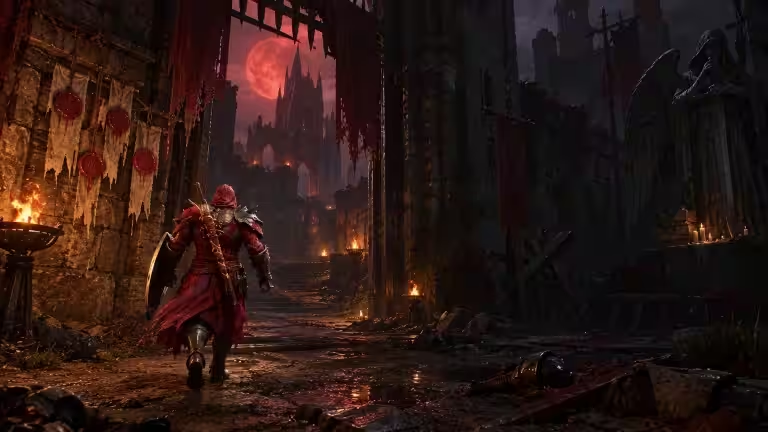
Crimson Moon‘s setup is simple to state and easy to miss if you only watched the trailer once: you play a half-angel soldier sent to take back a corrupted gothic city from hell itself, one district at a time, building toward fights with god-tier bosses called the Dead Gods. This guide breaks down who the hero actually is, what’s fighting you in Gildenarch, and exactly where the confirmed lore stops — because past that point, nobody outside ProbablyMonsters knows anything yet, and this article won’t pretend otherwise.
En resumen
- You play a Nephilim — a half-human, half-angel hybrid built to fight hell, not a mute wanderer with no backstory.
- The setting is Gildenarch, a fallen gothic/high-renaissance city retaken district by district from demons, undead, vampires and Hellgrowth abominations.
- The Order of the Crimson Moon is the city’s last line of defense, operating out of a home base called Sanctus Clypeus.
- Dead Gods are the boss-tier encounters runs build toward — their names, number and order have not been published.
- Crimson Moon is not Crimson Desert; they’re unrelated games that share part of a title.
Desbloqueo completo del equipo
Every weapon, armour piece and trinket the game gates, unlocked on your account — all nine…
Who Is the Nephilim in Crimson Moon?
The protagonist is a Nephilim — a human-angel hybrid forged to defend the world from Hell. That’s not flavor text bolted onto a generic silent protagonist: the character is explicitly framed as a sworn member of a knight order, wielding both weapons and inherited divine power rather than starting from zero. Official copy describes the hero’s abilities directly as evolving Nephilim powers that bestow temporary abilities for devastating attacks, which lines up with the “angelic transformations” the reveal materials keep pointing at — you’re not permanently a seraphic superhuman, you spike into that state for a window during combat and then drop back out of it.
The announcement framing goes further on identity than most genre leads get: as a half-human, half-angel Nephilim sworn to protect humanity as a Knight of the Crimson Moon, players will wield holy fury and divine abilities in their fight to retake the fallen city of Gildenarch. Combat isn’t just swords, either — the developer talks about supernatural powers, holy weapons, and unique execution moves tailored to each enemy type, which is the mechanical expression of the “angel that bleeds and hits back” pitch.
Anyone who would rather not spend the evenings on it can hand Boosting de Crimson Moon to our crew instead — same account, same progress, played by hand.
Gildenarch and the Enemies You'll Face
The setting is the city of Gildenarch, pitched as a Gothic High Renaissance action-adventure RPG — think cathedrals and ornate districts rather than generic dark-fantasy sludge. The premise is a siege in reverse: players can venture alone or bring a friend in optional cooperative play as they reclaim the city district by district from the Infernal Legion. The city itself isn’t static scenery either — official messaging describes it as a world that remembers, reshapes, and pushes back, without demanding punishing repetition, meaning cleared ground doesn’t just reset to default between runs.
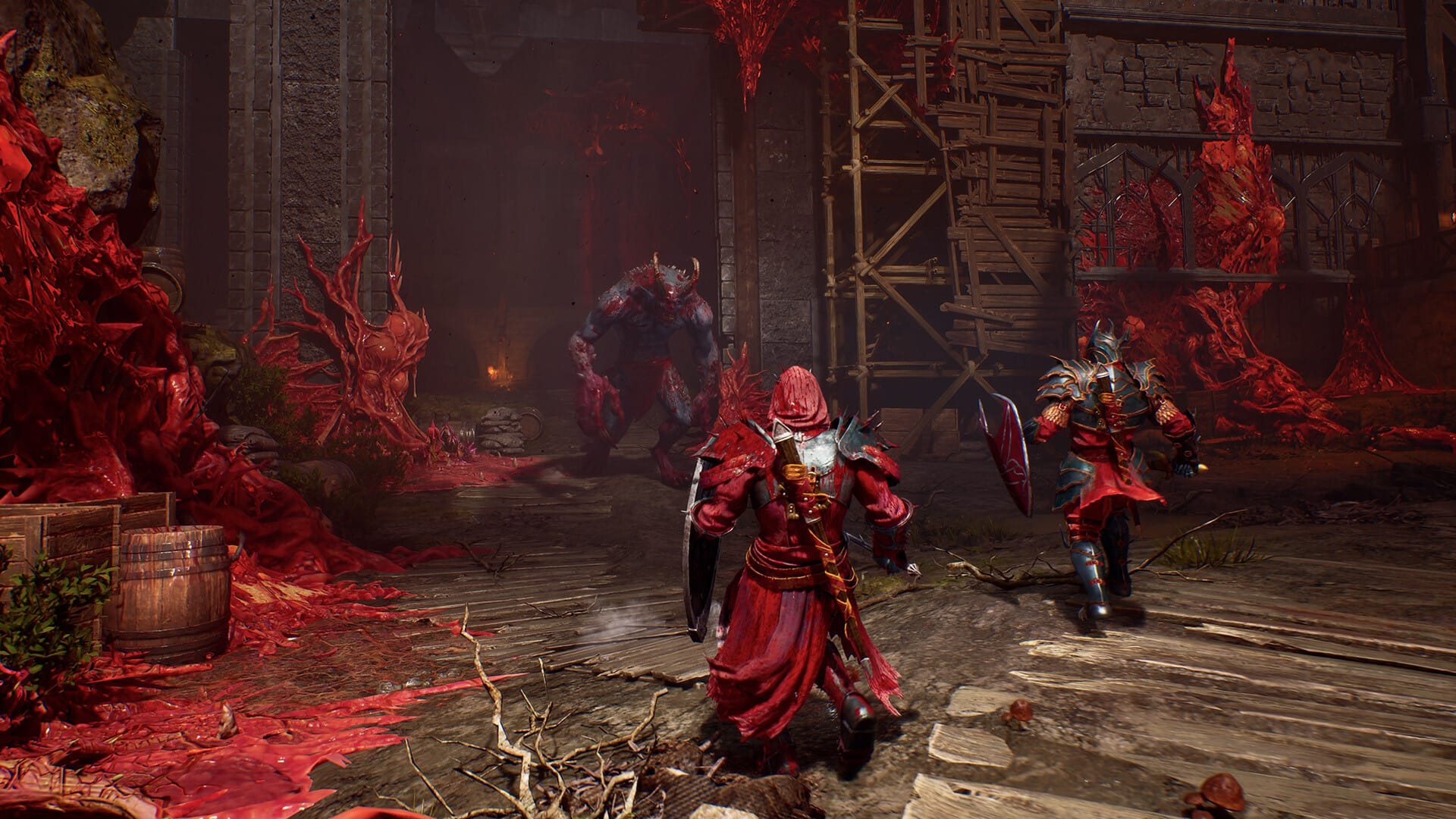
Opposition comes from four overlapping camps. Once a holy jewel, it is overrun by demons, undead, vampires, and Hellgrowth abominations. Behind the undead and vampire factions sits an organized demonic force — the demonic Infernal Legion’s return pushing corruption called Hellgrowth into every district you haven’t cleared yet. Standing against all of it is the order the hero belongs to: humanity’s last hope is the Order of the Crimson Moon, and its most feared weapon is you.
Advertencia
Do not confuse this with Crimson Desert. Multiple outlets have had to clarify the point directly: Crimson Moon is not Crimson Desert, the older 2024 Steam game with the same name, a Roblox experience, or the TYPE-MOON character. Search either title carefully before you buy or wishlist anything.
| Force | Who They Are | What's Confirmed |
|---|---|---|
| Nephilim (you) | Half-human, half-angel hybrid, sworn Knight of the Crimson Moon | Wields weapons, melee, and temporary angelic transformations |
| Order of the Crimson Moon | Knight order operating out of the Church hub, Sanctus Clypeus | Framed as the city's last line of defense |
| Infernal Legion | Organized demonic host besieging Gildenarch | Source of the Hellgrowth corruption spreading district to district |
| Undead & Vampires | Risen dead and vampiric factions holding parts of the city | A vampire lord referred to as Solomon Moore is named as the story's stated architect of Gildenarch's fall |
| Hellgrowth Abominations | Corrupted creatures spawned by the Legion's influence | Pushed back as each district is cleared |
| Dead Gods | Mythic, boss-tier entities at the top of runs | Names, number, and order not published |

What Are the Dead Gods in Crimson Moon?
Dead Gods are the boss tier the entire run structure is built to reach. Runs are described as culminating in brutal boss encounters with the fabled Dead Gods after you’ve fought through an ever-evolving horde of demons, undead, vampires, and Hellgrowth abominations in visceral souls-inspired melee combat. Progression toward them runs through the Church hub and the War Table: every hunt begins at Sanctus Clypeus, the headquarters of the Knights of the Crimson Moon and your home between adventures into the fallen city of Gildenarch. Between hunts you go to the War Table hub to upgrade their angelic abilities, craft new gear, and plan their next assault. Difficulty isn’t fixed, either — dynamic level design and evolving enemy compositions ensure that no two incursions are identical, and difficulty modifiers allow players to unlock greater rewards by taking on greater challenges.
Here’s the honest boundary: nobody outside the studio knows how many Dead Gods there are, what order you face them in, or how many districts and wards stand between the opening hunt and the first one. That means there’s no honest hour estimate to give you for “how long until you reach a Dead God” — anyone stating a specific number before launch is guessing, and this article isn’t going to be the one doing that guessing. Official materials do name one historia antagonist tied to Gildenarch’s fall: a winner-take-all confrontation with the sinister vampire lord, Solomon Moore, the architect of Gildenarch’s demise is teased, but whether that fight is one of the Dead Gods, separate from them, or a different kind of encounter entirely has not been clarified. If you want the confirmed mechanics of how runs, the Church, and the War Table actually chain together rather than the lore side of it, that’s covered separately in our War Table & Church Hub breakdown — we’re not going to re-explain run structure here and we’re not going to invent boss names to fill the gap.
How the Setup Unfolds Before You Reach a Dead God
Consejo
Crimson Moon reportedly launches with two-player co-op built around shared lives rather than fully independent characters, which changes how you’d realistically approach any of the steps above with a friend.
Sigue estos pasos para hacerlo rápidamente.
-
1
Start at Sanctus Clypeus
the Church-style headquarters of the Order of the Crimson Moon and your home base between hunts.
-
2
Plan at the War Table
pick your objective, and upgrade angelic abilities or gear ahead of the next incursion.
-
3
Enter a district of Gildenarch
fight through the ward's mix of demons, undead, vampires and Hellgrowth abominations.
-
4
Push back the Hellgrowth
clearing ground rolls back the Infernal Legion's corruption and opens new challenges in that area.
-
5
Stack modifiers for harder runs
difficulty modifiers let you trade risk for better rewards on repeat hunts.
-
6
Face a Dead God
the run's climax, reached once enough of the surrounding threat has been cleared.
Farmeo de moneda y materiales
Terminado cuando tu saldo muestra la cantidad pedida añadida
Common Misconceptions About Crimson Moon's Story
“It’s the Same Game as Crimson Desert”
It isn’t. The titles overlap by two words and nothing else — different developer, different genre, different everything. Treat any search result that conflates the two as noise.
“The Nephilim Is a Blank, Silent Protagonist”
The setup doesn’t read that way. The hero is introduced with a defined role — a sworn Knight of the Order of the Crimson Moon fighting to retake a specific city — plus named factions, a home base, and a stated mission, rather than the usual voiceless cipher genre fans are used to dropping into. That’s a framing choice, not a confirmed cutscene-heavy narrative style, so treat “how much story gets told to you directly” as unconfirmed until launch.
“We Already Know the Dead Gods’ Names and Order”
No list of Dead Gods has been published anywhere, official or otherwise. Anything claiming a specific roster, count, or fight order before September 1 is speculation dressed up as a leak. If you want confirmed mechanical detail on how runs actually escalate toward that fight instead of invented lore, that structure is broken down in the War Table piece linked above.
Our Take: Is Crimson Moon's Premise Worth Paying Attention To?
Nuestra opinión
The setup is more specific than most genre pitches, which is a good sign for a run-based action RPG.
Giving the hero an actual name, order, and stated mission instead of leaving them a blank vessel is a deliberate departure from how a lot of soulslike-adjacent games handle their leads, and pairing that with a defined antagonist and a city that’s said to react to your progress gives the premise more shape than a typical “kill things, get loot” pitch. Whether any of that pays off in actual writing quality is impossible to judge from marketing copy alone.
The honest caveat is that everything past this setup — the real narrative beats, who or what the Dead Gods actually are, how Solomon Moore fits in — is unrevealed, and it’s not this article’s job to fill that in with guesses. Check the release date and edition details if you’re deciding whether to jump in day one, since that’s a separate, already-confirmed question.
Sources and Confidence
Crimson Moon is a new release, so the setting below is taken from what ProbablyMonsters has published rather than from datamining or second-hand summaries.
| Claim | Where it comes from | Estado |
|---|---|---|
| The player is a Nephilim, half-human and half-angel, sworn as a Knight of the Crimson Moon | ProbablyMonsters announcement | Press release |
| The city of Gildenarch is overrun by the Infernal Legion and reclaimed district by district | ProbablyMonsters announcement | Press release |
| Gothic High Renaissance setting, souls-like melee, optional two-player co-op | Crimson Moon on Steam | Official listing |
| Release 1 September 2026 on PC, PlayStation 5 and Xbox Series X|S | ProbablyMonsters | Official site |
| Anything about the ending or late-story beats | Not covered by published material | Unconfirmed |
¿Te ha resultado útil esta guía?
Servicios de Crimson Moon
Subida de nivel de personajes
Subida de nivel de personajes
Your Nephilim levelled to the target you set, up to the cap · Gear, materials and War Table progress found on the way…
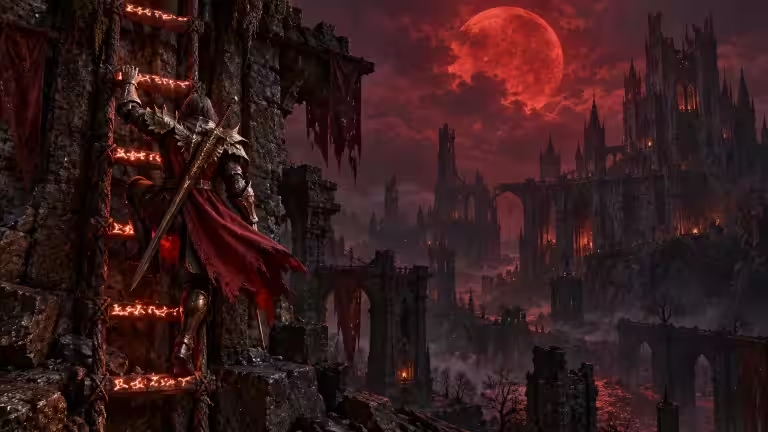
Desbloqueos de equipo y armas
Farmeo de artefactos y armas
The legendary weapons and artifacts you name, farmed onto your account · Done when each named piece is in your inventory
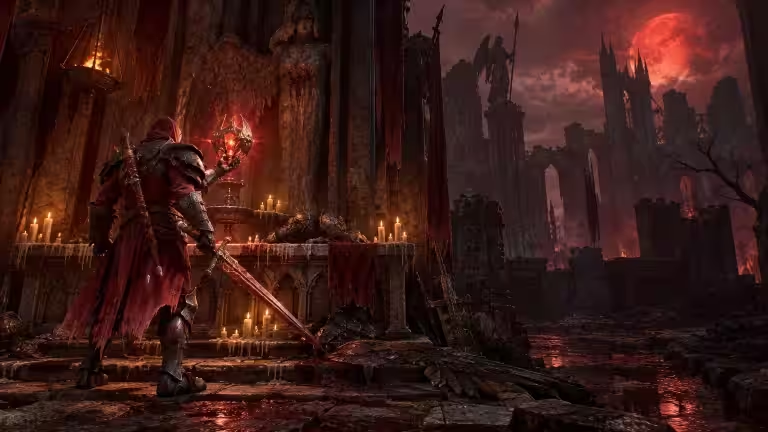
Misiones y encargos
Misiones completadas
The one mission you name, cleared on the difficulty you choose · Done when the chain continues from where it stalled