En esta página
Estado
Crimson Moon launched on 1 September 2026 ($19.99; PS5, Xbox Series X|S, Steam and Epic). Anything below marked “at launch” or “unknown until release” should be checked against the live game.
Crimson Moon‘s co-op mode lets two players team up and “share lives” — but the official description never says the two of you share one health bar, even though a chunk of the coverage around the game has been retold that way. This is the mechanic everyone’s arguing about before the game is even out, so here’s what ProbablyMonsters actually wrote, where the two readings of it diverge, and why the gap matters if you’re deciding whether to bring a friend into Gildenarch or go it alone.
En resumen
- Crimson Moon co-op is capped at two players and is explicitly optional — you can run the whole game solo.
- The official line is “share lives, resurrect the fallen, and unlock synergies,” not “one shared health bar.”
- “Share lives” could mean a pooled health bar OR a pooled number of attempts/respawns — both readings fit the wording.
- Dynamic difficulty and enemy composition scale to party size, so a partner changes what you fight, not just how you fight it.
- Nothing here is confirmed by actual play — the exact rule only becomes clear at launch on September 1, 2026.
Desbloqueo completo del equipo
Every weapon, armour piece and trinket the game gates, unlocked on your account — all nine…
What Is Shared Lives in Crimson Moon Co-op?
Shared Lives is the name the community has given to the resource-sharing rule attached to Crimson Moon’s two-player co-op mode. Developer and publisher ProbablyMonsters describes the feature directly in the game’s official pitch, which reads: “Crusade Alone or Slay Together – Your ally is your amplifier. Share lives, resurrect the fallen, and unlock synergies through optional cooperative mode.” The same listing adds that dynamic difficulty scaling and enemy composition ensures every mission feels fresh and personal, meaning the mode doesn’t just add a second sword — it changes what the mission throws at you.
The mode sits inside Crimson Moon’s mission-based run structure. Between missions, players return to the Church headquarters, where they can interact with NPCs, unlock permanent upgrades, and select new objectives through a War Table before heading back into the city. Co-op plugs into that same loop — you’re not locked into a separate multiplayer playlist, you’re bringing a partner into the same run structure solo players use.
| Modo | Cómo funciona | Qué incluye |
|---|---|---|
| Solo | One Nephilim, one life pool, full control over builds and pacing | No shared risk, but no revives either if the wording favors shared health |
| Two-player co-op | Optional, capped at two players, tied to shared lives and revives | Combat synergies between allies, plus a partner who can pick you back up |
If the hours are the obstacle rather than the fight itself, Boosting de Crimson Moon is run hands-on by a booster from your region.
How Crimson Moon Co-op Actually Works
Here’s where the story splits. A good amount of coverage paraphrases “share lives” as one shared health bar for both players — the idea being that any hit either of you takes drains a single pool, so a mistake by your partner is a mistake against you too. That’s a plausible reading, but it isn’t what the source text says. The official PlayStation Store listing and every other platform page use the exact same phrase — “Share lives, resurrect the fallen, and unlock synergies through optional co-op mode” — and “lives” in games has historically meant a shared count of attempts or respawns just as often as it’s meant shared health.
Some outlets covering the announcement have also been careful not to collapse the two. “In co-op, we can ‘share lives, resurrect the fallen, and unlock synergies,’ although the developer does stress that playing solo is just as viable.” That line confirms the wording again without pinning down which reading is correct, and a separate recap of the same feature describes it as letting players share lives, revive one another, and create combat synergies while dynamic scaling adjusts encounters based on party size — again consistent with either interpretation.
Advertencia
Do not treat “shared health bar” as confirmed. It is one of two plausible readings of the phrase “share lives,” and ProbablyMonsters has not published a mechanical breakdown of how damage, downs, or revives are actually calculated. Anyone stating hard numbers for this right now is guessing.
The honest cost of not knowing which reading is correct right now isn’t hours of grinding — it’s zero confirmed information until the game is actually in players’ hands. ProbablyMonsters has not clarified the mechanic beyond the marketing copy, and the only date anyone can point to for a real answer is the confirmed launch on September 1, 2026, covered in Gematsu’s report on the release date. If you’re weighing whether to plan a co-op session around launch, that’s the actual timeline to work with — not a leak, not a datamine, just the ship date. For everything else about that date, including price and edition details, the Crimson Moon release date and pricing guide covers what’s confirmed separately.
| Reading | What it would mean in a run | Effect on the player |
|---|---|---|
| Shared attempt pool | You and your ally each fight with your own health, but the team draws from one pool of lives/checkpoints before the mission ends | A death costs a shared resource, but a single bad hit doesn't instantly threaten both players |
| Shared health pool | Damage taken by either player drains one collective bar | Every hit either of you eats counts against a joint total, so mistakes compound fast |
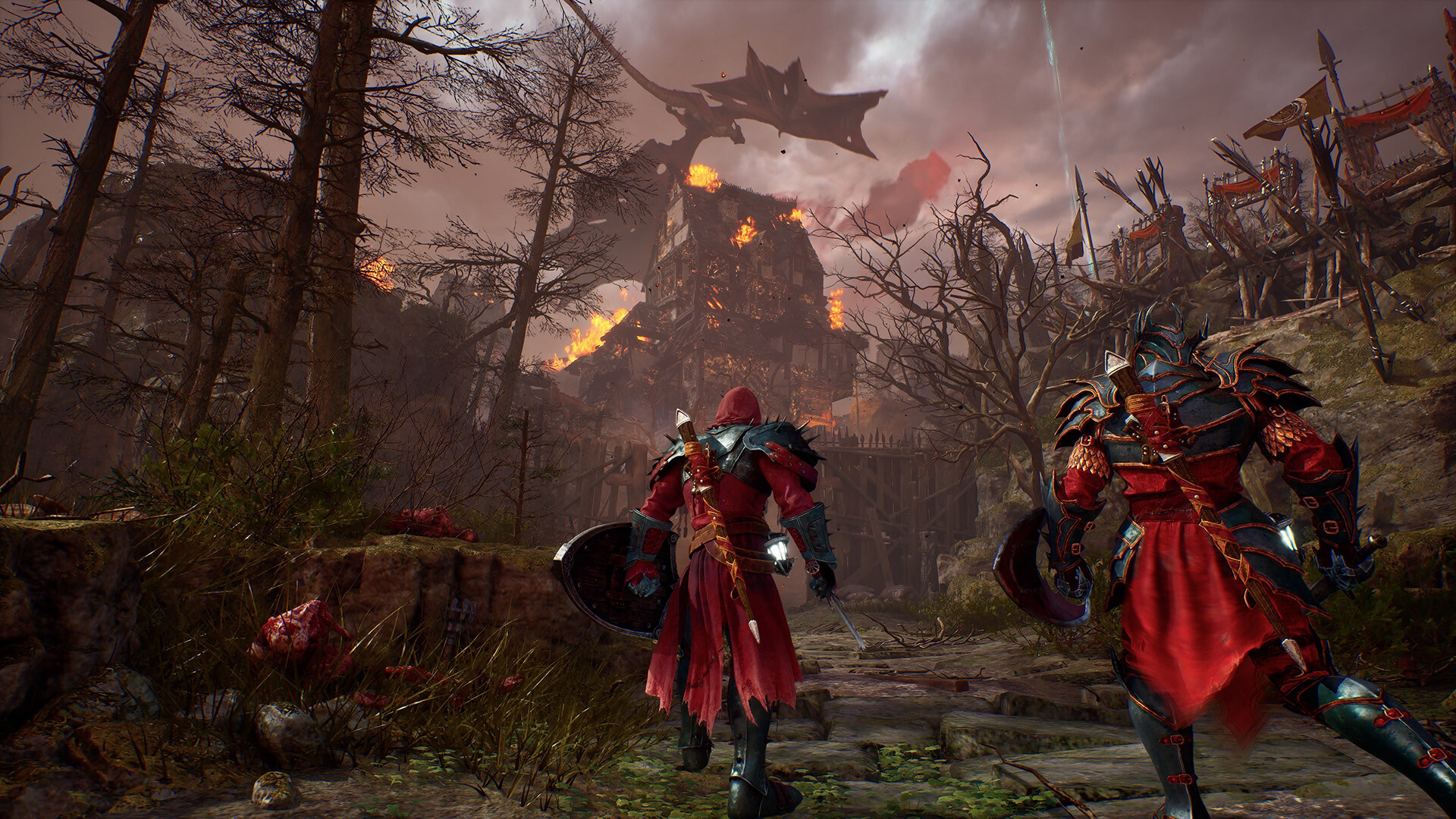
How to Start a Co-op Run in Crimson Moon
Before the 1 September launch the exact menu flow for inviting a partner wasn’t public. What is confirmed is the general shape of the loop co-op sits inside, based on the mission structure ProbablyMonsters has described.
Sigue estos pasos para hacerlo rápidamente.
-
1
Start from the Church hub
this is the home base where players return between missions to interact with NPCs and unlock permanent upgrades.
-
2
Decide solo or co-op per mission
the mode is described as optional, so nothing forces you into a partner for any given run.
-
3
Bring in a second Nephilim
co-op is capped at two players, and your ally functions as what ProbablyMonsters calls an amplifier rather than a second, separate character sheet.
-
4
Plan the mission at the War Table
both players use this step to survey the city and plan your next mission via the War Table before dropping in.
-
5
Enter the run together
expect enemy composition and difficulty to shift for two players rather than staying identical to the solo version.
Why Your Co-op Partner Might Matter More Than Your Weapon
If the shared-health reading turns out to be accurate, the math changes fast. A shared bar means every missed dodge or bad trade is a team-wide cost, not a personal one — the price of a mistake effectively doubles because it’s drawn from the same pool your partner needs too. Combine that with the fact that dynamic difficulty scaling and enemy composition ensures every mission feels fresh and personal, and a two-player run isn’t just “the solo mission with extra damage output.” The game appears to actively change what spawns based on party size, which means your partner’s build, positioning habits, and revive timing become part of the actual difficulty curve — arguably a bigger variable than which weapon either of you is carrying. That’s speculative reasoning built on confirmed mechanics, not a confirmed outcome, but it’s the logical consequence if the shared-health reading holds.
None of this changes if the shared-lives reading turns out to be about attempts instead. In that version, your partner still matters for revives and the promised combat synergies, but a single mistake doesn’t cascade into a shared health crisis mid-fight.
Common Misconceptions About Crimson Moon Co-op
Myth: Crimson Moon co-op is mandatory
It isn’t. Every piece of official copy, from the initial reveal to the September 1 launch announcement, calls the mode “optional cooperative mode” and frames the choice as crusading alone or slaying together. Solo is a fully supported path, not a fallback.
Myth: “Share lives” definitely means one health bar
This is the core confusion driving the discourse right now. The phrase as written supports a shared attempt pool just as easily as a shared health bar, and no official source has picked one explicitly. Treat any guide that states the health-bar version as settled fact with skepticism until launch.
Myth: Co-op is just solo mode with a second player added
The enemy composition and difficulty scaling are tied to party size, not just player count as a multiplier. That means missions built for two players aren’t guaranteed to be the same encounters you’d see solo, just with an extra Nephilim standing next to you.
Farmeo de moneda y materiales
Terminado cuando tu saldo muestra la cantidad pedida añadida
Our Take: Should You Play Crimson Moon Co-op or Go Solo?
Nuestra opinión
Go in solo first if you want a predictable difficulty curve, then bring a partner once you know how shared lives actually behaves.
ProbablyMonsters built co-op as an optional layer, not a requirement, and that framing is worth taking seriously. Until the shared-lives mechanic is confirmed one way or the other, jumping straight into co-op means committing to an unknown risk profile — fine for players who like figuring systems out live, less fine for anyone who wants to understand the stakes before a boss fight against one of the Dead Gods. The synergy and revive upside sounds strong on paper, but “sounds strong on paper” is exactly the phase this mechanic is still in.
¿Te ha resultado útil esta guía?
Servicios de Crimson Moon
Subida de nivel de personajes
Subida de nivel de personajes
Your Nephilim levelled to the target you set, up to the cap · Gear, materials and War Table progress found on the way…
Desbloqueos de equipo y armas
Farmeo de artefactos y armas
The legendary weapons and artifacts you name, farmed onto your account · Done when each named piece is in your inventory
Misiones y encargos
Misiones completadas
The one mission you name, cleared on the difficulty you choose · Done when the chain continues from where it stalled