

On this page
Aliens: Fireteam Elite 2 launched on August 25, 2026, and the credits roll after fifteen missions across four biomes — so the obvious next question is what the game actually wants you to do once that’s done. The short answer: there is no separate “endgame mode” waiting behind the campaign. The endgame is Horde, replaying the campaign on a harder difficulty tier, and building out the Specialist class, and this guide walks through all three so you know where to spend your time first.
TL;DR
- Horde mode with its own dedicated maps is the main repeatable activity from day one
- Campaign replays on higher difficulty are the other core loop, gating better reward crates
- Casual, Standard and Intense are open immediately; Extreme and Insane are expected to unlock after the campaign like in the first game, but this is not officially confirmed for the sequel
- Specialist is a custom class built from the other five classes’ abilities, meant to be tuned per activity, not run as one generic build
- None of this involves a season, battle pass, or ranked ladder — those systems simply are not part of the game right now
What Counts as Endgame in Aliens: Fireteam Elite 2?
Endgame here means the activities that stay relevant after you’ve seen every story mission once. That’s Horde mode and campaign replays on a tougher difficulty setting. There’s no raid tier, no live-service season layered on top, and no separate endgame currency system confirmed for launch — just the same two loops, played over and over, feeding weapon attachments, cosmetics, and class progression. The full rundown of what shipped on day one, including the biome list and cross-play setup, is covered in the launch day content guide if you need the baseline before jumping into repeats.
| Activity | What it gives | Who it's for |
|---|---|---|
| Horde mode (dedicated maps) | Round-based rewards, cosmetics, class XP, gear crates | Squads who want short, self-contained sessions with a clear extract point |
| Campaign replay, higher difficulty | Higher-tier reward crates per mission, weapon unlocks tied to difficulty | Players chasing specific weapon or attachment unlocks gated behind Intense and above |
| Class leveling across all five base classes | Unlocks the abilities and perks the Specialist draws from | Anyone planning to build a Specialist at all |
How the Difficulty Ladder Drives Replayability
The difficulty ladder is the actual replay engine. Casual, Standard, and Intense are available from the start, and each step up changes more than a damage multiplier — enemy spawn behavior, ammo scarcity, and friendly fire all shift as you climb. In the first game, Extreme and Insane only opened up after finishing the full campaign at least once, and reporting on the sequel expects the same gate to apply here, but Cold Iron has not confirmed that structure for Fireteam Elite 2 specifically. Treat any claim that Extreme or Insane are locked behind a campaign clear as a reasonable guess based on the first game’s pattern, not a confirmed mechanic.
Note
Extreme and Insane difficulty gating after the campaign is expected by analogy with the original Fireteam Elite, but it has not been officially confirmed for the sequel. Check the in-game difficulty select screen after your first clear rather than assuming.
The Horde mode squads you build for Intense won’t necessarily survive Extreme if that tier does carry the friendly-fire and spawn-rate increases the first game used — for a breakdown of what roles actually hold up under pressure, the Horde mode squad roles guide covers composition in more depth than this piece does.
| Difficulty | Availability | What changes |
|---|---|---|
| Casual | Open at launch | Lower enemy damage, forgiving pacing |
| Standard | Open at launch | Baseline enemy behavior and rewards |
| Intense | Open at launch | Friendly fire enabled, tighter ammo, better reward crates |
| Extreme | Expected post-campaign, unconfirmed | Reportedly heavier enemy damage and scarcer resources |
| Insane | Expected post-campaign, unconfirmed | Hardest confirmed tier name in the achievement list, exact unlock condition unclear |
Building a Specialist for Endgame Activities
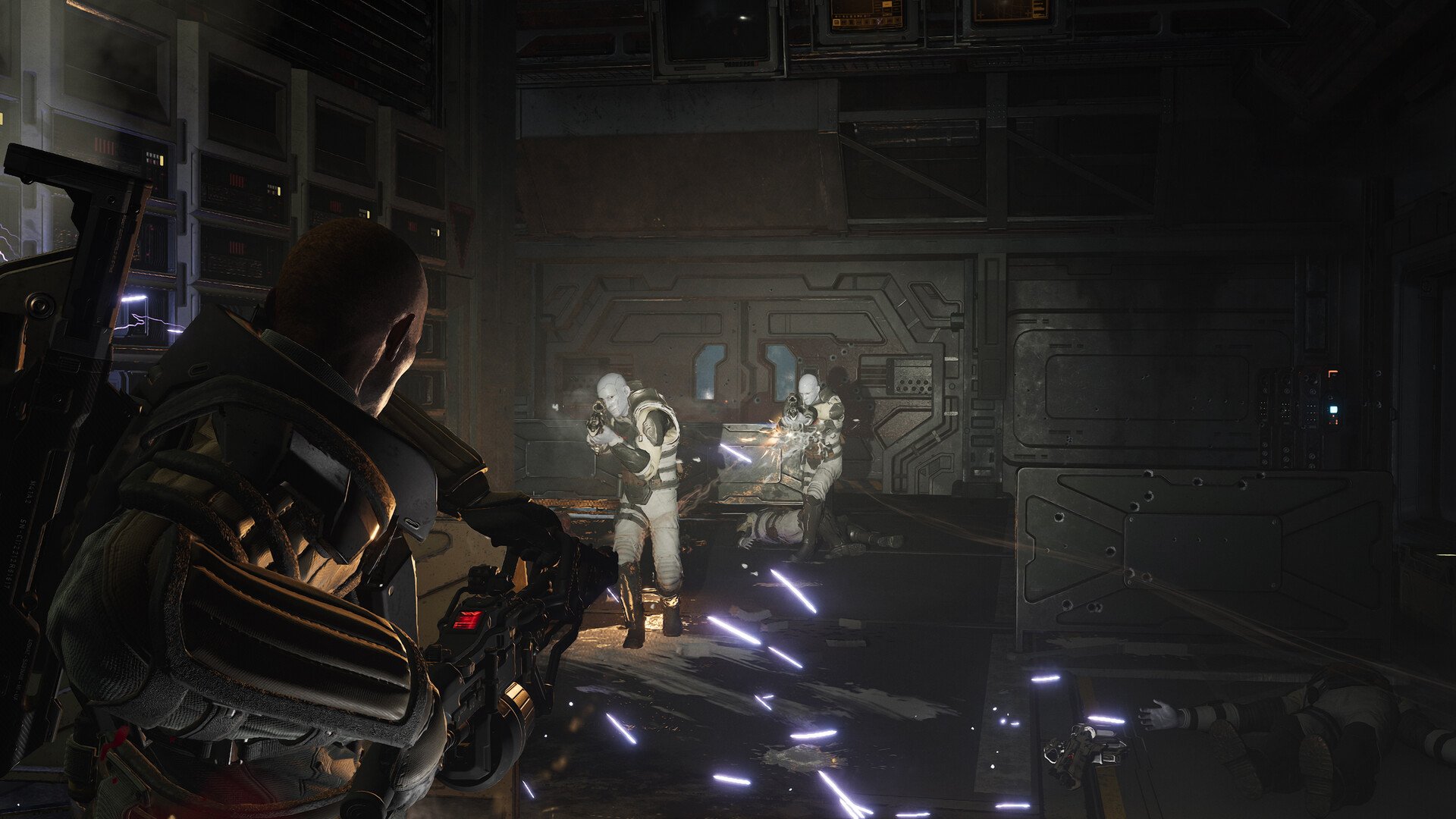
The Specialist is not a sixth starting class — it’s a slot you unlock by leveling the five base classes: Marauder, Duelist, Machinist, Hunter, and Medic. Once you’ve put time into those, the Specialist lets you mix abilities, perks, and signature weapons from across all of them into one loadout. That’s exactly why it doesn’t work as a “pick once and forget it” build. A Specialist tuned for crowd control on a Horde map full of swarming drones looks nothing like one built to survive a friendly-fire-enabled Intense campaign replay, and since the whole point of the class is recombination, running the same generic mix everywhere wastes the entire premise.
Unlocking the abilities worth combining takes time, since you need meaningful progress on all five base classes before the Specialist has anything good to pull from — that’s the real cost of getting an endgame-ready build online, not a single grind but five parallel ones. If you haven’t settled on which base class to level first, the full class breakdown walks through what each of the five actually does before you commit hours to any of them.
Tip
Don’t wait until you’ve maxed all five base classes to touch the Specialist. Unlock it as soon as it’s available and swap the mix per activity — Horde crowd control versus campaign survivability draw from completely different ability pools.
Common Misconceptions About the Fireteam Elite 2 Endgame
Myth: Horde mode has one big map like the first game
Fireteam Elite 2’s Horde restructures the format entirely — instead of ten waves before a single cash-out, rounds run in five-wave blocks lasting roughly a dozen minutes each, and squads choose to extract or push into the next round every time one ends. That’s a meaningfully different rhythm than the original’s single long haul, so builds and strategies from the first game’s Horde don’t transfer cleanly.
Myth: Extreme and Insane are confirmed day-one difficulties
They’re confirmed to exist as named tiers — Insane shows up as a target in the achievement list — but nothing official ties them to an immediate unlock. Casual, Standard, and Intense are what you actually get on day one; anything above that is an expectation based on the first game, not a documented feature of the sequel.
Myth: the Specialist replaces your favorite base class
It doesn’t sit alongside the five base classes as a straight upgrade — it’s a recombination tool that only works because you’ve already leveled those classes. Ignoring the base classes to rush the Specialist just means you unlock an empty toolbox with nothing worth pulling from it.
Our Take: Is the Endgame Loop Worth Grinding?
Our Take
Solid for a launch, thin if you’re expecting a live-service structure.
Horde’s round-based rework and the Specialist’s build-swapping premise give the post-campaign period real direction, and the difficulty ladder gives replays an actual reason to exist beyond farming the same missions. What’s missing is anything resembling a season, a ranked mode, or a long-term reward track — this is a co-op shooter with two solid repeatable loops, not a live-service platform, and treating it like one will leave you disappointed once you’ve cleared Intense and built a couple of Specialist loadouts.
Was this guide useful?